Listening to the early universe has become more difficult. A team of scientists announced the discovery of cosmic radio noise that is six times greater than expected.

The findings made by the team led by Alan Kogut of NASA's Goddard Space Flight Center were made possible by the instrument ARCADE. It is a balloon launched in July 2006 that reached an altitude of 120,000 feet. The mission's goal was to search the sky for heat from the first generation of stars.
"Instead of the faint signal we expected to find, we ran into this roaring noise six times greater than predicted," notes Kogut. A detailed analysis ruled out primordial stars or known radio sources as the origin, including gas from our galaxy's halo. The source of this cosmic radio radiation remains a mystery.
Many objects in the universe emit radio waves. In 1931, physicist Karl Jansky detected radio static from our Milky Way. Similar emissions from other galaxies create a background hiss of radio noise.
The problem, as noted by Dale Fixsen of the University of Maryland, is that there don't seem to be enough radio galaxies to account for the signal ARCADE detected.
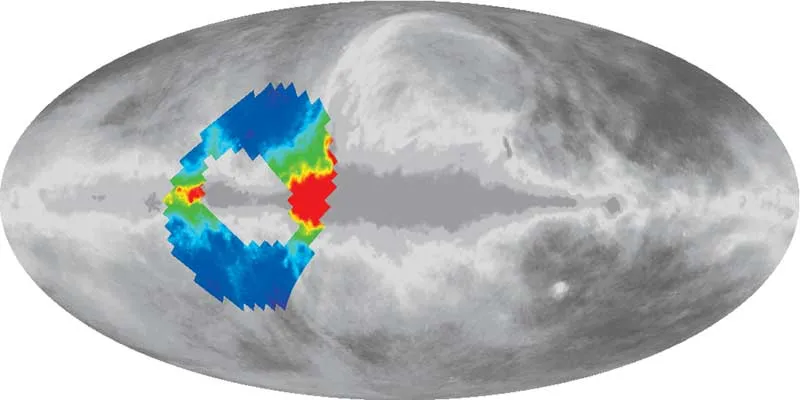
The sought-after signal from the primordial stars remains hidden behind the radio background signal, complicating efforts to detect those first stars, thought to have formed 13 billion years ago. However, this cosmic static could provide important clues about the development of galaxies when the universe was less than half its current age.
The discovery was announced at the 213th meeting of the American Astronomical Society in California. Four reports describing the results were submitted to The Astrophysical Journal.
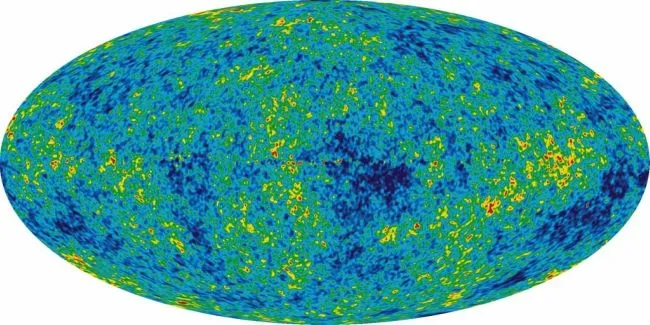
ARCADE is the first instrument to measure the radio sky with sufficient precision to detect this mysterious signal. To improve the sensitivity of the radio receivers, they were immersed in ultra-cold liquid helium. The instrument's operating temperature was 2.7º above absolute zero. This is the same temperature as the cosmic microwave background radiation (CMB), the remnant heat from the Big Bang, a cosmic signal discovered in 1965.
Sources and related links
- NASA Balloon Mission Tunes in to a Cosmic Radio Mystery
- Code 820: NASA Balloon Program
- ARCADE Mission
- ARCADE Measurement and Interpretation of the Extragalactic Background at 3 GHz
Michael D. Seiffert et al.
213th AAS Meeting - ARCADE 2 Measurement of the Extra-Galactic Sky Temperature at 3-90 GHz
D. J. Fixsen et al.
arXiv:0901.0555v1
About the images
Credit: NASA/ARCADE/Roen Kelly