KOSMOSLOGOS ARCHIVEAutomatic translation of the original Spanish post by Gerardo Blanco (KosmosLogos, CC BY-SA 3.0). Read the original in Spanish. /2010/03/nuevos-articulos-argentinos.html
Nine papers by Argentine researchers published in specialized journals.
As in related articles, the goal of the note is to disseminate the work of Argentine astronomers. Where possible, links were made to their pages or their curriculum vitae, so we can learn a little more about each of them.
(Only the institution to which the Argentine researchers belong is indicated).
- Optical polarization observations in the Scorpius region: NGC 6124
M. Marcela Vergne, Carlos Feinstein, Ruben Martinez, Ana Maria Orsatti, Maria Paula Alvarez
arXiv:1003.1250v1
The researchers, from the Facultad de Ciencias Astronómicas y Geofísicas de La Plata (UNLP) and (IALP) of the Instituto de Astrofísica in the same city, obtained data on 46 of the brightest stars in the area of the open cluster NGC 6124 to investigate the properties of the interstellar medium that lies along the line of sight towards the cluster. The data were obtained from the Complejo Astronómico El Leoncito (CASLEO) in San Juan, between 2003 and 2007. - Polarimetry of an Intermediate-age Open Cluster: NGC 5617
Ana Maria Orsatti, Carlos Feinstein, M. Marcela Vergne, Ruben E. Martinez, E. Irene Vega
arXiv:1003.2985v1
http://arxiv.org/abs/1003.2985
In this case the researchers come from the same institutions cited in the previous article and with similar objectives, but on the cluster NGC 5617. In this case, as in the previous one, an instrument from the Observatorio Astronómico de Torino, Italy, was used. - The Nature of Transition Circumstellar Disks I. The Ophiuchus Molecular Cloud
Lucas A. Cieza, Matthias R. Schreiber, Gisela A. Romero (UNLP), Marcelo D. Mora, Bruno Merin, Jonathan J. Swift, Mariana Orellana (UNLP), Jonathan P. Williams, Paul M. Harvey, Neal J. Evans II
arXiv:1001.4825v1
in ApJ Lucas A. Cieza et al 2010 ApJ 712 925-941
DOI: 10.1088/0004-637X/712/2/925
The researchers obtained millimeter photometry and high-resolution spectroscopy, as well as infrared images of a sample of 26 circumstellar disks in the Ophiuchus molecular cloud for which the presence of "holes" is suggested. The goal is to find the mechanisms potentially responsible for them. - The Onfp Class in the Magellanic Clouds
Nolan R. Walborn, Ian D. Howarth, Christopher J. Evans
arXiv:1001.4032v1
The Astronomical Journal 139 1283
DOI: 10.1088/0004-6256/139/3/1283
Cecilia Fariña (UNLP-IALP), Guillermo L. Bosch (UNLP-Visitor at Las Campanas), Nidia I. Morrell (Las Campanas) and Rodolfo H. Barbá (ICATE, visitor Las Campanas, Univ. La Serena) participated in the work, along with researchers from other countries.
They studied a rare class of stars, type O, with iron absorption lines. It is the peculiar class to which Naos (zeta Puppis) belongs. - Early Results from the Galactic O-Star Spectroscopic Survey: C III Emission Lines in Of Spectra
arXiv:1002.3293v1
ApJ 711 L143
DOI: 10.1088/2041-8205/711/2/L143
Nidia I. Morrell, Rodolfo H. Barbá, and Roberto C. Gamen (IALP) participate in another study on O stars. - Demystifying the coronal line region of active galactic nuclei: spatially resolved spectroscopy with HST
Ximena Mazzalay (IATE/MPE, Germany), Alberto Rodríguez-Ardila, S. Komossa
arXiv:1002.3152v1
They present an analysis of optical spectra of a sample of ten Seyfert galaxies with the aim of studying the structure and physical properties of the so-called coronal line region, lines with highly ionized atoms that took their name from the Sun where they were first observed. - Two confirmed compact elliptical galaxies in the Antlia cluster
Analia V. Smith Castelli, Favio R. Faifer, Lilia P. Bassino, Gisela A. Romero, Sergio A. Cellone, all from UNLP/IALP, together with Tom Richtler from the Univ. de Concepcion, Chile.
arXiv:1002.3830v1
To be published in Boletín 52 BAAA
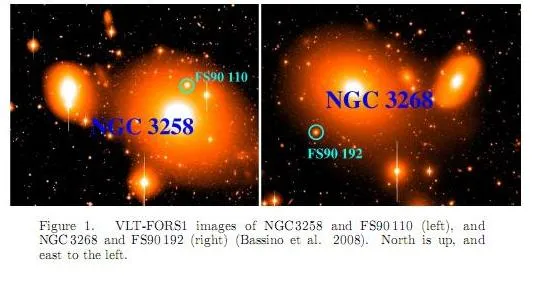
They confirm the existence of two compact elliptical galaxies in the central region of the Antlia cluster, one of which shows evidence of interaction with one of the giant ellipticals that dominate the central region of the cluster. - The intriguing nature of the high energy gamma ray source XSSJ12270-4859
D. de Martino, M. Falanga, J.-M. Bonnet-Bidaud, T. Belloni, M. Mouchet, N. Masetti, I. Andruchow (UNLP/IALP), S.A. Cellone (UNLP/IALP), K. Mukai, G. Matt
arXiv:1002.3740v1
Accepted in Astronomy & Astrophysics
They study the nature of the source XSSJ12270-4859, a supposed cataclysmic variable. The study suggests a low-mass and low-luminosity X-ray binary. 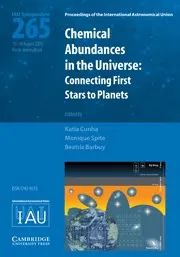
- Haro15: Is it actually a low metallicity galaxy?
V. Firpo (UNLP), G. Bosch (UNLP), G. Hägele (UNLP), A.I. Díaz Beltrán (U.A.Madrid) and N. Morrell (Las Campanas)
arXiv:0912.2781v1
Published in Proceedings of the International Astronomical Union ,
Symposium S265 (Chemical Abundances in the Universe: Connecting First Stars to Planets),
Volume 5 , Symposium S265 , Aug 2009 , pp 243-244
DOI: 10.1017/S1743921310000657
They present a detailed study of the physical properties of the nebular material in multiple regions in the BCD (blue compact dwarf) galaxy Haro 15. Using long-slit and echelle spectroscopy, obtained with different instruments at the Observatorio de Las Campanas - Chile, they study the physical conditions (electron density and temperature), total and ionic chemical abundances of several atoms, reddening and ionization structure.
Sources and related links
What do Argentine astronomers study?
Argentine articles in APJ and AJ 2009
Argentine articles in A&A 2009
Argentine articles in SpringerLink
About the images
Galaxies in Antlia. Credit: Bassino et al. 2008/Analia Castelli et al.
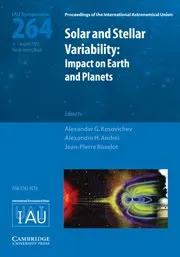
Poster of Symposium 265. IAU.
KOSMOSLOGOS ARCHIVEOriginally published on KosmosLogos by Gerardo Blanco · License CC BY-SA 3.0 · Adapted format, original text unchanged