On "The Library of Babel" and the limits of knowledge. Does it make sense to search for the meaning of life, of Nature?
On several occasions here I have mentioned Marcelo Gleiser when referring to his posts on NPR:13.7, a collaborative science blog.
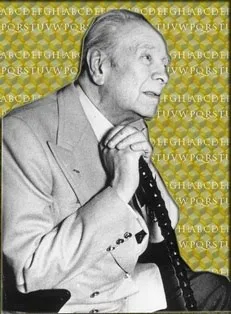
On Friday, Gleiser wrote about The Library of Babel, that metaphorical construction by Jorge Luis Borges.
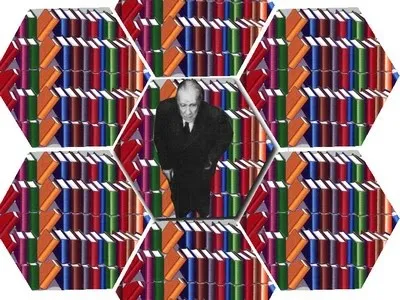
The Library of Babel is not just any book repository. All books are there, those written and those yet to be written. All human thought is there. This Universe of books is composed of hexagonal galleries, like an infinite hive that forms a homogeneous space, with none standing out from the others. They are all the same. For Gleiser, this is a correspondence with the modern Cosmological Principle which states that on large scales, the universe is homogeneous and isotropic, so no point is more important than another.
The light in this swarm of books is scarce and the readers are partially in the dark: "The light comes from some spherical fruits that bear the name of lamps. There are two in each hexagon: transverse. The light they emit is insufficient, incessant."
According to the Brazilian physicist, it could be the faint light of the night sky.
Nothing exists outside the Library. The readers and the narrator are part of it. Will we ever be able to completely understand something of which we are a part, something we cannot examine as a whole? Like a fish trying to understand the totality of the oceans, the readers try to decipher the mysteries of the world, without noticing that all they can acquire is a partial knowledge of reality.
One of the superstitions alluded to by Borges is that men thought there must exist a book that was the compendium of all others. Since there can be nothing outside this Library-Universe, the book must be part of it. But if that book contained ALL the others, it would have to contain itself as well. Or there should be a catalog that described the previous one. And Another that described the first one. And so on, in an infinite progression.
Thus, complete knowledge is impossible. Which brings the illusion of believing one knows the whole by knowing a part.
Even knowing that all books are written with the same 25 symbols is not enough to approach the fundamental knowledge of the nature of the Universe.
Does it mean the search is doomed to failure?
The answer, for Gleiser, is that it depends on how far we want to go. Even if we want to go as far as possible, we must remember that we are limited to these regions of the Library that are better lit, where we can find here and there another volume that reveals a little more of the greatness and infinite mystery that surrounds us.
This Borgesian story that Gleiser reminds us of can be dissected much more. The theme of determinism is present. Let's say that for physics, since we supposedly "know" the laws of Nature and the Principle of Causality, if we had the initial data and enormous computing power, we could know what will happen next, in the future. It is Laplace's Demon.
The certainty that everything is written annuls us or makes us ghostly. I know of districts where the young prostrate themselves before books and barbarously kiss the pages, but they do not know how to decipher a single letter. Epidemics, heretical discords, pilgrimages that inevitably degenerate into banditry, have decimated the population.
Something not very different from this, and also with high-caliber literary reference, was recently commented on by a NASA engineer and which I translated in "One Tenth of One Percent of Nothing".
There, after the translation, I recalled "The Secret of the Universe", by Isaac Asimov and his idea of a Fractal Universe.
Doesn't Borges say something similar perhaps, in his final paragraph?
"I have just written 'infinite'. I have not interpolated that adjective out of rhetorical habit; I say that it is not illogical to think that the world is infinite. Those who judge it limited postulate that in remote places the corridors and staircases and hexagons can inconceivably cease, which is absurd. Those who imagine it without limits forget that the number of possible books has them."
Note that although it is possible to combine the 25 letters of the alphabet in many ways, the total number of combinations (with repetition) is finite.
Each hexagon has four walls used to store books (the other two communicate with the others) in five shelves. Each shelf holds 32 books.
With these data provided by the author we can calculate:
1 Wall=5 shelves =>5*32=160 books per wall.
On 4 walls, 1 Hexagon has 4*160=640 books.
It is also noted that each book has 410 pages. Each page has 40 lines, that is, there are 16,400 lines in a book. Each line has 80 letters.
Again with the data imagined by Borges, there would be (410*40*80) 1,312,000 letters in a book.
In how many ways can we combine the 25 signs to achieve that million and a bit of letters? That is, that million three hundred twelve thousand letters make up a book. If I change one letter's place I already get another book. Therefore, how many books are there? Well, we should raise 25 to the 1,312,000 to get all possible combinations.
If we divide that result, say n (n= total number of books) by the 640 books that fit in a hexagon, we will know how many hexagons there are in total.
The result is a very large number. The library could be stored in about 101974751 Terabytes. It is not infinite, although if it repeated...
"If an eternal traveler were to traverse it in any direction, he would verify after centuries that the same volumes are repeated in the same disorder (which, repeated, would be an order: Order). I dare to suggest this solution to the ancient problem: The library is unlimited and periodic."
Currently, high-energy physicists are searching, through enormous accelerators, for the most elementary particles. These days, new results are being presented in this regard.
It is that, despite these limitations, human beings remain curious. The yearning to know what we are made of, we and the Universe, how, and why we are this way, will not cease before these frontiers.
Even if the steps we take are, therefore, infinitesimal, we will not stop taking them. At first, these ideas can generate dread and terror. But we must also consider that, in some way, we are "destined" to face that challenge. Even if we didn't want to "know", we would do it anyway.
Let's imagine that, horrified by this idea of the incommensurable reality of the cosmos, we decided to stop learning about nature and limit ourselves to "being happy." I'm enjoying the scenery until, unintentionally, I step on a snake or a poisonous spider. Whatever the outcome, my companions will likely relate the bite of such an animal to my feverish state, to give just any example. Thus, only through "trial and error" will we have reached a knowledge we did not have before.
But this assumes moving from a particular premise to a general one. "This bug poisons," "this other similar bug poisons," ..., conclusion: "all bugs like this one, poison."
Unintentionally, we would arrive at this procedure or "method" to "learn something new." It is not very different from the use of inductivism by science, although the scientific methodology is not limited to that single procedure, but rather makes observations of reality, conducts controlled, independent experiments, with falsifiable conclusions.
It is not the "ideal" way to know that unattainable whole. We must be aware of that vastness and our limitations, but we also have to note that we "believe" certain things. We are not going to stop doing it, even if we want to. And in the face of that other reality, the scientific method is far preferable to no method, to simple superstition.
Happiness? What do I know. Happiness, I believe, is something else. Probably, I say, a path. The one we have chosen consciously, even if we are wrong. The one that does not harm others. The one that provides us with true knowledge. But also the path (which sometimes forks) that allows us all to become a little better, more just and equitable among ourselves.
Perhaps that is the secret of the Universe.
"My solitude rejoices in that elegant hope."
Sources and related links
- How many books are in “The Library of Babel”, By Martín Cristal
- Literaberinto.com: The Library of Babel
- THE MATHEMATICAL LIBRARY OF BABEL, By Claudio Salpeter
- 13.7:Borges, The Universe And The Infinite Library
About the images
- Image of J.L.Borges Credit: Keystone/Hulton Archive / Getty Images