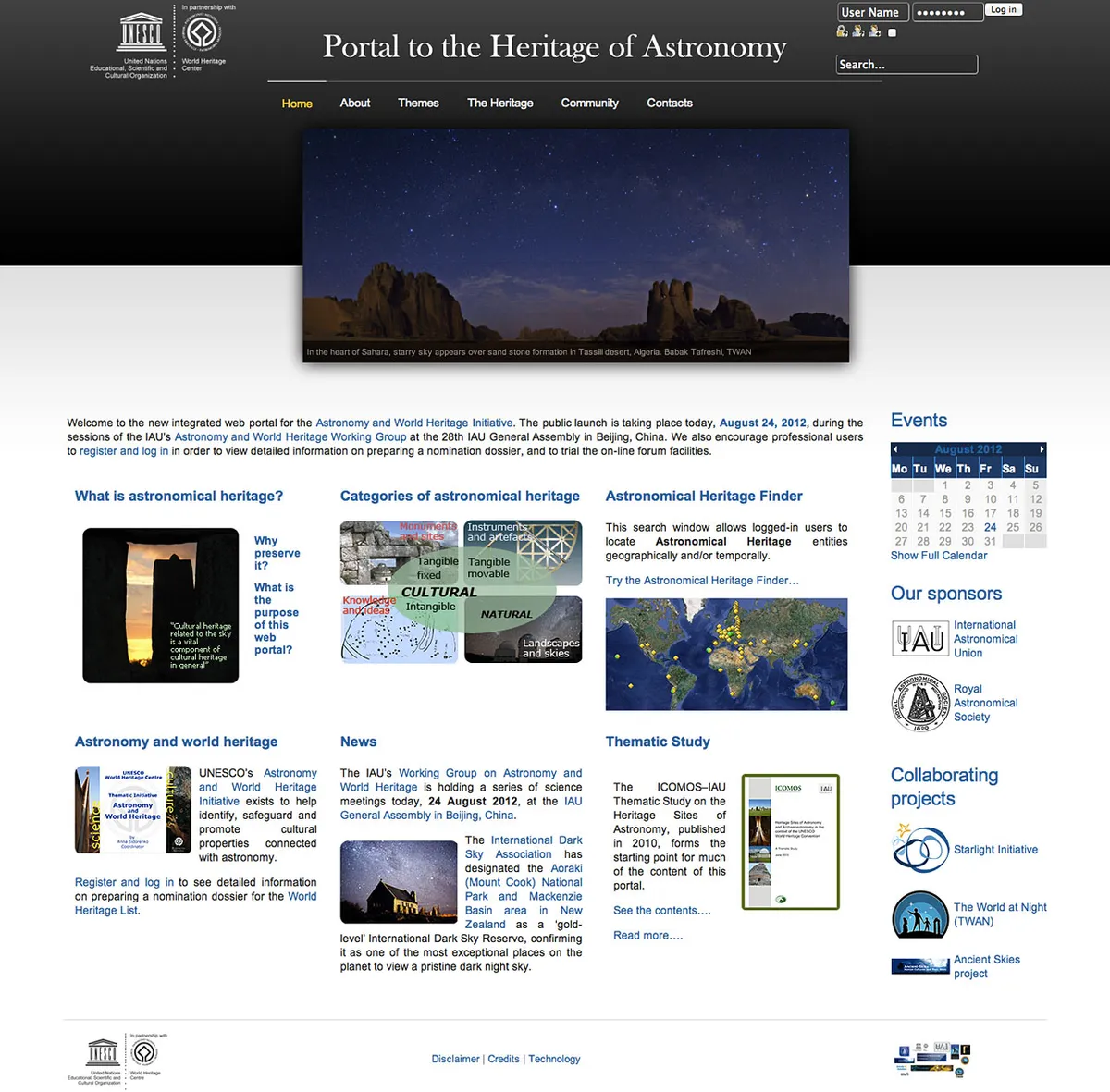
From the Stone Age to the Space Age
The UNESCO World Heritage Committee conducted a study on the heritage of astronomical and archaeoastronomical sites with the aim of identifying some of the most significant examples for humanity.
The Committee, whose 34th session was held in Brasilia (July 25 to August 3), is composed of several countries for a set period which, since 2005, they agreed should be four years. The list of countries that have adhered to the World Heritage Convention can be consulted.
The essential functions of the Committee are:
1. To identify, based on information submitted by Member States, cultural and natural properties of outstanding universal value that should be protected under the World Heritage Convention, and to include them on the World Heritage List;
2. To monitor the state of conservation of properties inscribed on the World Heritage List; to decide which properties should be included on or removed from the List of World Heritage in Danger; to decide whether a property should be deleted from the World Heritage List; and
3. To examine requests for International Assistance made to the World Heritage Fund.
Now, for the first time, the committee has conducted a study on scientific heritage. The thematic study on Heritage Sites of Astronomy and Archaeoastronomy, prepared within the framework of the International Year of Astronomy 2009, presents a global overview of astronomical heritage and attempts to point out some of the most incredible places that are already part of Humanity's legacy.
The study is the result of a collaboration between the Working Group on Astronomy and World Heritage of the International Astronomical Union (IAU) and the International Council on Monuments and Sites (ICOMOS), which is the advisory body to UNESCO on cultural sites.
The two organizations produced a detailed report on the historical richness of astronomy around the world and the key sites of this heritage. The document, titled "Heritage Sites of Astronomy and Archaeoastronomy in the context of the World Heritage Convention," was developed as an integral part of IYA2009 and has several objectives.
Goals of the Study
On one hand, they wanted to have a clear picture of the character and composition of astronomical heritage in the world. Furthermore, to identify and define this type of legacy, which is why the document details the main characteristics that should be expected from an astronomical heritage site. And this is compared with a representative sample of the most important sites.
Through 16 themes, human history is covered, from the stone age to the modern space age, in a document that can be downloaded in PDF format, 283 pages long. The document was produced by Clive Ruggles and Michel Cotte, but with a long list of contributions.
The initiative had the support of the Instituto de Astrofísica de Canarias and Starlight.
The content of the document
The report begins with acknowledgments, list of authors, introduction, some preliminaries on the nature of this heritage and general considerations.
Chapter 1 covers the earliest prehistory, through four case studies.
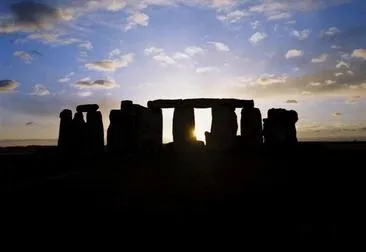
The second chapter deals with later European prehistory, with three cases including Stonehenge.
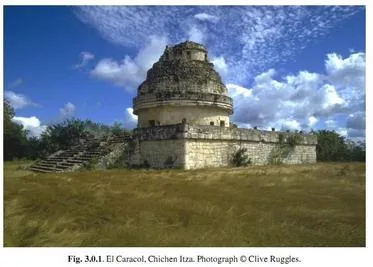
The third chapter explores Pre-Columbian America with examples from Mexico, Puerto Rico, Peru and Chile.
Indigenous use of astronomy is developed afterwards, and then the legacy of the ancient and medieval Far East.
The sixth chapter deals with India, the next with Mesopotamia and the Middle East and the eighth with ancient Egypt, with the expected allusions to various Egyptian temples.
The ninth chapter talks about the Classical World (the sphinx, the Pantheon), while the tenth immerses us in Islamic astronomy. Chapter 11 takes us back to European medieval astronomy and the next to the Renaissance contribution up to the mid-20th century, which includes the Einstein Tower and the Mount Wilson observatory.
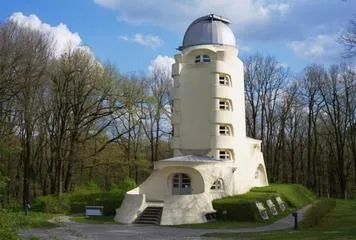
Chapter 13 expands on the development of radio astronomy and chapter 14 is about applied astronomy in modern times.
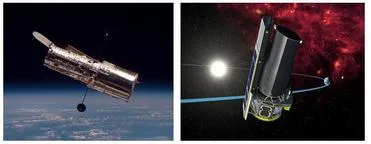
The space legacy takes place in the following chapter and, before the conclusion, a "Window to the universe" opens to talk about light pollution and the right to dark night skies (Starlight) and some notable sites are pointed out such as the AURA Observatory in Chile, Roque de los Muchachos in the Canary Islands and Mauna Kea in Hawaii.
American Sites
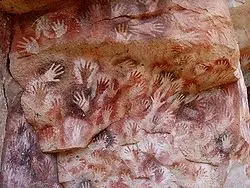
Among the places noted on the World Heritage List by the IAU Group as having a connection with astronomy or indigenous astronomy, is the Cueva de las Manos, Río Pinturas in Argentina.
There are several references to Chilean sites, such as Rapa Nui National Park; in Mexico, such as Chichen-Itza (and many others); in Peru the Nazca Lines or Chavin; in Bolivia, Tiwanaku; or in Colombia, Tierradentro National Park.
Unfortunately, the report is written in English. The e-book (ISBN 978-2-918086-01-7) can be downloaded from:
www.astronomicalheritage.org
The World Heritage List
It should be noted that the UNESCO World Heritage List includes 911 properties that form the cultural and natural legacy that the World Committee considers to be of outstanding universal value. In the case of Argentina, it includes Los Glaciares, the Jesuit Missions of the Guaraníes, Iguazú National Park, the aforementioned Cueva de las Manos, the Valdés Peninsula, the Ischigualasto / Talampaya Parks; the Jesuit Block and Estancias of Córdoba and the Quebrada de Humahuaca.
It is also good to know that there is a List of World Heritage in Danger such as the Humberstone and Santa Laura Saltpeter Works in Chile; Los Katíos National Park, in Colombia; the archaeological zone of Chan Chan, in Peru; and Coro and its port, in Venezuela, to name the sites in America.
Sources and related links
- http://www.astronomicalheritage.org/
- UNESCO astronomical heritage initiative
- Astrotourism: A journey to stars, valleys and mountains
About the images
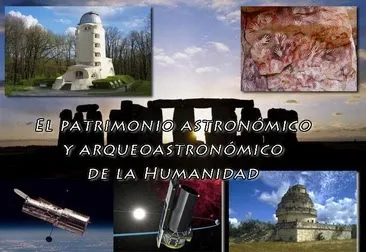
- "Cueva de las Manos, Río Pinturas," in Santa Cruz (Argentine Patagonia), 7350 BC. Credit: Wikipedia
- Images taken from the report: Einstein Tower (Credit: R. Arlt); Stonehenge (Credit: James O Davies); El Caracol, Chichen Itza. (Credit: Clive Ruggles); Hubble and Spitzer telescopes (Credit: NASA)