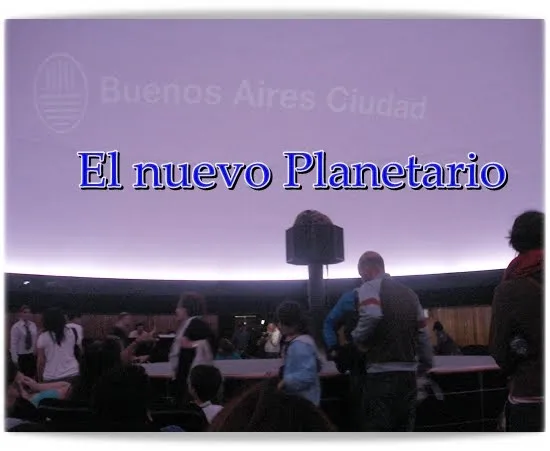
The “Galileo Galilei” Planetarium reopens to the public this Thursday, December 15, with the completion of the restoration works and the complete technological renovation.
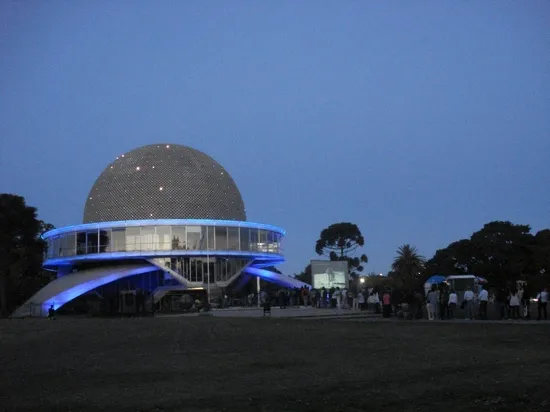
To celebrate, starting at 19 h next Thursday, at Avenida Sarmiento and Belisario Roldán, there will be a poetry and song show by poet Luis Pescetti and guitarist Juan Quintero. At the end, the Planetarium will open its doors and in the main hall a video will be projected showing the new technology and resources of the institution, with free admission and in groups.
From its reinauguration, the “Galileo Galilei” presents its shows with a new star projector, a novel “full dome” immersive video system, a renovated internal dome and 280 mobile 4D seats that feature an interactive participation system.
These technological advances add to the already presented renovation of its external lighting, which once again make the Planetarium a cutting-edge institution in Latin America.
From Friday until the end of the year, residents and tourists who visit it will be able to enter the "Galileo Galilei" for free from Tuesday to Friday from 14:30 to 17:30 and on Saturday the 17th and Sunday the 18th from 15 to 20, to see the presentation video and get to know the New Planetarium.
Optical planetarium
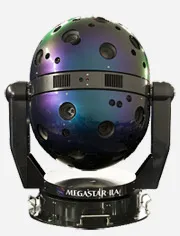
The Megastar II A model, installed in the Show Hall, shows stars up to 11th magnitude, one million more stars than conventional planetariums, a true revolution in sky projections.
It also shows more than 140 clusters, nebulae and the Milky Way can be appreciated with a realism never before achieved. It is the first in the world to adopt LED lamps for projection on large domes. The 32-lens instrument guarantees maximum projection quality.
Immersive video
The new shows also dazzle with their high-resolution images, according to the Planetarium. DigitalSky II by SKy Skan is an advanced full dome video system that covers the entire semi-spherical dome.
The result is the creation of a unique immersive environment with surprising definition, color, movement and realism. Until now we could enjoy in the planetarium hall the starry sky observable from anywhere on Earth in the past, present or future; the new system adds the possibility of making a historic change of perspective: immersive projection transports us to any place in the Universe to experience wonderful astronomical experiences.
Among the multiple functions of the new system we could highlight:
-Generation of highly realistic virtual environments.
-Simulation of eclipses, transits, meteor showers.
-Travel and flyovers of deep sky objects, such as nebulae, star clusters or galaxies.
-Simulation of atmospheric effects (refraction, twinkling of stars).
-Projection of constellations, auxiliary orientation marks and astronomical elements (ecliptic, celestial equator, meridians, vertical circles, almucantars, azimuthal and equatorial coordinates, etc.)
-Orbits of the planets and the traces of their apparent movements in the sky.
-The 4D seats, with their movements, provide more realism to the shows projected onto the renovated internal dome.
The combination of the projection systems allows for the creation of a unique space to tell stories, teach concepts and explore the entire Universe.
DigitalSky 2 by SkySkan
http://www.youtube.com/watch?v=xLLckXZzn5o
Renovations
I announced the reinauguration of the Planetarium hall a few days ago when I told about the lunar observation event III, after which my friend Alejandro Tropea made the comic: A night of observation at the "Galileo Galilei" planetarium.
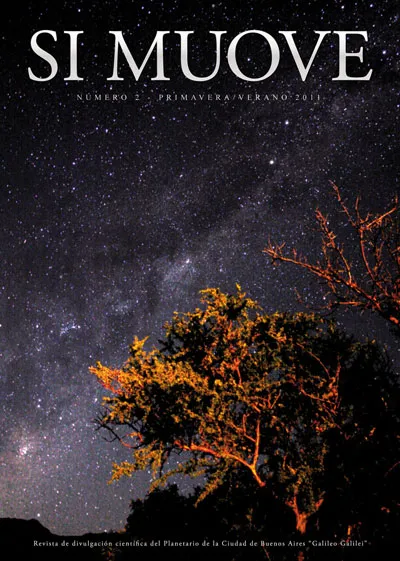
The Planetarium hall remained closed from December 2010 until now due to the need to carry out the renovations that are now being announced as completed. Originally, changing the planetarium instrument did not seem to be in the plans, as could be inferred from an interview I conducted with the director at the beginning of the year. But later it was learned that a digital planetarium would be acquired when the new magazine Si Muove was announced.
The old analog instrument was of excellent quality, Carl Zeiss, but required maintenance. Many stars appeared much less bright than they should, for example.
Meanwhile, at the Planetarium, the exterior lighting system was changed, which now allows control of the colored lights, and the internal dome was also changed. The change of seats for more modern and comfortable ones had also been announced. Starting this Thursday we will be able to enjoy these improvements to evaluate them, although it is already formidable that there is public investment in the Planetarium.
Starting Thursday I hope to enjoy these new advances at the City's Planetarium and obtain complementary information.
Sources and related links
- Planetario Galileo Galilei
About the images
- Photo of a Megastar II A model.