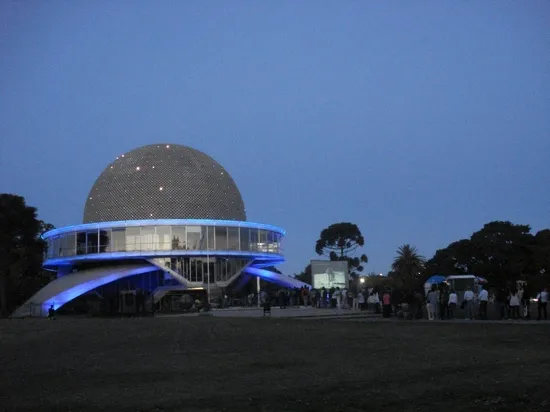
I attended the reopening of the hall of the Buenos Aires City Planetarium. How does it look with the new projector?
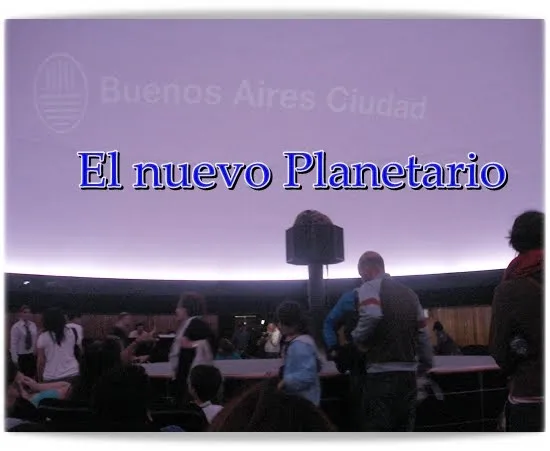
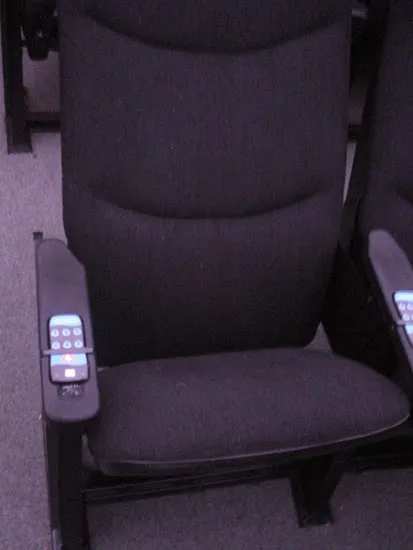
Last Thursday I attended, along with hundreds of other people, the reopening of the Galileo Galilei Planetarium Hall. What was shown to the attendees is a presentation of about 15 minutes aimed at demonstrating the capabilities of the new instrument. It was also possible to compare the comfort of the new seats.
Everything new, every change, generates fear, uncertainty. Sometimes we prefer the old known to the bad unknown. This happens or has happened to all of us at some point. During the year the Planetarium Hall was closed there were also uncertainties.
On the one hand, years ago an anonymous email circulated on the internet stating that the Planetarium would be privatized, although the text later did not explain anything about a concession to private hands, but only aimed to discredit part of the Planetarium's staff. Perhaps because the Head of Government of the City, Engineer Mauricio Macri, has a liberal, center-right thinking, to label it somehow, that "tunes in" with privatization discourses, there were those who believed that communication was plausible.
During the following year the Planetarium operated without problems, allowing the public to enjoy its shows -at the usual rate-, as well as astronomy courses and lectures given by professional astronomers, free and without paying a cent.
But then, a reform plan was announced and the hall remained closed.
Here it must be said that this "plan" was never detailed. But through the press and from this very blog based on an interview with the Director of the Planetarium, Lic. Lucía Sendón de Valery, we told what the works to be carried out would be. In those first months there was no talk of changing the Carl Zeiss instrument, the ant, that inhabited the center of the Hall since December 20, 1966, four and a half decades ago. (The first show, however, occurred six months later).
The same Director, when announcing the reforms to me, indicated that they planned to improve the existing instrument, there was even talk of some agreement with an important lamp supplier company. And it was indicated that there was no thought of changing it for another of the digital type, so popular today, as it would not have the same quality.
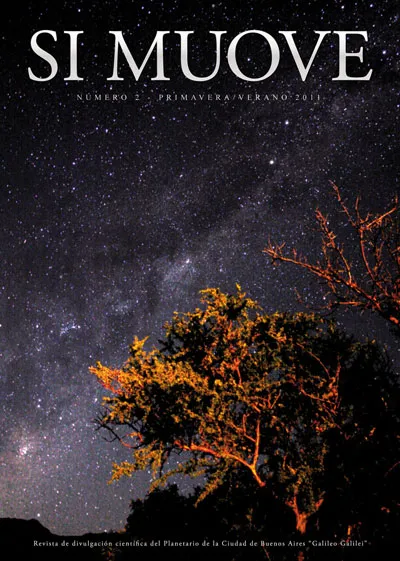
Later, at the presentation of the new magazine Si Muove, it was announced that, despite what was said before, the instrument would indeed be changed for a more modern one.
Perhaps the director's attendance at an International Congress in Egypt and then at another regional meeting of Planetariums made her change her mind.
The truth is that this uncertainty centered on the change of the instrument was increased by the lack of precise information throughout the year. As the deadlines -never fully officialized- expired, new rumors began to emerge.
But this Thursday it began to be seen that reality was not fearsome. The new system offers an impressive image quality. Together with the good sound and the more comfortable seats and the immersive video technology, which makes the planets, for example, seem to "approach" the viewer, the result is astonishing.
The presentation shows some of the possible options, but over time, new and creative uses will be found for the system that, initially, seems to have a drawback: it is too overwhelming. I think I read that Engineer Macri said it was like going to school and to the movies at the same time. Well, if this happens and the outreach message effectively gets through, there is no problem. But it may fall exclusively on the visual and lose the true objective which is not to overwhelm the senses, but to learn.
The Planetarium staff is fully aware of this and will take their precautions. There are people there very skilled in pedagogy, as they are demonstrating with the articles appearing in the new magazine.
However, that will take time. When the Planetarium reopens after the holidays next year, the shows that will be shown will be "canned", if I may use the term considering they are not canned tapes, but software.
For example, the Hayden Planetarium in New York is showing the show Journey to the Stars. We can see some segments of it on their website: Journey to the stars.
http://www.youtube.com/watch?v=MXGUl9DCWwA
It will be noted that it is a show specifically focused on the stars. The Sun, then, is a true star of the presentation, but they also use models to visually recreate the currently accepted theory about the formation of stars after supernova events. By approaching our Sun as we know it today it is possible to explain how fusion works, talk about the planets and then about its final destiny as a white dwarf. And get to know the neighboring stars until the grand finale of a sunrise.
That the same show is projected, a priori, is not a problem, as long as there is some kind of adequate adaptation regarding the translation of the text.
It will also be possible to move away from astronomy, for example to show and learn about the human body, nature and weather and many other topics.
But, in the long run, the ideal would be for the Planetarium to create its own material, designed for a local audience and with the assistance of Argentine professionals. It will not be an easy task and will take time, but it should be an objective.
The technical detail
There are two types of technical data that would be good to know and about which I intend to inquire. On the one hand, how the system works, in detail. On the other, to learn about the contractual-economic aspects of the magnificent remodeling work at the Planetarium, which includes the exterior lighting and the dome, in addition to the new instrument and the seats.
This is not a whim, but as it is part of the City's heritage, it would be good for specific data to become known.
Regarding the heritage, one of the rumors that had appeared during the renovation was the location and fate of the previous instrument. As I was informed last Thursday, the Carl Zeiss is at the Planetarium, disassembled. It is a large object and obviously could not remain in the hall. There is no decision made, as I was told, about its future. Lic. Sendón indicated to me that she would like it to be exhibited in some sector of the ring, although if there were any possibility of transferring it to an institution that could continue to give it use, it would be evaluated. It would be important that, since these decisions sometimes take time, the necessary measures be taken so that the instrument does not suffer damage.
This is a piece of information that will deserve follow-up, not only because the Carl Zeiss is part of the City's heritage, but because it is a beautiful instrument that should neither be lost nor spoiled.
The return to operation of the hall will also allow the resumption of courses at the Planetarium and surely next year there will also be talks by professional astronomers who bring specific knowledge in the voices of local experts to the general public and which are so welcome.
Suggestions
From this very humble space, I can think of pointing out two suggestions:
1- That while the staff learns to use the new system, its operation be recorded and that when they manage to start creating their own content (which may take years) that work be documented in audiovisual form.
2- That the Planetarium's website have a page with technical details about the system's operation and that the site be used in the future to announce future renovations, if any, as they are carried out. It is an aspect of management transparency that new technologies can provide and that is sometimes wasted.
3- The graphic material in the ring that is currently on display is very well done. But, in the future, perhaps they could consider exhibiting there part of the formidable work that Alejandro Tropea has been doing, as can be seen on his blog Ciencia con Alma y Arte. He is one of the few cartoonists who combines science and humor and does it splendidly, in my opinion. It occurs to me that it could be fantastic material for both adults and children.
45 years amazing all the public
Despite what one might think, the Planetarium is not just for kids. I must also say that some people confuse a planetarium with an observatory. While it is true that in the park adjacent to the iconic building telescope observations are held on weekends and specific events are also organized during the year, the shows at the Planetarium are just that: a fiction. But one that allows us to show what we can hardly see with the naked eye or with telescopes. Understanding how the sky "moves" apparently due to Earth's motions, knowing how things look from other latitudes, recognizing the constellations that always serve as a guide, etc.
In this task, which combines the artistry of the visualizations with the educational aspect of scientific knowledge, the City Planetarium is a fabulous tool for getting started in astronomy for people of all ages.
Thanks to the courses, talks, and events, knowledge was brought closer to another kind of public, more specifically interested, and it created a meeting space.
But the technological pillar it had been, it had lost. Although with the previous instrument it was possible to do a lot, technological advances allow the Planetarium today to be among the best in the world. Together with the publication of the magazine and the astronomical plaza, it forms a formidable whole.
It occurs to me, however, that the use of new technologies does not only imply the acquisition of more modern equipment, but rethinking the ways: the manner of informing (whether through more complete websites, whether through social networks) and that of educating in relation to the new tools.
The challenges the Planetarium undertakes towards its fiftieth anniversary are not few.
Sources and related links
- Planetario Galileo Galilei
- A New Look at the Sky
About the images
- Photos of the remodeled hall.
DOI