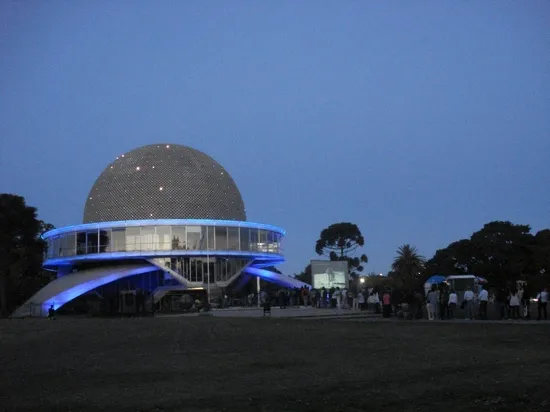
This Friday, December 2, between 20:00 and 22:30 h, the Moon can be observed in the park adjacent to the Planetarium through telescopes, and the satellite will be shown in its crescent phase on a giant screen. There are other novelties: a magazine and a reopening.
After the successful experiences of September 3 and October 1 (through which more than 2,000 people passed in total), the Planetarium once again invites the people of Buenos Aires to an unforgettable experience: a giant screen will show the image of the Moon "live," taken with a powerful telescope, as if we were astronauts peering out of a space capsule's hatch. And next to the screen, as a "journey in stages," several telescopes will be set up, with increasingly higher magnifications, to see our satellite directly. All accompanied by music and entertaining educational talks to better understand and further enjoy the surprising lunar landscapes: large "seas," enormous and deep craters, and sharp mountain ranges.
On this occasion, and unlike the two previous ones, the Moon will be observed just past its First Quarter phase (55% illuminated). And that will allow us to see the central part of our satellite in great detail, the region where most of its most spectacular geological features are concentrated, such as the giant crater Clavius (225 km in diameter), or the monumental Apennine mountain range.
"The Moon Live from the Planetarium III" will be a true astronomical celebration, a scientific outreach event, free and for everyone.
Mark your calendar: This Friday, December 2 at 20:00 h, next to the entrance, Av. Sarmiento and Av. Figueroa Alcorta, Palermo woods.
It will be canceled in case of rain or very cloudy skies.
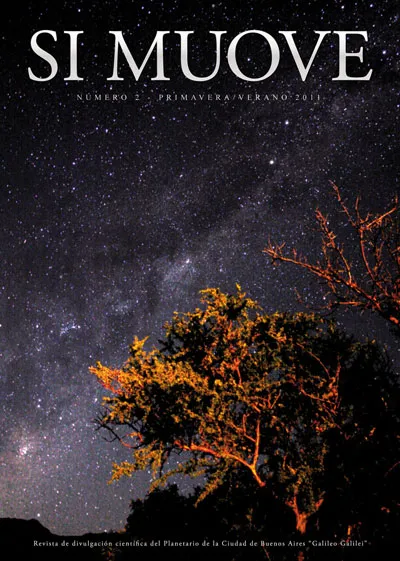
Si muove No. 2
The Buenos Aires Planetarium Galileo Galilei, as a reference for scientific outreach and non-formal science education, is a generator of interests and vocations. The activities they carry out are many. And each year they incorporate new proposals.
This year, the magazine Si muove began to be published, as I reported in due course after attending the presentation of Si Muove in July of this year.
For the first time in its history, the Planetarium is publishing its own magazine, produced by the institution's staff, with the participation of prominent scientists.
This project established a new communication channel to inform about activities and also to delve into various astronomical topics of general interest and other related sciences.
In addition to outreach articles, there are notes on recent discoveries, photographs by amateurs and professionals, and observing guides.
For the Planetarium to have a magazine is also another way to reach all those who cannot come due to distance problems or any other reason.
On Friday, December 2, while the Moon Live III event is taking place, 500 copies of the second issue of the magazine will be distributed.
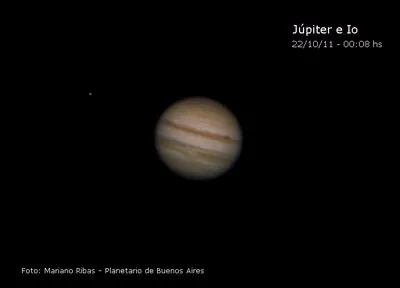
SI MUOVE NO. 2 contains, among other articles: "The Future Collision Between the Milky Way and Andromeda," "Opposition and Observation of Jupiter," "Paleoclimate: When Earth Was a Snowball," "The Stars of Brazil," "Campo del Cielo Meteorites," "Remote Sensing. Satellite Images," "The Astronomical Migration of Birds," "The Cardinal Points," "Supernova Remnants," "Observation of the Andromeda Galaxy," "The Rotation of the Moon. Always the Same Face," "Astronomical Photography," "Solar Observation. Red Fury," "The Year of Neptune"
Reopening of the hall
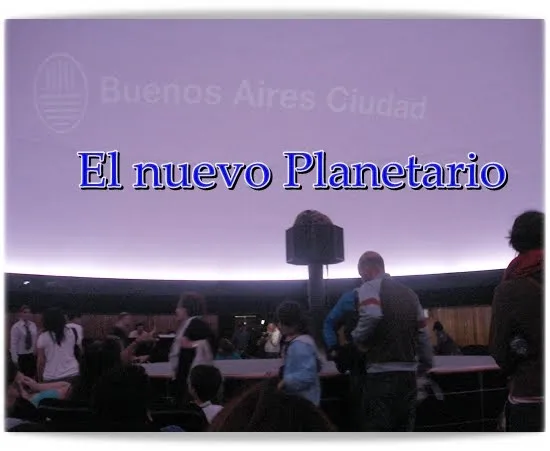
Finally, it must be added that the Planetarium's show hall has remained closed to the public due to a series of renovations since December 2010. According to sources from the institution, the hall would be re-inaugurated next December 15. In the coming days, more information will likely be available.
Sources and related links
- Planetario Galileo Galilei
About the images
- Image of the cover of issue 2 of Si Muove. Credit: Planetario Galileo Galilei GCBA.