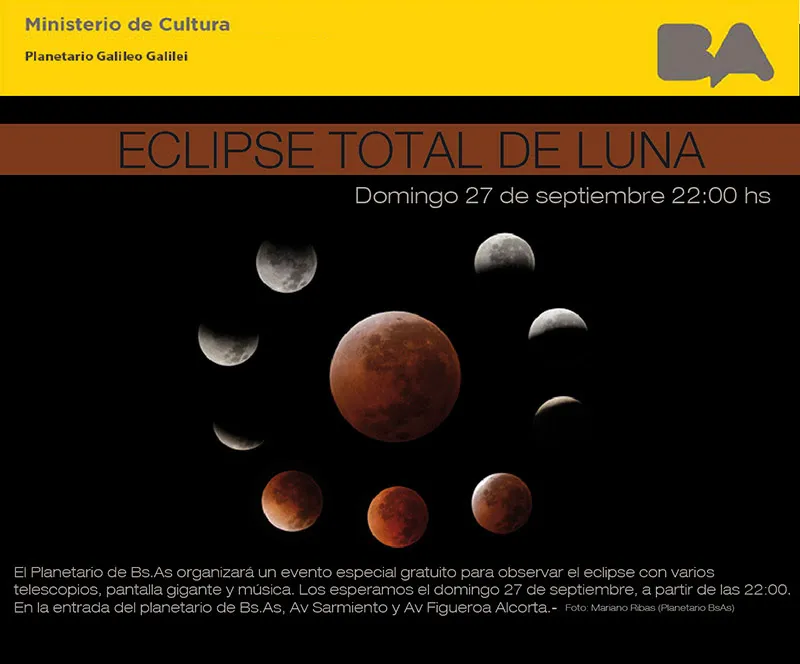
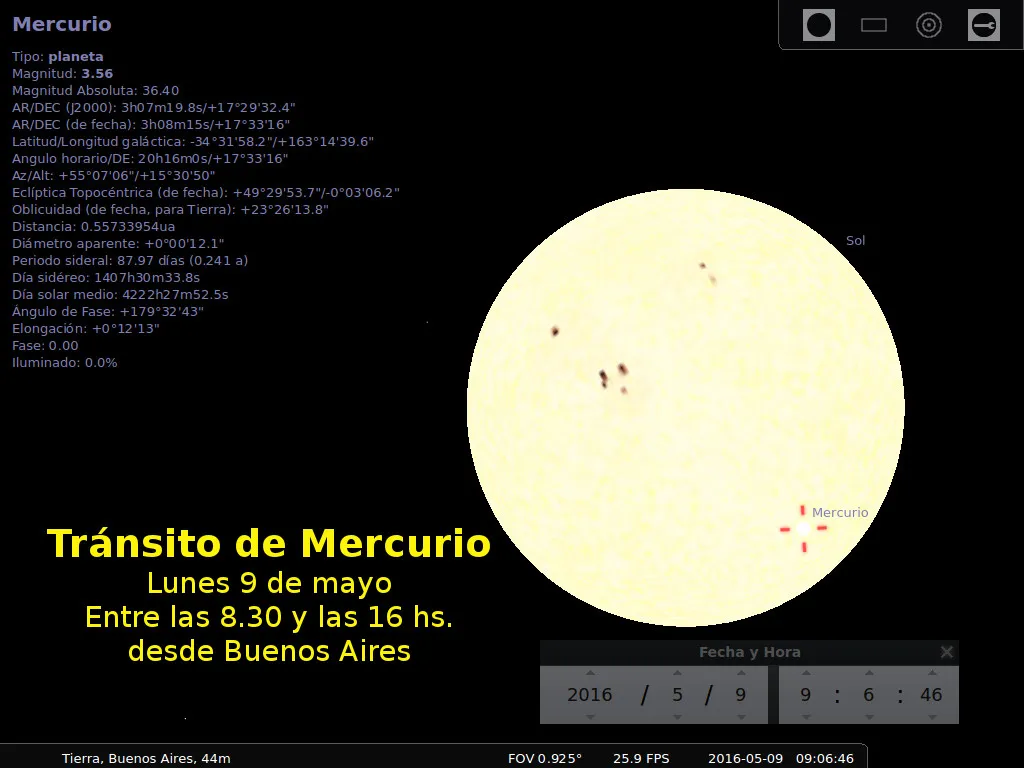
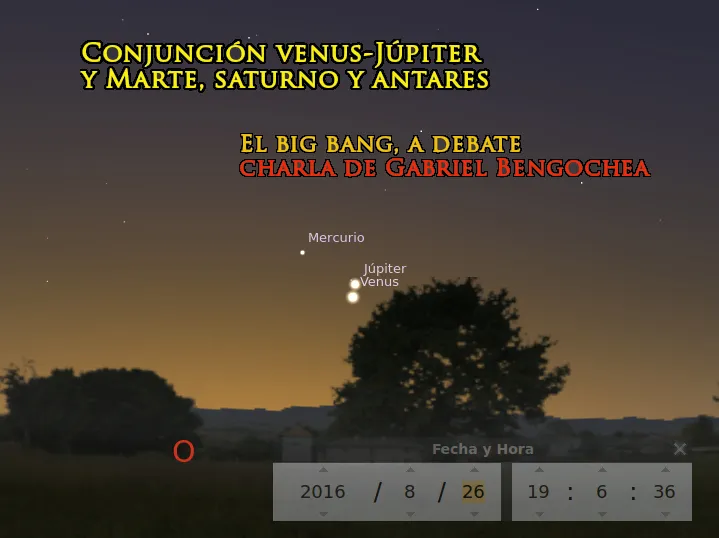
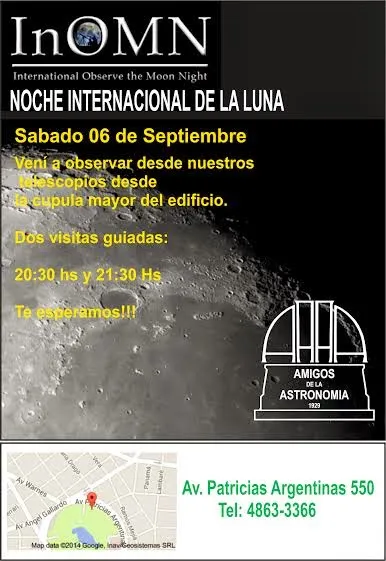
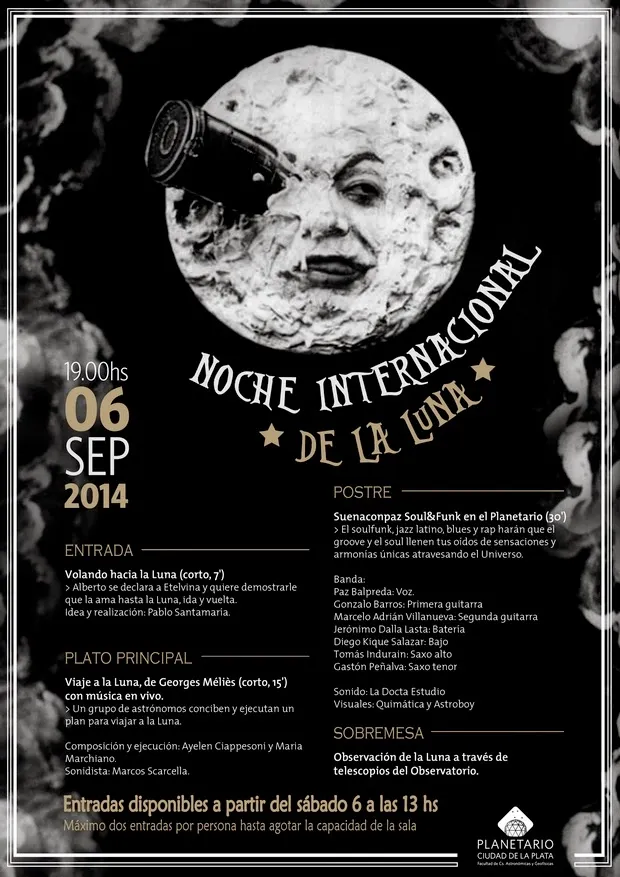
Both the Asociación de Amigos de la Astronomía and the Planetario de Buenos Aires are joining the international event to observe our natural satellite. There will also be activities at the Planetario de La Plata.
The international event is called InOMN for its English acronym (International Observing Moon Night).
It consists of scientists, educators, and astronomy enthusiasts coming together in activities that have a motivational or inspirational goal as a gateway to the fascinating world of visual and theoretical astronomy.
There are those who believe that possessing a lot of scientific knowledge about natural objects takes away their beauty. Others of us are against such a fallacy. On the contrary, knowing that what we see as shining and call the Moon is a world more than 380 thousand kilometers away; that those shadows are enormous craters; that the light Selene reflects is what emanates from the Sun and that the phases are formed by a play or dance of positions; etc., does not take away one iota of beauty, but rather increases it.
In contemporary times, natural objects have been considered beautiful in the same sense as works of art. In my view, works of art are always cultural products, of the human being, not natural. But such human creations arise from the observation of the reality around us. The photographs, drawings, poems we have created from the Moon (and other celestial objects) are clearly works of art.
The Moon allows us to address a great variety of topics:
-Length scales: size and distance of the Moon. Our satellite is about 3500 km in diameter. What can it be compared to? We can do the same with the distance. The relationship between real size and real distance can also be expressed in another term: an angle.
-Theories about the formation of the Moon.
-What are the dark and bright areas? What are the Maria or Seas?
-Why does the Moon have so many craters and Earth - apparently - does not?
-Why do we see only one side of the Moon?
-Did NASA land on the Moon? And Russia? And Japan?
-Did the technology to make it possible exist in the 60s?
-Why haven't we returned to the Moon? Would it make sense?
Events in Buenos Aires
At the Planetario de Galileo Galilei, Saturday, September 6, between 19:00 and 22:00 h.
At the Planetario de La Plata, also starting at 19:00.
At the Asociación de Amigos de la Astronomía, starting at 20:30.
Let's hope the weather cooperates and it's clear.
Sources and related links
- Amigos de la Astronomía: InOMN 2014
- Planetario Galileo Galilei
- Planetario Ciudad de La Plata
- InOMN
About the images
- Poster from Amigos de la Astronomía. Poster from Planetario de La Plata.
- InOMN logo