During June we will be able to see how the evening star apparently approaches the gas giant until their maximum conjunction on July 1. And then, a meeting with the Moon and the brightest star of Leo.
Since objects in the sky look different depending on the hemisphere and even from the south the times change according to the latitude and longitude of the place, I will use the City of Buenos Aires as a reference.
May is ending. As we approach the sixth month of the year, the sky offers us a whole "show": if we look towards the West after sunset, we will see two very bright "stars" (if the sky is not covered with clouds). They are not stars, but planets: Venus, the brightest, and Jupiter.
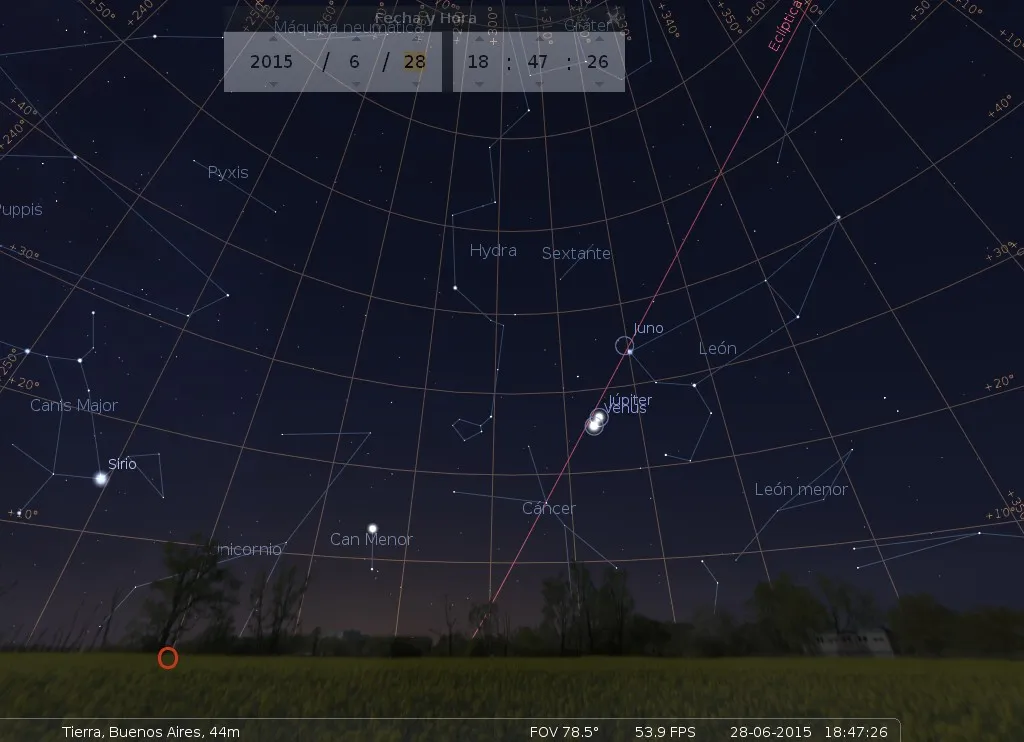
If we observe the position of both worlds night after night, we will notice that they will "approach" each other. It is, of course, an apparent motion. They will seem to move towards the East (what is known as direct motion) and will get closer to each other and to the star Regulus, the most notable one in the constellation of Leo.
By May 30, Venus is near the two brightest stars of Gemini: Castor and Pollux. If we draw an imaginary line towards Jupiter and Alpha Leonis, we will be "seeing" the Ecliptic.
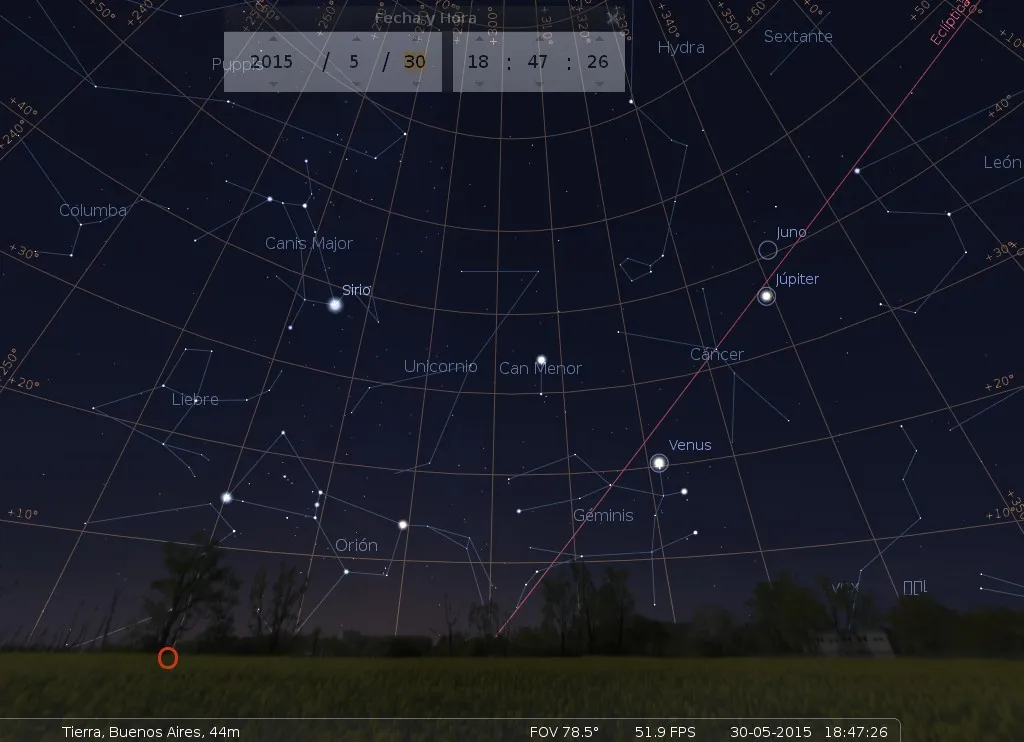
A week later we will not notice major changes, except that the two planets will be closer.
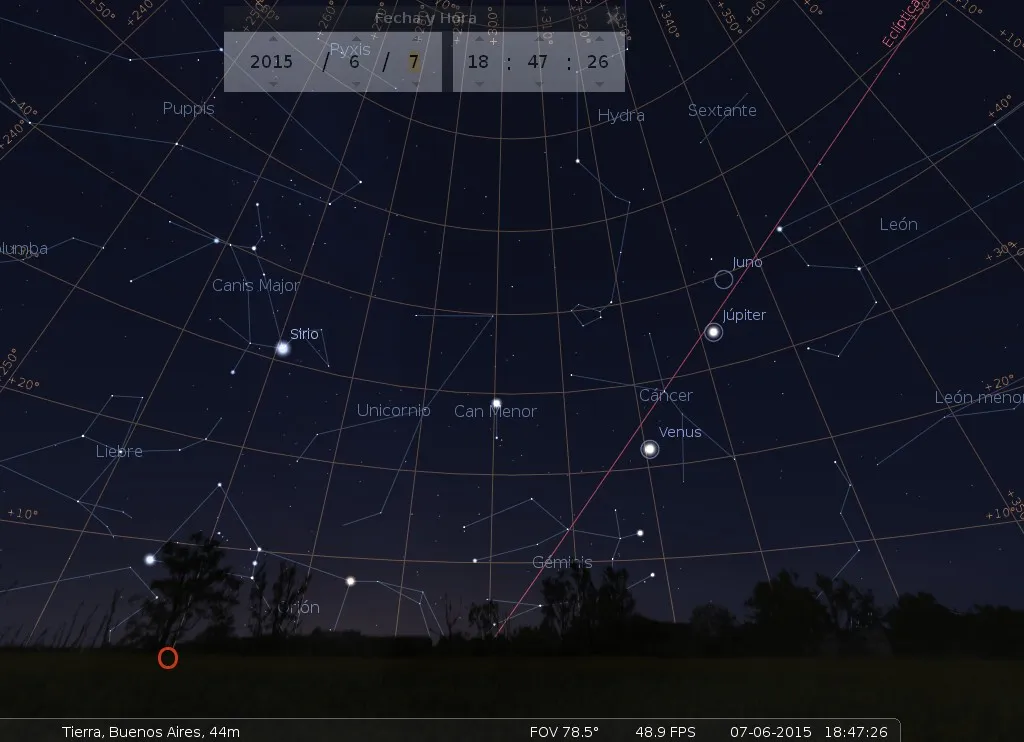
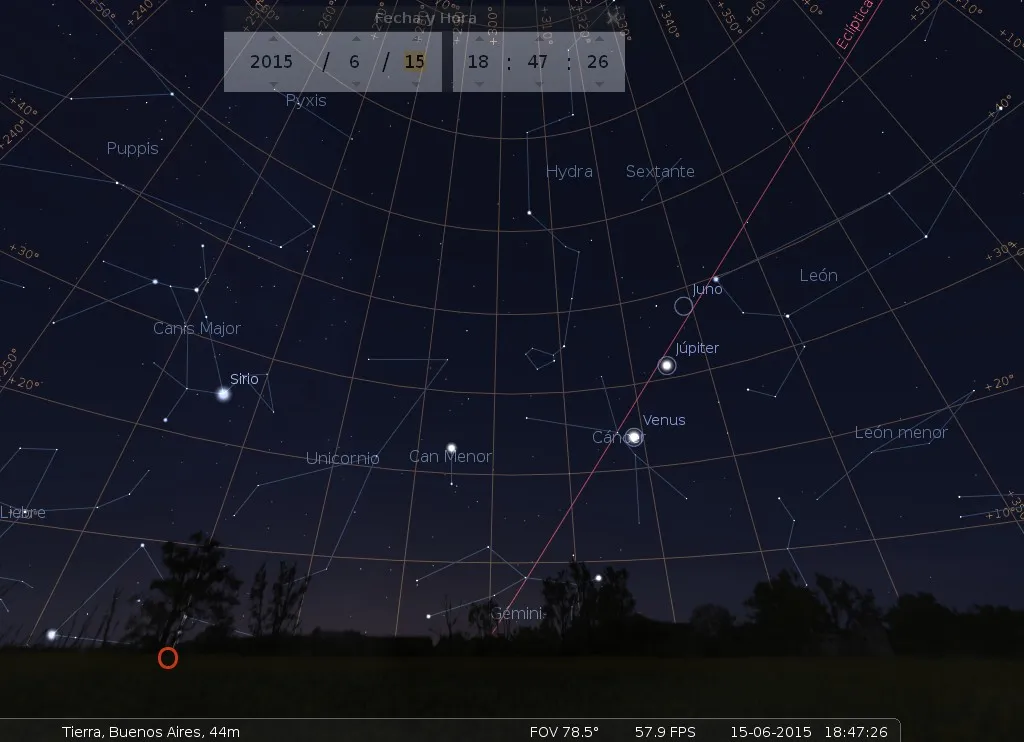
Around June 15, Venus will be in the center of Cancer.
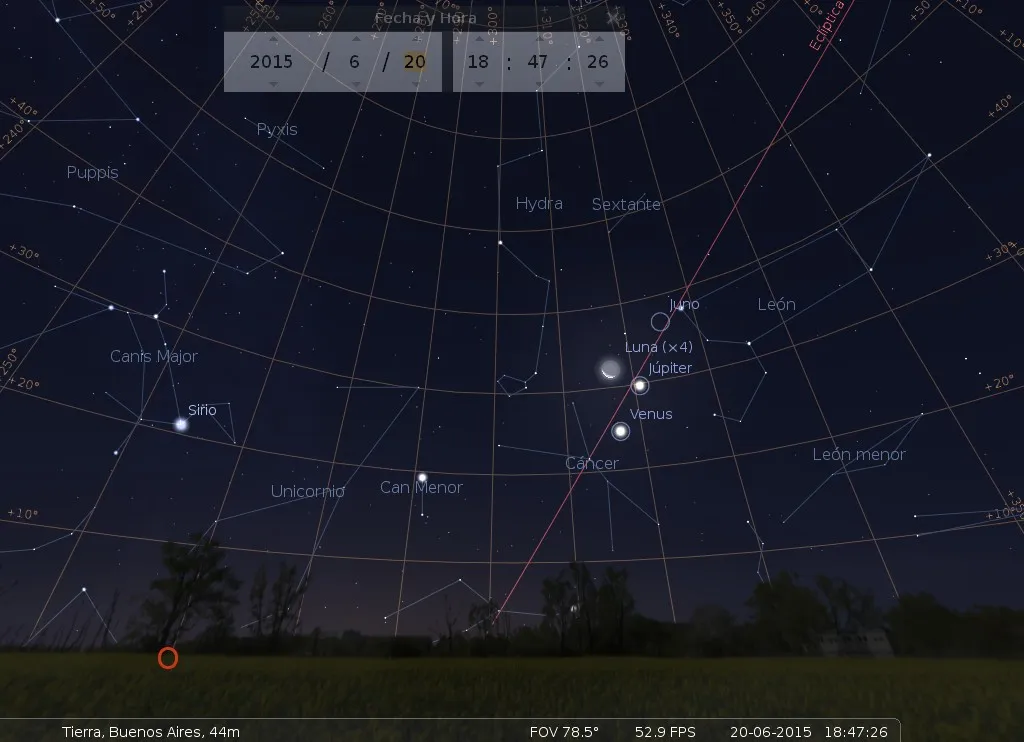
Around June 20 we will see the Moon wandering through the same sector of the sky.
And on July 1, the maximum approach of the evening star and the planet with the red spot will occur, in what in astronomy is called a Conjunction.
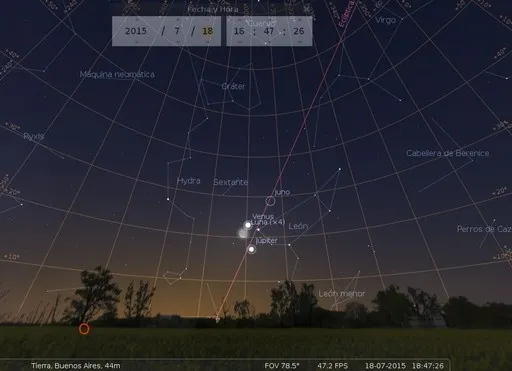
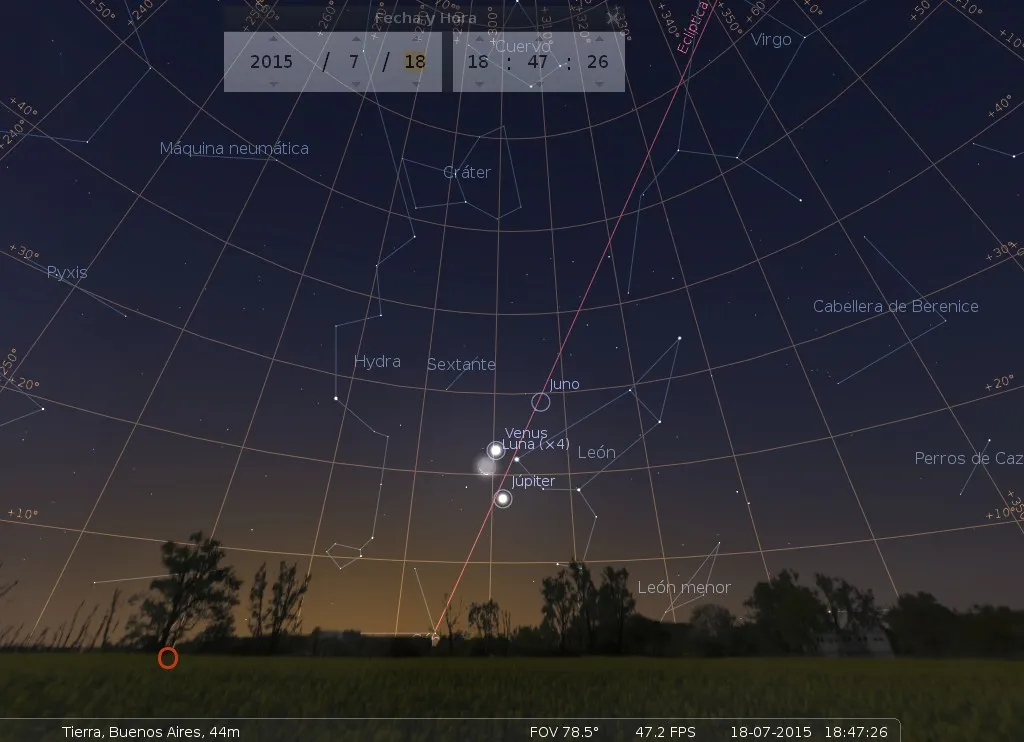
But there is more: if we continue observing night after night, on July 18 we will see the two planets, the moon and Regulus in a beautiful quartet about 20 degrees above the horizon. Let's remember that Regulus is actually a quadruple system 77 light-years from the Solar System.
If we look on the opposite side of our sky, that is, to the East, we will see Saturn balancing in Libra.
From a very dark and clear sky it will be ideal for observing with the naked eye, but also with binoculars, to detect the Galilean satellites.
If we wonder why Venus moves faster than Jupiter, it's simple: being closer to the Sun its orbit is smaller and faster.
How to know in advance that there will be a conjunction between planets?
One possibility is to search the web for sites with ephemerides, like El cielo del Mes. (See Planetary Conjunctions page).
Another possibility is to use planetarium software like Stellarium.
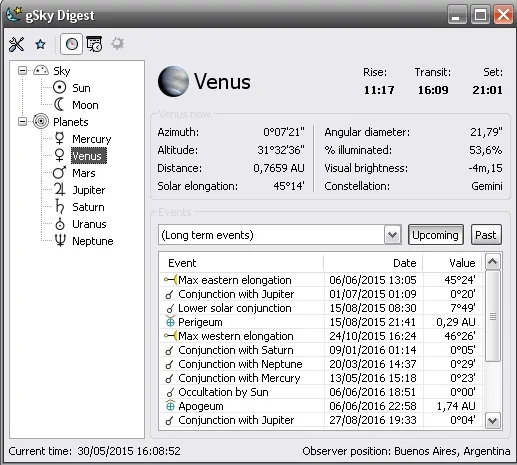
The desktop application GSky Digest is also useful, from which we can select a planet and see its future and past conjunctions.
For example, with such an application we can know that the next conjunction of Venus with Jupiter will be on July 1, and also that the next one will occur on August 27, 2016.
Sources and related links
- Earthsky: Watch the great race of Venus and Jupiter in June 2015
About the images
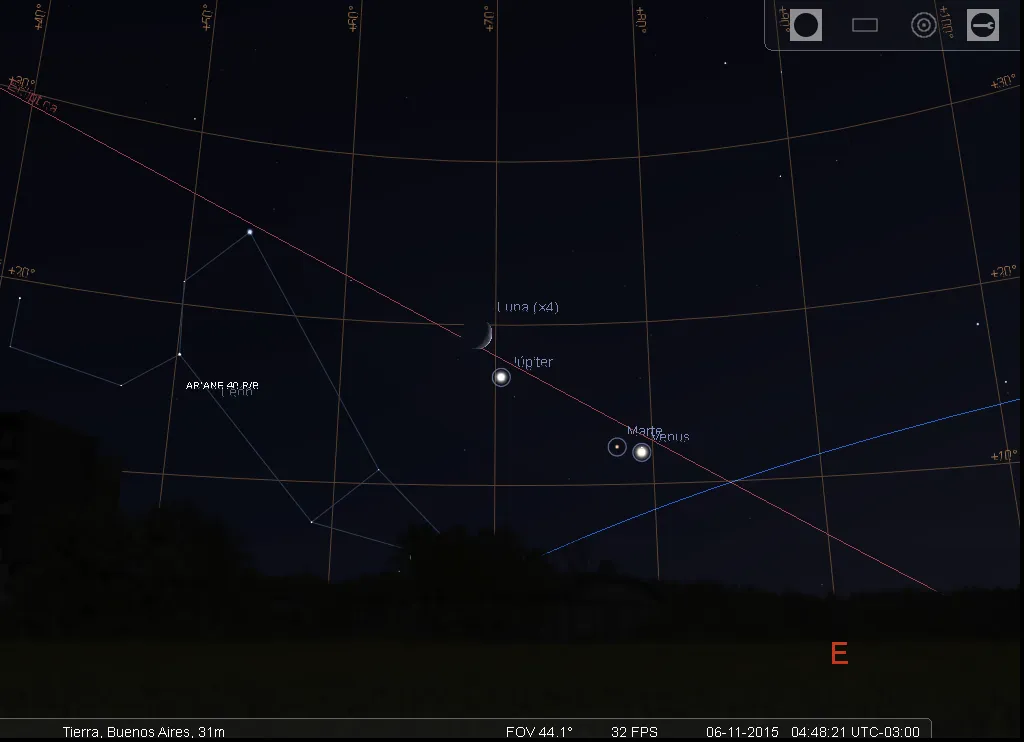
- Screenshots from Stellarium.