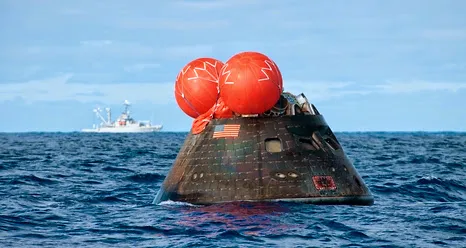
What novelties will NASA bring us in 2016? About forecasts and pre-suppositions.
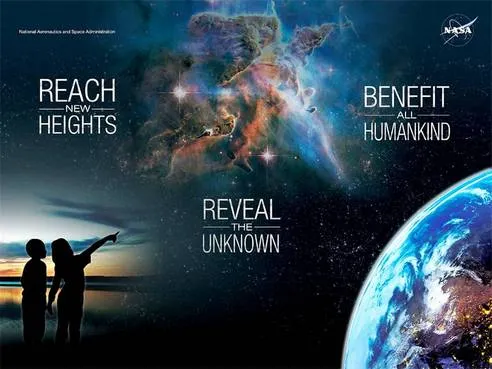
Recently, a person wrote to me by email without indicating name, country, sex, or age (only the username Segundo252) to ask me what my position was on NASA, since they had noticed that on one hand this blog has pointed out several times that I consider it certain that NASA reached the Moon six times, but that I have shown some criticisms regarding space exploration.
And since the question arises from pre-suppositions, it seemed appropriate to me to address two issues: the agency's (economic) budget, the missions planned for the new year, and, based on that, answer the reader's concern.
NASA'S BUDGET
It has recently been noted that NASA achieved a budget larger than expected, the largest in the last decade, according to The Atlantic [1]. UniverseToday has also referred to the increase of USD 750 million compared to what the Obama administration proposed (USD 18.5 billion) for fiscal year 2016 (FY2016) [2].
On NASA's website, information can be obtained about the details of that budget [3].
That astronomical amount of money will be used for a number of projects that allow us to foresee the missions to be carried out in the coming years.
Beyond the postponement of the InSight mission recently announced [4] we know there will be news about the Juno mission (launched in 2011) which will arrive at the Jupiter system in July to scrutinize beneath the dense cloud cover to better understand the gas giant and the origins of the Solar System [5].
In January, Jason 3 would be launched, extending the previous missions (Topex/Poseidon and Jason 1-2) to make precise measurements of the oceans and climate change [6].
DSAC, Deep Space Atomic Clock, a technology demonstration of a small, ultra-precise mercury ion atomic clock that will be launched into orbit to test its potential as a next-generation tool, would also be launched [7].
What will probably make the most media noise will be OSIRIS-REx, the first U.S. mission to bring samples from an asteroid, Bennu, back to Earth. The launch window will open on September 3 and last 39 days [8].
And, although the post is about NASA, it would be good to include in the near future of space exploration the ESA ExoMars program [9].
The European agency will also make itself heard in September when it crashes Rosetta into Churyumov-Gerasimenko [10].
On the NASA Space Science Data Coordinate Archive site, on the subpage about Solar System Exploration, there is a link to upcoming missions where we can see the next planned launches [11].
THE PRE-SUPPOSITIONS ABOUT NASA
The issue the reader consults me about requires a broader context. Let's say that in existing discourses we could consider the following subdivision (although there are hybridizations):
1-Those who are against scientific development (anti-rational) and, therefore, usually have a magical-religious thinking that denies scientific knowledge.
2-Those who are blindly in favor of scientific knowledge and consider that any criticism of science serves the opposition, that is, the previous ones.
3-Those of us who consider that both, those who develop the previous criteria, are "blind" to a part of reality, and end up in a certain dogmatism that can hardly be thought of as critical thinking.
That the first ones exist, despite being in the 21st century, there is no doubt and as an example, one is enough:
In the following YouTube video [https://www.youtube.com/watch?v=cV2gpjUxZpo] we will see how some people are convinced that...the Earth is flat!!! And if we look at the related videos (on YouTube, to our right) they deny the Moon landings, and if we look better, we will see that they consider the only truth to be deposited in a "sacred" book.
That the second ones exist is also undeniable, for example, NASA itself.
My position
Scientific-technological development is indispensable for human beings. It is often said that many of these "advances" are actually useless and an unnecessary expense when there are unmet basic needs. Those who express themselves this way, however, do not question the existence of luxury cruises or that millions of dollars are spent on movies like Transformers or Star Wars (which are undoubtedly useless regarding unmet basic needs). Therefore, such questioning lies in the concept of the State (and not in private ventures).
NASA spends fortunes that come from taxpayers and are granted to private companies that build parts of spacecraft, orbital and ground-based telescopes. Such companies obtain substantial profits, they do not do it out of love for the country. They create jobs, certainly, in exchange for a salary. And the profit of the owners of such companies is "astronomical," while the salaries are low. ESA is the underlying issue.
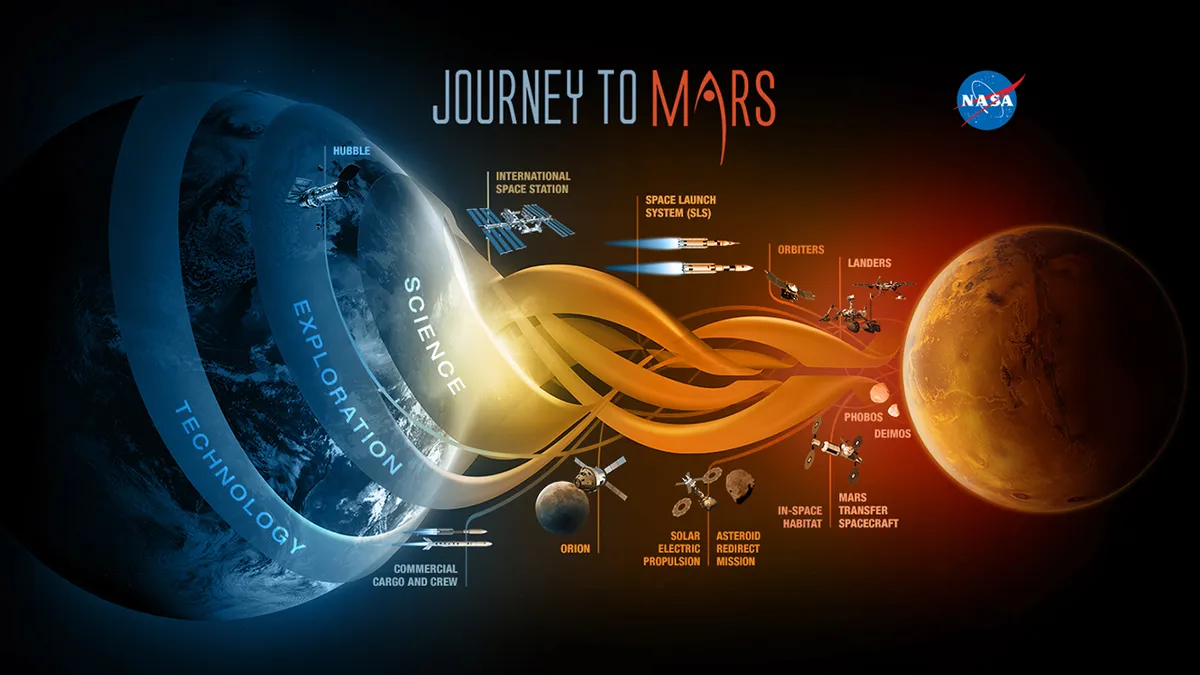
And because of that issue, it can be understood then that behind scientific missions there are political interests (as there were with the Apollo missions and as there are today with missions to Mars), and economic interests. Mars is the next stop for terrestrial commercial exploitation. The extraction of minerals is expected from that world, just as is currently done on the face of the Earth, for the benefit of a few and with the effort of the many.
There are those who will be in favor of such exploitation (natural and human) and those of us who believe something else is possible, but it is irrefutable. Those who deny it or simply keep quiet about it are because they are in favor. However, repeating this every time the topic arises due to a news item also makes no sense, and that is why I take the opportunity to make it clear.
Therefore, a contradiction lies in reality: scientific development benefits us and, at the same time, the form, the way it occurs, does not benefit us. Being blindly in favor or blindly against is looking at reality with one eye. Reality must be understood before taking a subjective position. First understand, then opine.
At the bottom lies the issue of property, which in the case of outer space, has little legislative basis, but it is not only a topic of extraterrestrial interest. Who does Mars belong to? is a question as valid as wondering about Antarctica or a piece of bread.
True scientific thinking is that which takes nothing for granted, but questions the given. Pre-suppositions are not necessarily the true ones and the ones that benefit us the most.
Sources and related links
- [1] NASA's About to Have Its Biggest Budget in a Decade
http://www.theatlantic.com/science/archive/2015/12/nasa-budget-2016-mars-rover-europa-mission-planetary-science/420912/ - [2] NASA RECEIVES SIGNIFICANT BUDGET BOOST FOR FISCAL YEAR 2016
http://www.universetoday.com/123937/nasa-receives-significant-budget-boost-fiscal-year-2016/ - [3] NASA Budget
https://www.nasa.gov/content/reach-for-new-heights-nasa-budget-unveiled-for-fiscal-year-2016 - https://www.nasa.gov/news/budget/index.html
- [4] http://www.nasa.gov/press-release/nasa-suspends-2016-launch-of-insight-mission-to-mars
- [5] http://www.jpl.nasa.gov/missions/juno/
- [6] http://www.jpl.nasa.gov/missions/jason-3/
- [7] http://www.jpl.nasa.gov/missions/deep-space-atomic-clock-dsac/
- [8] http://www.asteroidmission.org/
- [9] http://exploration.esa.int/mars/46048-programme-overview/
- [10] http://nssdc.gsfc.nasa.gov/nmc/spacecraftDisplay.do?id=2004-006A
- [11] http://nssdc.gsfc.nasa.gov/planetary/upcoming.html
About the images
The mission logos and the initial image are credited to NASA.