Reflections on the scientific system, its strengths and weaknesses.
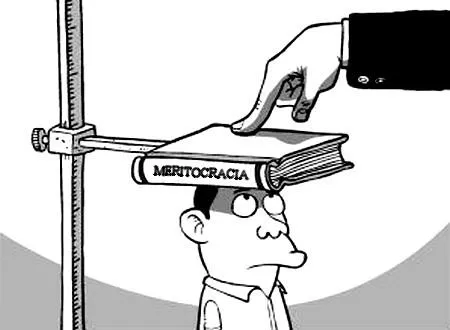
With the conflict over the non-continuity of CONICET researchers -which has had a temporary and fragile resolution- a poorly focused debate was put on the table due to the circumstances.
On one side, voices appeared downplaying the importance of scientific research under the fallacious argument that since certain researchers, apparently, would waste State money by conducting "useless or absurd" inquiries, then -without continuity- they must be fired indiscriminately. The argument is fallacious because, even if it were true that some researchers proceeded in that manner, it cannot be extrapolated to the whole. One cannot go from one thing to the other without a reflective process in between, so the argumentation seems to be a prejudiced "reflex act."
To counter this stance, there are those who decided to say the opposite: that the Argentine scientific system, and specifically CONICET, is "an emblem of meritocracy" [1].
Meritocracy is a form of government based on merits. We must consider what is called "merit" and then evaluate whether the scientific system functions in relation to that definition.
What I will do next is to question whether the scientific system is "meritocratic," without denying that it does have some elements that allow the term to be used partially and without this argument implying endorsing the first kind of discourse mentioned at the beginning. That is, the data and comments that follow do not aim to deny the importance of scientific work nor do they question what millions of researchers do in the world. On the other hand, I will not refer specifically to CONICET, but to international science which includes Argentina.
But before starting I want to return to an axis that I already presented in its time in this blog that does have to do with the aforementioned conflict.
If what was intended to be objected to was "useless work," it is something we can -and must- discuss, although we would have to see what definitions we use for "usefulness." The word is related to need (and there are different kinds of needs). There is no doubt that both individuals and societies need to eat to live and to eat wealth must be produced and that producing is working. Therefore, if there is something indisputable, it is that work is necessary. What can be debated is what work and under what circumstances can be considered socially useful. But if that were the issue, then the solution is not to eliminate jobs, but rather, if anything, to transform them. That is, if some perform "useless" work, but at the same time need to work, the solution cannot be to cut employment, but to transform the task. Hence the fallacy of the initial argument and therefore, since that was the core of the matter, trying to contrast those arguments with the notion of meritocracy seems "lunatic."
However, do we live in a meritocratic society? Is science really meritocratic? Can merit be evaluated in an unequal society?
MERITOCRATIC SOCIETY AND HYPOCRISY
Some may think that democracy is "in itself" meritocratic insofar as the powers of the State fall on people who were voted for by the majority and that that is their merit. If that were the case, given that the majority in the U.S. voted for the candidate who lost, one could deny that at least in that country there is meritocracy (although the exact opposite is often said).
The prejudices that generate segregation, whether of gender, race or other kinds, imply evaluating a person in their work not by their merits (skills, achievements), but by skin color or sex, under the false assumption that such criteria imply that all people who possess them are "inferior" to the rest. The U.S. is an example of many things, among them, discrimination (as pointed out by the recently released film Hidden Figures by Theodore Melfi). Discrimination is contrary to supposed meritocracy, but they coexist because meritocracy is a fairy tale. And it is because it is difficult to analyze merits without equality. Equalities of gender, ethnicity, ideology, etc., are necessary, but insufficient. The deepest inequality is of class. Let's say, in passing, that astrology is based on false ideas to separate people according to supposed personality. But those anti-scientific prejudices are also part of science.
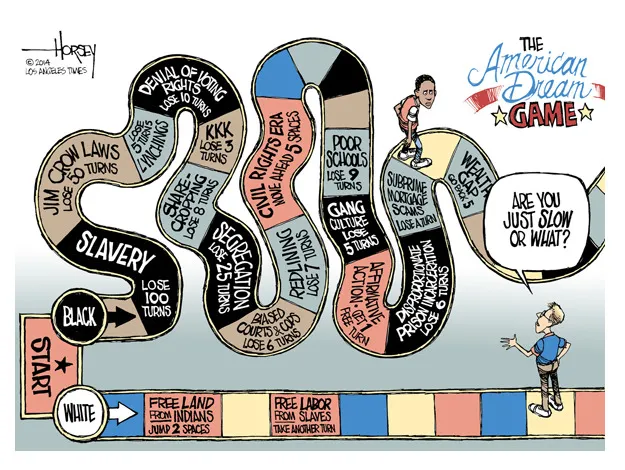
Beyond the electoral system, officials of National States are chosen by popular vote only in part, since many are chosen by hand by the one who actually won an election, not based on their "merits," but on other criteria, among them "cronyism" or ideological alignment.
All over the world, workers make great merits (for several hours a day) to receive miserable wages in return. While politicians, businessmen and certain workers earn much more than they produce. Messi and the Rolling Stones generate delight in their matches and concerts, but their fortunes seem to say they discovered the cure for all forms of cancer, not that they put on shows for necessary recreation.
In private companies, much the same happens: bootlicking is more common than supposed merit evaluation. As if that weren't enough, a prevailing criterion is that of "productivity" which only works from top to bottom.
So the concept of meritocracy in National States and in public or private companies can be questioned. What happens in science?
MERITOCRATIC SCIENCE?
Science is not exempt from social contradictions, unless we believe that scientists form a special class of people, beyond good and evil.
It is often said that science is not democratic. Some see in democracy an opposite to meritocracy [2]. It is said that science is not democratic because we cannot determine how reality works by holding a vote. If we consulted the population about the shape of the Earth, perhaps a majority would indicate it is flat, although it is not. That is why science is based on evidence (which does not exclude discussions about how to interpret objective data).
It is also repeated that science is meritocratic because researchers supposedly go through a rigorous mechanism (in the hands of the scientists themselves with some State regulations, that is, with political interference) that ensures that whoever obtains a position in public science organizations is properly qualified and has produced quality science (that is, has the corresponding merits). Is that so?
Kevin Carey published a note (in English) in the New York Times about fraudulent scientific publications [3]. Part of the article was translated for the Spanish version published by the newspaper Clarín [4]. I repeat that the translation is of a part of the original.
I extract some paragraphs from the translated article:
(...) OMICS International leads the growing business of academic publication fraud. It has created a score of 'publications' that mimic the look and style of traditional academic publications. OMICS is also in the business of conference fraud (...)
Both schemes exploit an aspect of modern higher education. Academics need to publish papers to advance professionally, get better jobs, or secure a permanent position.
In October, a university professor from New Zealand sent an article to the 'International Conference on Atomic and Nuclear Physics' sponsored by OMICS, to be held in November at the Hilton Atlanta Airport in Georgia.
It was written using the predictive keyboard on his iPhone, which produced an abstract that begins like this: 'Atomic physics and I will not have the same problem with a separate section during a very long long road. Nuclear weapons will not have to go out the same day after a long moment of the year added the two sides will see the two leaders take the same path to bring to light their long roads of the same since they will have been a good place for a good time at home the united front and she is a great place for a good time'.
The paper was accepted in less than three hours.
OMICS makes money based on volume. Its website conferenceseries.com lists hundreds of 'academic meetings', many in vacation destinations like Las Vegas.
The example given about the spurious article recalls the 1996 Sokal Affair [5], which means it's not something that has just been discovered. This leads us to the issue of scientific publications, as well as science institutions.
SCIENTIFIC PUBLICATIONS AND INSTITUTIONS AND MERITOCRACY
Richard Dawkins wrote an article in which he asks: what is the government of reason? Democracy or meritocracy? After pointing out the strong aspects of merit in science, he says: 'The biggest problem with meritocracy is that it takes power away from the citizenry and gives it to individuals with power, opening the door to another form of abuse of power' [6].
In a 2012 article in BMJ Open titled 'Science without meritocracy' [7], it is indicated that from a survey of more than 1200 medical professionals in Europe it is concluded that for almost 70% discrimination is part of medical sciences, which would indicate that meritocracy is not such. That is to say, non-relevant data (gender, geographic area) are taken into account when making salary and hierarchy decisions among researchers.
On the website of the Independent Balkan News Agency, Dr. Agim Vinca from Albania was interviewed about the lack of meritocracy in science, specifically about the lack of transparency in granting academic titles to those who do not truly deserve them [8].
On Quora there is a debate about whether it is necessary to rethink the scientific publication process to make it more meritocratic [9].
The few responses in the debate are in English and contain some terms that the general public may not know and which I will try to explain simply:
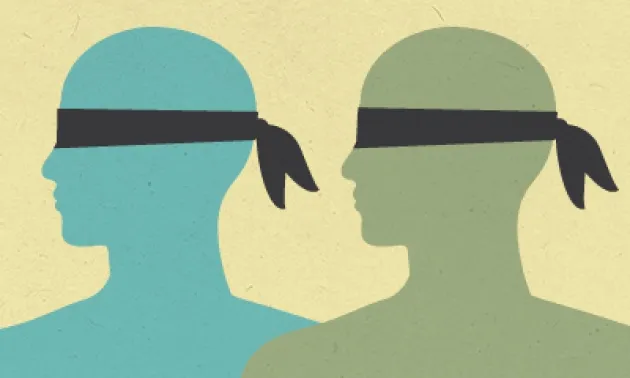
Some point out the need for 'double-blind review': journals (i.e., specialized scientific journals) usually have a process of reviewing articles in the hands of other scientists in the same specific topic. When the review is 'single-blind' it means that the reviewer knows the identity of the authors of the submitted article, but not the other way around, i.e., the reviewed does not know the identity of the reviewer. The 'double-blind' modality would imply that both are unaware of the other's identity.
This is important for two reasons:
1-single-blind review does not prevent 'cronyism' or, to put it more broadly, subjectivity. Keep in mind that in certain small circles researchers know each other and may have greater or lesser affinity for reasons unrelated to the research at hand, personal issues, which can lead to a reviewer being a 'friend or enemy' of the reviewed.
2-Because this does not only happen with journals, but also in scientific institutions (like CONICET).
Another element pointed out as important for there to be greater 'meritocracy' in publications is open access and the possibility of lower or no payments. Let's explain then that to finance a publication there is a double path: scientists who want to publish are charged, and readers of the published articles are charged. For researchers with large grants, the payment for review and publication may not be a problem. For those who do not have such grants, it is. So publishing or not can be the result of an economic issue unrelated to merit. In some cases, National States make payments to some publishers, thus allowing researchers from that country to publish in those journals without that payment coming out of their pockets.
It is also mentioned that reviewer reports should be public, for greater transparency and less 'capriciousness'.
Another element that deserves attention is the correct, specific, task of the authors. A paper can be signed by several authors without knowing what each one did, to what extent each one participated (I mean a qualitative measure).
The last comment in that debate (as of the publication date of this post) points to an article in Nature about 'making the review process scientific' [10]. At the end of the article the author says: 'There are almost no barriers to eventual publication. There does not seem to be a study too fragmented, no hypothesis sufficiently trivial, no citation too biased or selfish, no design too deformed, failed methodology, presentation of data imprecise, obscure or contradictory, there does not seem to be a circular argument or unjustified conclusions or grammar and syntax too offensive for a paper to end up being published'.
IN SEARCH OF SOLUTIONS: A MOONSHOT?
The previous phrase is similar to saying that anything gets published. Worse: those who did conduct research (i.e., who did not use the smartphone's predictive text and did not plagiarize) do have barriers to publishing with long review times and financial outlays.
Add to this the debates about plagiarism and ghost authors, the non-transparent processes for granting fellowships, and cases of fraud, to reach a general conclusion:
That science is meritocratic can be called into question with multiple concrete data. If this is a problem, then what is the solution?
A rare scientific answer might be: take a picture of the moon!
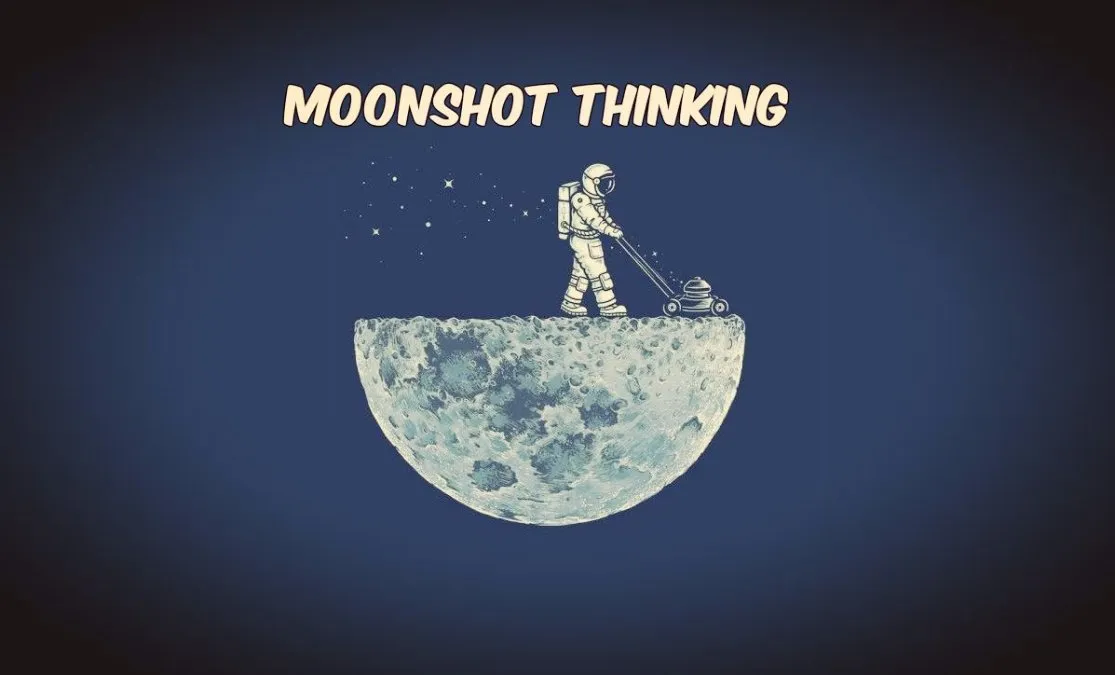
The concept of "moonshot" (literally "photo of the moon") has been used for a long time: this is what ambitious scientific initiatives, usually medium-term, are called. The term is probably used in reference to the space program to reach the Moon as a specific goal requiring novel solutions, although other words are also applied to point out similar things [11].
However, this "moonshot" must be undertaken by the scientists themselves for the benefit of workers as a whole (scientists or not). Who benefits from publishing "fake" papers? If any researcher believes it benefits them personally, they should actually know that it affects the entire body of scientists and the general public. Why do these practices occur? It's not just about dealing with the symptoms, but first it is necessary to understand the origin, the causes, of social contradictions.
The issue is often summarized in the famous saying "Publish or perish" which justifies the unjustifiable. It is consistent with "You have to do what you have to do," that is, to get on the production line mechanically, without thinking critically. Is science anything else? No, science has its contradictions. Purity exists only in our thinking.
Scientific work (like all work) should be thought of as socially necessary. But it is not produced because it is useful for society; rather, wealth is created only if it is a business, in relation to supply and demand. While workers (in science and others) compete against each other (even stepping on each other's heads), the ruling class (political and economic) sunbathes on a beach by the sea. That's what meritocracy is about: the enjoyment of some over the effort of others. To change reality it is necessary to understand it scientifically.
The lack of criticism of the sciences by the scientific community itself (which is reflected in considering the unequal as "meritocratic") is a symptom that some have their heads in the moon.
Sources and related links
- [1] Revista Veintitrés: Las ideas no se matan
http://www.veintitres.com.ar/article/details/127342/las-ideas-no-se-matan- - [2] Forbes: Democracy vs Meritocracy
http://www.forbes.com/sites/startswithabang/2016/11/10/democracy-vs-meritocracy-how-science-doesnt-care-about-your-vote/ - [3] NYT: A Peek Inside the Strange World of Fake Academia
https://www.nytimes.com/2016/12/29/upshot/fake-academe-looking-much-like-the-real-thing.html - [4] El extraño mundo de las publicaciones académicas fraudulentas
https://t.co/BeMKNXSSER - [5] Escándalo Sokal
https://es.wikipedia.org/wiki/Esc%C3%A1ndalo_Sokal - [6] Richard Dawkins: Democracy or Meritocracy
https://richarddawkins.net/2012/10/democracy-or-meritocracy-which-is-the-government-of-reason/ - [7] Tacconelli, Evelina et al. “Science without Meritocracy. Discrimination among European Specialists in Infectious Diseases and Clinical Microbiology: A Questionnaire Survey.” BMJ Open 2.6 (2012): e001993. PMC. Web. 1 Feb. 2017.
DOI: 10.1136/bmjopen-2012-001993. - [8] Lack of meritocracy in issuing scientific titles, by Naser Pajaziti
http://www.balkaneu.com/lack-meritocracy-issuing-scientific-titles/
[9] How should the scientific publication process be rethought to be more meritocratic?
[10] Let’s make peer review scientific
Drummond Rennie
Nature 535, 31–33 (07 July 2016) DOI :10.1038/535031a
[11] Moonshot http://whatis.techtarget.com/definition/moonshot
Nature: Big science has a buzzword problem
Moonshots, road maps, frameworks and more are proliferating, but few can agree on what these names even mean.
Megan Scudellari
Nature 541, 450–453 (26 January 2017) DOI :10.1038/541450a
The meritocracy myth
Michael Hyter and Andres Tapia share insights on the gap between idea and reality with Talent Management Magazine. http://www.talentmgt-digital.com/read-tm/may_2015#pg45
About the images
Initial image: Version of the illustration in How just our meritocracy?, by Lydia Lim. Credit: ST The Straits Times
The American Dream Game cartoon, January 21, 2014. (David Horsey/LA Times).
https://donaldearlcollins.com/2015/10/25/glory-days/
Moonshot http://www.gdtm.org/blog/16354?ckattempt=1
Journals weigh up double-blind peer review
Nature DOI: 10.1038/nature.2014.15564