"Artificial intelligence" based on physiognomy is pure obscurantist garbage with the appearance of science. It is not a tool, it is a weapon against the population.
Two preliminary clarifications:
1-Certainly this blog is a space to analyze social discourses on astronomy and related sciences, which includes news of discoveries and debates about theories. It is, therefore, a thematic blog. But I think, sometimes, that it is necessary to step out of that self-imposed restriction when it is warranted, for example, when something that is pseudoscientific is attempted to be passed off as science. This is the case.
2-On many occasions I have pointed out that astrology is a pseudoscience made by people who are not scientists. But it is even worse when the same is done by scientists. Which demonstrates in this post that I do not make an unconditional defense of science. In the name of science, atrocities have been committed, like the ones I will point out below.
In an article in the NYTimes [1] what Michal Kosinski and Yilun Wang have recently published is explained and questioned. Kosinski is a professor at Stanford in the graduate school of business and has a doctorate in psychology from Cambridge. On his own website he presents himself as a "data scientist".
The "research" done by this duo of satraps has been published in newspapers such as The Economist and The Guardian and a version in Spanish can be read in ABC [2].
But I want the reader to think about the fundamental, underlying issue in this type of study and not to focus on the "superficial". I will explain: these two idiots say they have trained a neural network to predict, through photo analysis, people's sexual orientation. It has been called a "gaydar", that is, a "gay radar". That it is used in this case for that is superficial, not because that topic is unimportant, but because it is only one of the multiple ways to use the same thing to achieve NON-REAL results. And, therefore, it is the underlying issue that should concern us. I point this out because if one is not gay, the topic might not matter. But it happens that the same thing can be used to detect terrorists, Boca Juniors fans, introverts, voters of such a party, or any other stupid idea of persecuting people, whether minorities or majorities.
Let's be clear: If this were done well and the results were adequate to reality, there would still be an enormous problem with people's privacy: anyone who has studied systems and operates a database knows that there is "sensitive" data that should not be recorded and published, such as the party a person votes for. People have the right to state their preferences, just as we have the right not to do so.
And this is so not only because we value our privacy, because we understand that despite living in a globalized and hyper-connected world, we need our own, intimate space. But also, any data that can be used to discriminate against the population is considered "sensitive".
So if these algorithms yielded real results, their application would still be questionable. But it is even worse if, in addition, the results are incorrect.
If you read the drafts (preprints) of the work of this mechanical duo, you will quickly tell me that -according to them- the results obtained are very close to reality, in one case, 91% accuracy.
Even if that were true, what does 91% accuracy mean? What does the remaining 9% mean in particular? It implies that there will be false positives: I translate a paragraph from the NYTIMES below: "Let's say 5% of the population is gay, that is 50 out of 1000 people. A facial scan with 91% accuracy would falsely identify 9% of heterosexuals as gay; in the example that would be 85 people. The software would also mistake 9% of gay people as heterosexuals. The result: out of 130 people that the facial scan identifies as gay, 85 would be heterosexual".
Before continuing, let's recap:
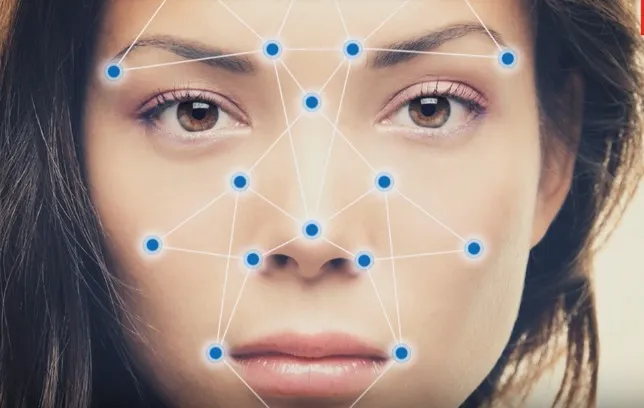
Facial scans and algorithms are used to detect people's behavior through photos of the face. In this particular case, sexual behavior, but there have already been other "use cases" of detecting terrorists, not by their background, but by "facial appearance". Anyone who searches the web for "physiognomy" will see that it is a pseudoscience, of a genetic nature, which assumes that we are the way we are due exclusively to genetic, birth-related issues.
There are no murderers by birth, nor gays, nor Boca Juniors fans, nor voters of this or that, nor introverts. Yes, it is true that genes exist and that they have influence, for example, on eye or hair color. But if a person were a River Plate fan "by birth" and later changed and became an Atlanta fan, would the person's face change? Clearly, no.
Therefore, the arguments against these algorithmic applications are their anti-scientific basis, whether they are used for one thing or another.
The second argument is that, even if the results were realistic, there would be a sufficient margin of error to worry us: if you were misidentified and because of that you were denied a job or put in prison, we would have a bias not merely theoretical, but practical, concrete, against the population in general. That is why, if these algorithms were really good, some should be created to detect bullshitters, whether in the scientific sphere or in the political sphere. And I point out the latter because these "tools" are used as "weapons" by the political class.
There are those who will be in favor of using these algorithms to combat local crime or terrorism. Careful! Who says that YOU don't have the "face of"?
The third argument is a bit more difficult to understand: what do these algorithms really do, what do they detect?
In the NYTIMES article, the following example is given: algorithms were used to detect, by photographs, Russian tanks from American tanks. But then they realized that the US tanks were photographed during the day, while the Russian ones on cloudy days. Therefore, what differentiated one from the other (in the photos) was a difference in lighting, and it was THAT which the algorithms detected, not the origin, but a change in illumination.
In the case of the "gaydar" it could be the quality of the images (under the assumption that gays tend to use higher quality images) or, more likely, the gestures. In the case of full-body photos it could be the pose or the clothing.
Often when we see someone we privately decide if that person "seems" gay, for example, by the clothes they wear, the way they speak, or the way they walk and gesture. In reality, we would be detecting an affectation, not necessarily a sexual behavior.
Does a person wearing gym clothes and a cap necessarily imply they are a Boca fan? NO, why should we establish that relationship when reality shows otherwise? Do all Boca fans have a face like Di Zeo's? THAT is a prejudice.
The so-called "artificial intelligence" does not come out of nowhere; it is programming made with the prejudices of its programmers (or intellectual authors). [3]
Artificial intelligence, as we reported here on another occasion, is being used for the analysis of astronomical images, for example to evaluate gravitational lenses or characterize galaxies. But if the result of that application were incorrect, that is, a group of galaxies is classified as spirals when they are ellipticals, the result would be questionable, but ultimately there is no SOCIAL consequence, galaxies will not be offended, stars have nothing to do with people, they are inert matter, without cells, without life, without social life.
In a video, Kosinski indicates that it is very easy for people to recognize the gender of any other person in milliseconds just by seeing their face, with which he tries to validate by generalization the same action for anything else. He then stipulates that there must be "something" in a person's face that indicates their political preference. When a person changes their political preference, does their face change? No, why should that happen? The political sphere is full of examples, but also each of us has voted very differently throughout our lives.
This garbage must be repudiated by the community in general and by the scientific sphere in particular. Do you remember what Bertolt Brecht said? [4].
Discrimination is anti-scientific since it implies reaching false conclusions about reality and acting accordingly. This, however, can be done by scientists, can be endorsed by their peers (explicitly or implicitly) and is finally used by political leaders against citizens. We are one step away from living in "Brave New World".
Sources and related links
[1] Why Stanford Researchers Tried to Create a ‘Gaydar’ Machine, by HEATHER MURPHY (10-9-2017)
https://www.nytimes.com/2017/10/09/science/stanford-sexual-orientation-study.html
[2] Are you gay or straight? A machine can guess it from a photo (25-9-2017)
The economist: Advances in AI are used to spot signs of sexuality https://www.economist.com/news/science-and-technology/21728614-machines-read-faces-are-coming-advances-ai-are-used-spot-signs
The Guardian: New AI can guess whether you're gay or straight from a photograph https://www.theguardian.com/technology/2017/sep/07/new-artificial-intelligence-can-tell-whether-youre-gay-or-straight-from-a-photograph
Deep neural networks are more accurate than humans at detecting sexual orientation from facial images
Michal Kosinski Yilun Wang https://osf.io/zn79k/
[3] El País: If she's in the kitchen, she's a woman: how algorithms reinforce prejudices https://elpais.com/elpais/2017/09/19/ciencia/1505818015_847097.html
[4] Bertolt Brecht: "And then they came for me...", by Martin Niemöller, Protestant pastor http://www.homohominisacrares.net/php/articulos.php?num_revista=16&cod_articulo=137
About the images
Video Screenshot: Keynote "The End of Privacy", Dr. Michal Kosinski https://www.youtube.com/watch?v=NesTWiKfpD0