The role of turbulence in star formation.
Which comes first: the order that disrupts chaos or the chaos that disrupts order?
Nature is dialectical: stars and galaxies are forged in chaotic turbulence and the violent encounter between gravity and matter. And they end their lives also violently, becoming disordered as they expel the outer layers of their atmospheres into the interstellar medium (ISM), which will be the breeding ground for later, once again, gravity to structure the gaseous homogeneity until igniting it.
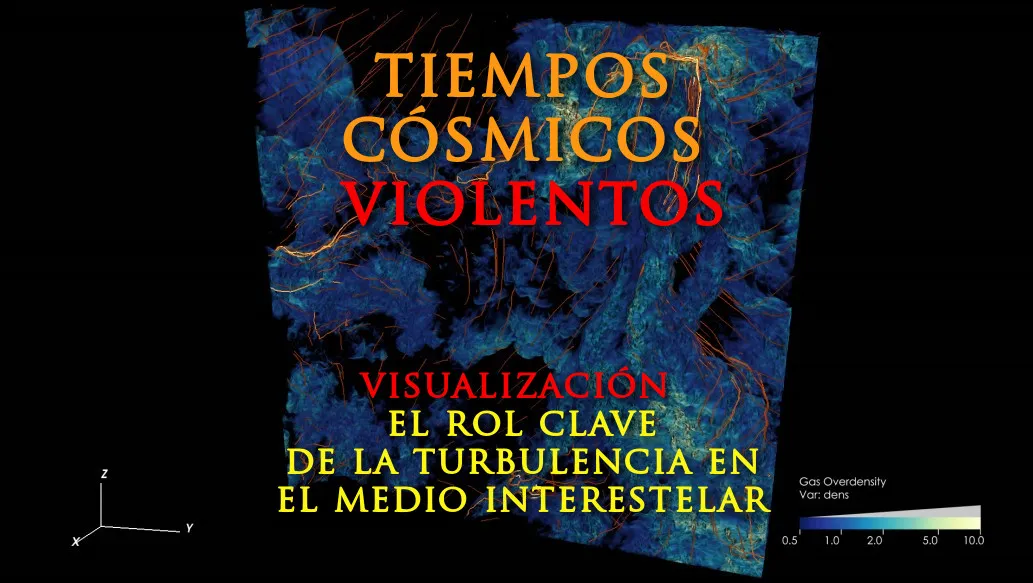
Recently, a team of researchers led by Professor Christoph Federrath of the Australian National University used the computing power at the Leibniz Supercomputing Centre (LRZ) in Germany to run the largest magneto-hydrodynamic simulation of astrophysical turbulence.
The team partnered with visualization experts from LRZ and Intel to transform their massive calculation into an incredible visualization. To achieve this, they used Intel's OSPRay rendering engine. The result, besides being useful for understanding the ISM, earned a spot as a finalist in this year's Scientific Visualization & Data Analytics Showcase (SC19).
Turbulent times
To the naked eye, the space between stellar systems like our solar system seems like a huge void without major features, but that space is filled with what astronomers call the interstellar medium (ISM). This medium is a gaseous environment that plays a key role in transporting elements in the universe, thus shaping stars and galaxies.
The matter and energy of the ISM were ejected by violent supernovae and stellar winds that generate chaotic, turbulent motions. Turbulence is one of the greatest problems to solve in physics and understanding those movements on such a scale requires HPC, high-performance computing.
"The general challenge with astrophysical simulations is that they are multiscale problems", said Dr. Salvatore Cielo, a researcher at LRZ in charge of the visualization. "To understand star formation, we need to model objects as large as galaxies, but with a resolution several orders of magnitude higher to properly account for the physics of the building blocks of stars, such as turbulence", he explains.
And he adds: "Turbulence is especially demanding to simulate, as it tends not to be localized, but fills the volume; there is no symmetry or geometric construction".
The simulation recently produced by Federrath achieved a resolution of more than 10,000 cells or grids per spatial dimension, for a total of 100483 elements, the largest simulation to date. This was necessary to capture the transition from the supersonic to subsonic scale of turbulence. By definition, the sonic scale is when Mach number 1 is reached.
Besides being the first to achieve this scale, the simulation accurately reproduces the complexity of the internal structure of a star-forming region.
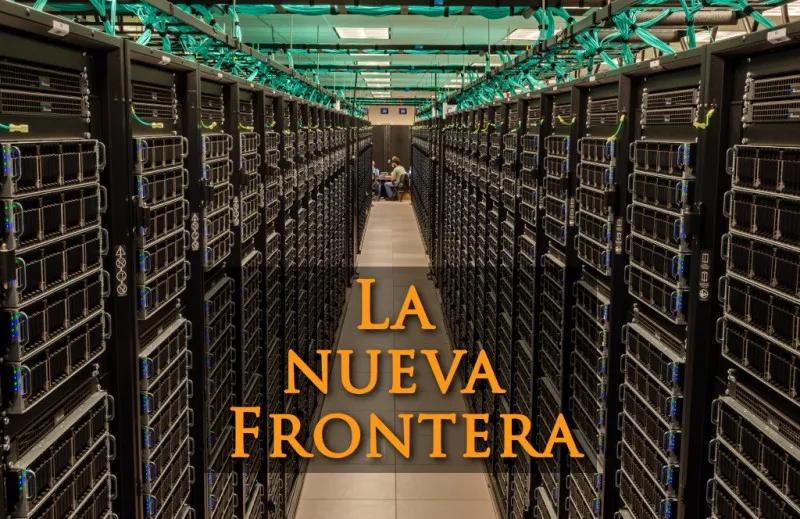
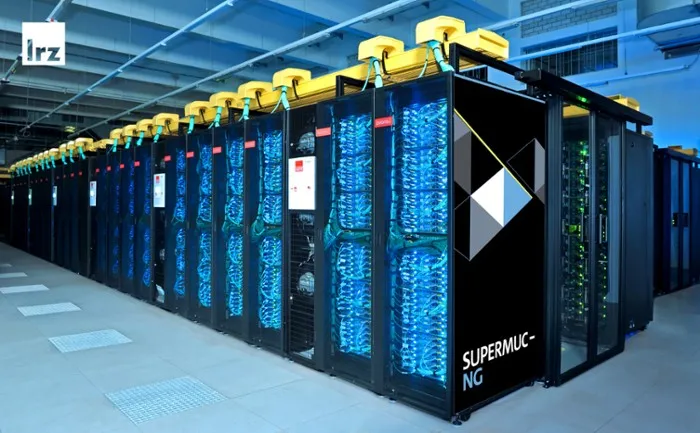
Each frame required more than 23 terabytes of disk space. For this purpose, the 6336 nodes of the SuperMUC-NG, the LRZ supercomputer, were used.
https://www.youtube.com/watch?v=EPe1Ho5qRuM
Conclusion
Turbulence, seemingly chaotic and asymmetric, plays a key role, both in the formation and destruction (both violent) of stars. Better understanding these processes that go from homogeneous and diffuse molecular clouds to ordered structures like stars and from these again the expulsion of enriched matter into the interstellar medium in an incessant loop, is an indispensable topic of modern astrophysical research.
Hydrodynamic simulations and their visualizations are important tools that require intensive use of computing, as well as the development of advanced algorithms and mathematics.
If we cannot tame wild cosmic nature, at least we can try to understand it.
There is an advantage: no lenses are needed to avoid pellets.
Sources and related links
- How does a star form?
https://sciencenode.org/feature/How%20does%20a%20star%20form.php - SuperMUC-NG
https://doku.lrz.de/display/PUBLIC/SuperMUC-NG - Scientific Visualization & Data Analytics Showcase
https://sc19.supercomputing.org/program/posters/scientific-visualization-data-analytics-showcase/ - Visualizing the world's largest turbulence simulation
Salvatore Cielo, Luigi Iapichino, Johannes Günther, Christoph Federrath, Elisabeth Mayer, Markus Wiedemann
arXiv:1910.07850 [physics.comp-ph]
https://arxiv.org/abs/1910.07850 - Associate Professor Christoph Federrath
https://www.mso.anu.edu.au/~chfeder/ - Supernovae feedback propagation: the role of turbulence
Loke Ohlin, Florent Renaud, Oscar Agertz
arXiv:1902.00028 [astro-ph.GA]
https://arxiv.org/abs/1902.00028
About the images
Screenshots of the visualization: Federrath et al., 2019.