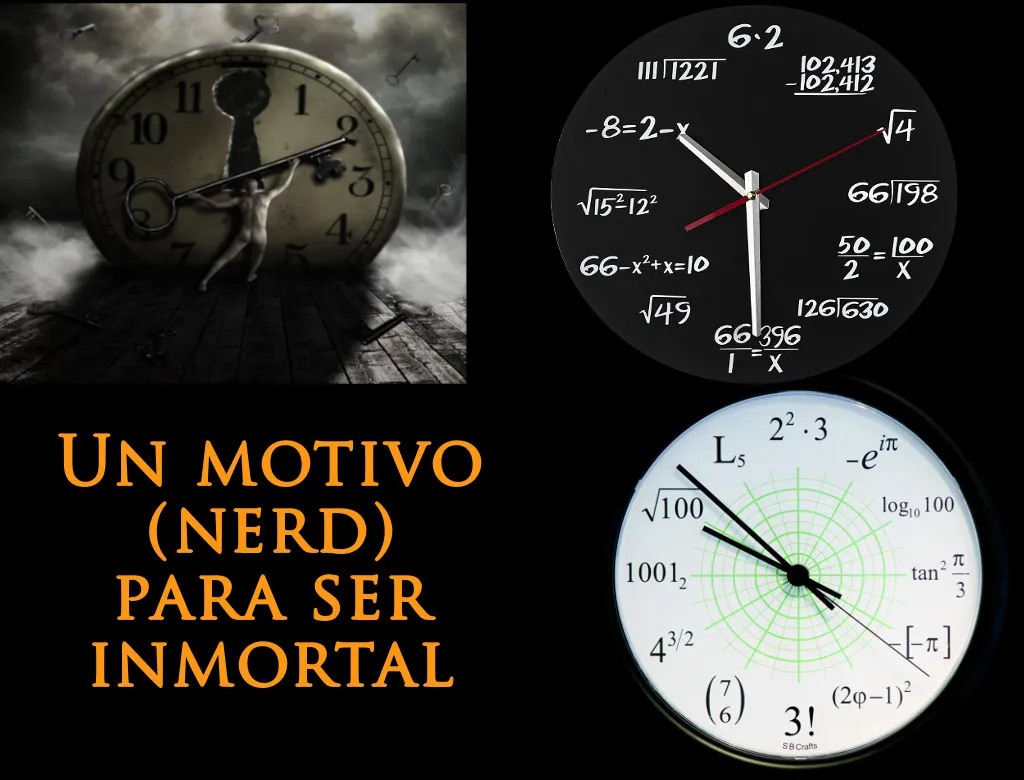
A reflection on supremacies and arrogances and freedoms.
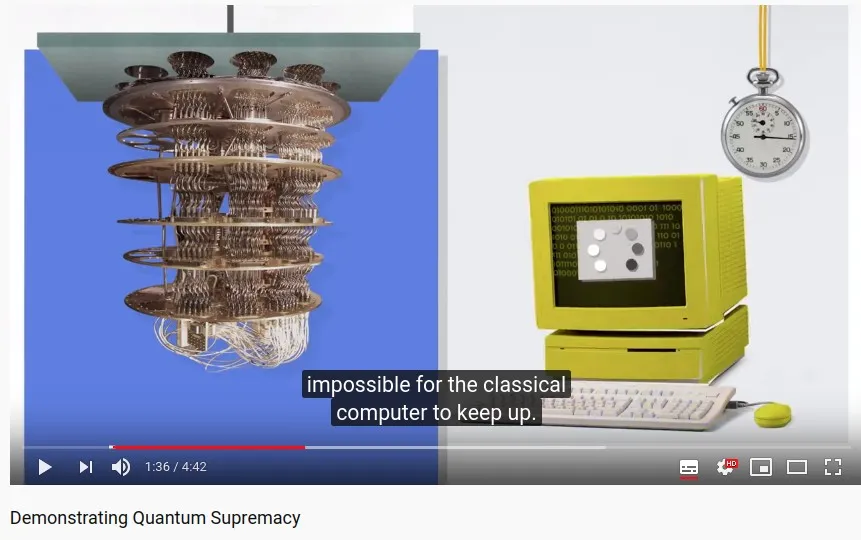
Google announced "quantum supremacy", the point of no return at which a quantum computer manages to surpass a "normal" computer. Let the reader note the word "normal" in their memory. Let the reading public note the similarity between this idea and those of Thomas Kuhn about "normal science" and the anomalies that will lead to a new "supremacy" and a paradigm shift.
In the same Google video on Youtube where they make the announcement, a person is seen opening a notebook that has a Google Chrome sticker on the lid. And it is interesting how the same comment is repeated (among the more than 16 thousand that are on that video at the time of writing this):
While the tech giant announces computational supremacy, on a common computer, when opening a new browser tab, almost all the RAM is consumed...
Scientific arrogance
Often there is a negative reaction to science due to certain types of arrogance that come into play in collective or individual discourses. Let's give examples:
Physicists believe that what really makes the world are particle-waves and everything else is superficial.
Mathematicians think the world is mathematical: algebraic and geometric (and that it can be graphed as a curve, that is, a wave).
Sociologists think that what is truly important are the social relations between individuals.
From an individual point of view, the general becomes particular and thus, a physicist can have a dismissive attitude towards an athlete or a philosopher, under the consideration that what he does is important and what others do is trivial.
However... Is this an attitude unique to the sciences?
Philosophers think that reflective abstraction is transcendent and any other particular and concrete thing is an accident.
Athletes consider their activity a way of life and that the only important thing is to expand their list of achievements and break records.
Artists believe that the only transcendent thing is art.
In many cases, sport is narrated as a warlike contest in which the winners are "heroes". And celebrities from the world of entertainment are considered "stars".
Does it make sense to expect scientists to be humble when everyone else is not?
The rejection of scientific humility
A contrario sensu, a rejection of scientific humility is also perceived. I will give an example:
We go to a talk on "Normal Numbers" (we return to the "normal"). The speaker is Joseph Vandehey, a postdoctoral fellow at the University of Georgia.
He tells us that the word "normal" is used in many other cases and with similar meanings, as in "normal distribution" and the famous bell curve.
A normal number is defined as a real number whose infinite digits, in any numerical base, have the same frequency for any sequence of digits.
To make it clear, he gives examples of what would be a normal number and what would not:
If a real number has the sequence "14159" of five digits among its digits, it should also have, with the same frequency, every possible combination of those five digits and any other sequence of two, three, four, etc., digits in all their combinations, all with the same frequency.
Apparently, the number PI would be a "normal" number. It has been said that it is highly probable that among the numbers of PI we will find any numerical sequence, for example, our telephone number. In fact, there is a web page that allows you to know if that is the case: https://www.angio.net/pi/piquery.html.
If PI is normal, among its digits the sequence 00 would have to appear as many times as the sequences 01, 02, 10, 20, 09, 90, etc. And similarly with sequences of a greater number of digits 000, 111, 222, 001, 020, etc.
And then, Joseph, at 17 minutes into the lecture, says:
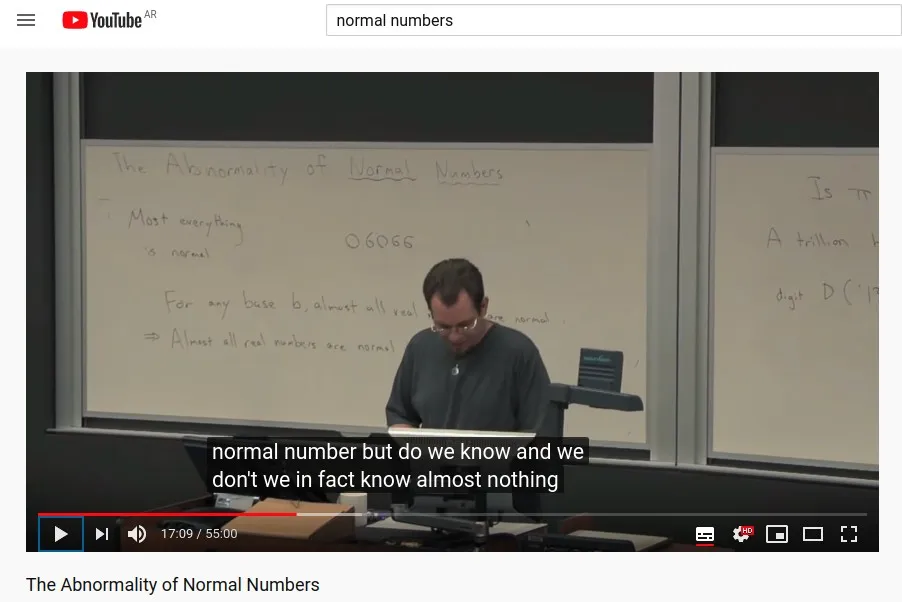
A minute later, in the video of that talk that indeed took place in 2014, the sound of the room door opening and closing is heard. It would not be far-fetched to imagine that someone who went to listen to a lecture to learn about scientific advances felt "cheated" and left, when the researcher says that "he knows almost nothing".
Similarly, we are shocked by the arrogance of a millionaire soccer player, but then we criticize him when he misses a pass. How does he miss if he dedicates himself to that and is paid fortunes?
Joseph says that one can think of "building" a normal number with a ten-sided die (like those used in certain games). Such a number of sides would be necessary to create a number in base 10. When rolling the die, if it is well made, there is the same probability for any of its sides. The die would be a "random number generator". As a consequence, if we make a real number by choosing each digit in that way and we do it a very large number of times, every sequence in such a random number should have the same frequency as the rest.
Numbers that are NOT normal are those in which this clearly does not occur, as in rational numbers, since they have a period.
However, a number being irrational does not guarantee that it is normal.
Joseph says that most real numbers must be normal. That is, in that set of numbers, its elements should be a greater quantity (or cardinality) with respect to any other set of numbers. However, only a couple of examples of normal numbers are known.
In another more recent video, from the Numberphile channel, the mathematician Matt Parker tells this same thing with greater perspective, by categorizing numbers using Euler diagrams, which are concentric circles, in which the larger sets include the smaller ones, but not the other way around:
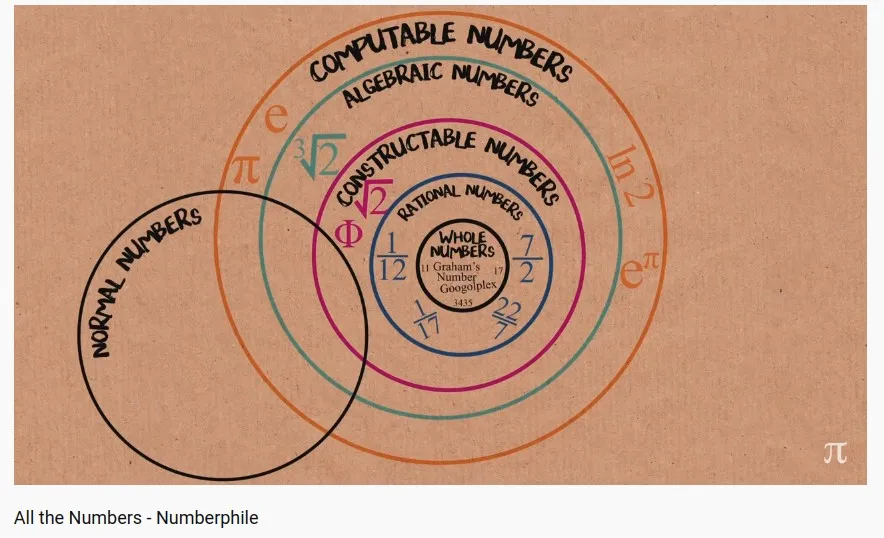
Integers
Rationals
Constructible numbers: with ruler and compass.
Algebraic numbers: product of equations.
Computable numbers: about the seminal work of Alan Turing without which there would be no Google quantum supremacy, and which includes transcendentals like Pi.
All these categories have infinite elements. But all are countable. Outside those limits are the Non-computable numbers.
The "Normal number" category, then, could contain almost all the other classes, meaning that of all thinkable numbers the majority should be "normal". However, barely a few are known. What does that say about arrogance/humility?
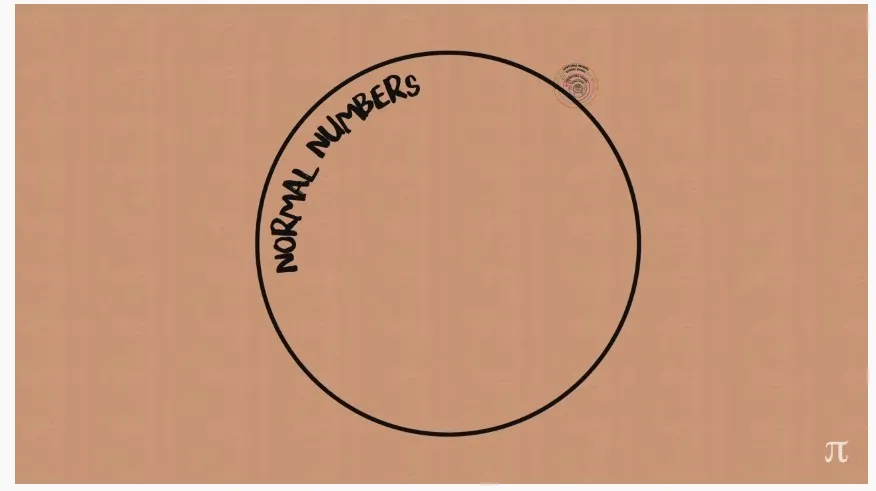
Similarly, we know that irrational numbers are an uncountable set, but it is very difficult to know if a real number is irrational when its digits do not SEEM to have a period.
The "problem of normal numbers" is over a century old. And still almost no progress has been made. There is, as yet, no "supremacy" or overcoming of that "normality".
We can give more examples in the same vein: What is the real number that comes after 0? We should know it after millennia of development.
We know what the universe was like 380,000 years after the Big Bang, but we have no idea what spacetime is, what it is made of.
The idea of mathematical "normality" implies a great quantity and randomness. Something sufficiently large and random will also be uniform.
SCIENCE AND DOMINATION
Will Google be able to dominate us all with its new quantum ring of power?
Umberto Eco coined the terms "Apocalyptic and Integrated" to refer to people with certain attitudes towards technology. In the first case they reject it, under the assumption that technology only has negative consequences; and in the second case they accept it uncritically, under the assumption that it only has positive consequences.
Technologies are all those things invented by people, from language, the wheel, a blackboard to a quantum computer. Can anyone be against wheels or language or blackboards?
Technology is not good or bad, it has no morality. The people who use technologies do.
But to be able to make use of scientific knowledge and transform it into technology and use it requires capital, in addition to labor. And scientists provide the labor, not the capital. The capital is provided by few, since few have it.
There are two ways to relate both things: that capital is at the service of labor and social needs, or the reverse, which is what we know: that social needs are at the service of capital.
Where there is a sufficiently large social demand, there will be capital willing to satisfy that demand with the sole objective of multiplying itself.
CONCLUSION
Normality is uniformity. In a certain sense we detest uniformity, we want diversity. To dress differently, listen to different music, etc. We want to be different. Difference is valued positively and not uniformity. Uniformity is even associated with "dictatorship".
However, we should rethink things, since certain freedoms depend on uniformity. For example:
In a 100-meter dash, there will only be freedom if all runners have the same initial conditions. That initial uniformity guarantees that whoever finishes first is the fastest.
In contrast, in a race where the first to cross the finish line is rewarded, but in which each participant starts from where they can, some from 100 meters, others from 50, and someone from just 2 meters, it does not reward the one who runs the fastest, but the one who is closest. The others will always lose. That is not freedom. It is having "the cow tied up", the result assured.
Assuming that supremacy is a direct consequence of "merit" is a fantasy. Supremacy is a consequence of the lack of uniformity.
Few have the capital. The rest of us contribute our labor power. That is to say, we are in a race where the first run 1 meter and the rest of us run kilometers. In mathematics there will be normal, uniform numbers, which would apparently be the majority. Among people, uniformity does not exist. Dinosaurs had superiority and lost it. Human beings are, in that sense, very animal-like.
Sources and related links
- All the Numbers - Numberphile
https://www.youtube.com/watch?v=5TkIe60y2GI - Demonstrating Quantum Supremacy
https://www.youtube.com/watch?v=-ZNEzzDcllU - The Abnormality of Normal Numbers
https://www.youtube.com/watch?v=G3MwnMo7tio
About the images
Youtube screenshots.