The spying of vibrations.
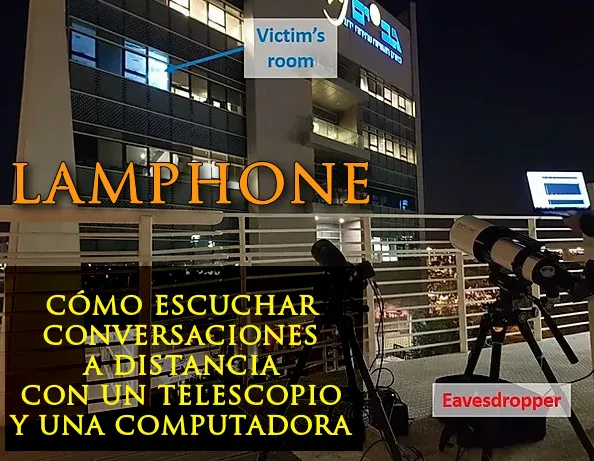
Let's say that in a building there are two apartments with windows facing the street. In apartment A, a person listens to the news on television. In apartment B, another person hears music from the radio. In both rooms, there is a light on.
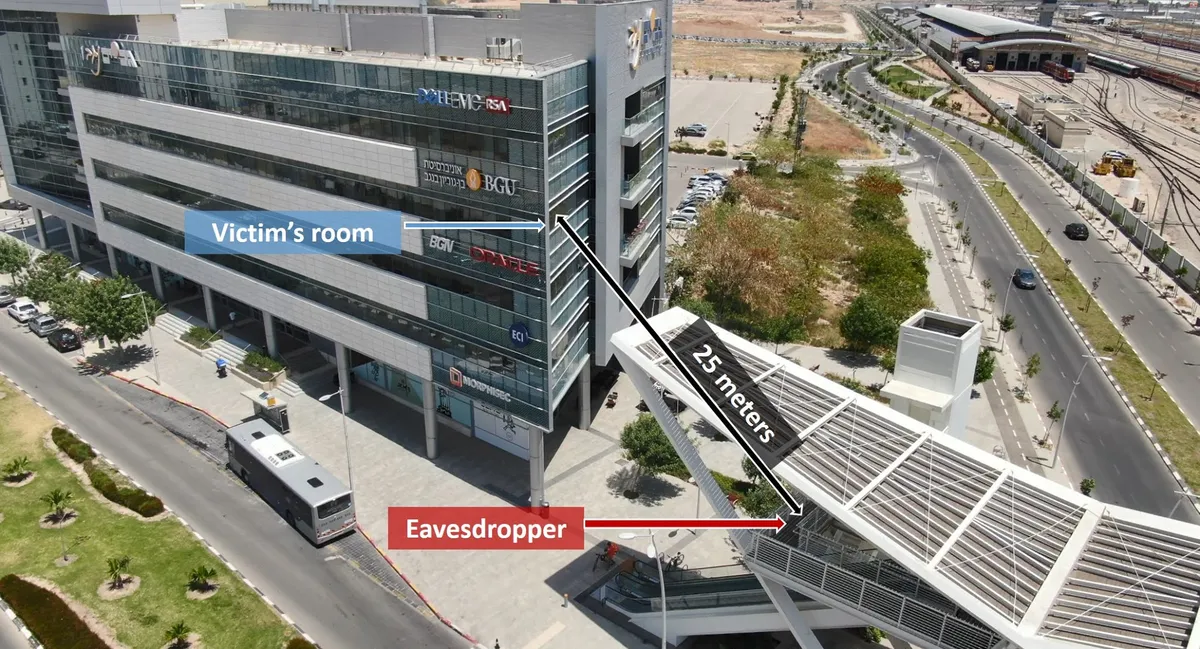
At 25 meters, in the building across the street, a spy places a small telescope with an optical sensor connected to a computer. In real time, the spy managed to know that in the first apartment a speech by Donald Trump was being listened to, while in the second they were hearing "Let it be" by The Beatles. How did they do it?
In a paper published a few days ago, a group of Israeli researchers explain that they did it thanks to the fact that sound changes the way light vibrates.
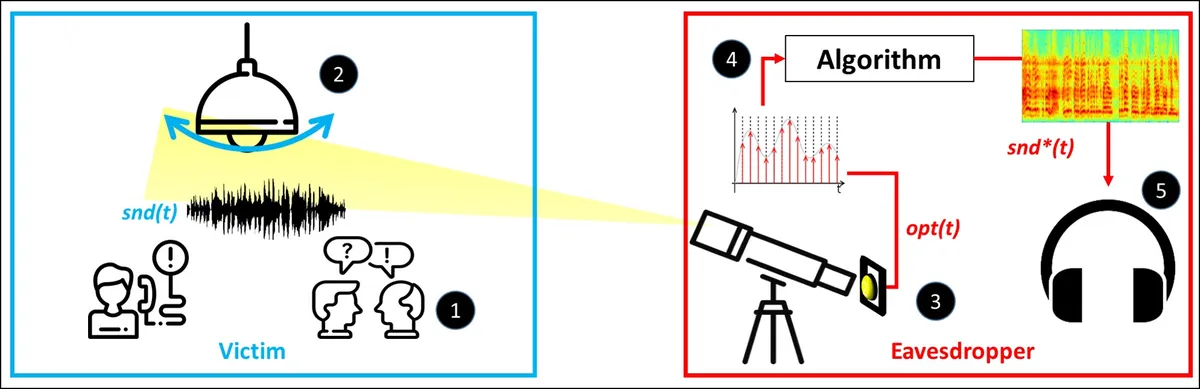
"We show how fluctuations in air pressure on the surface of a lamp, in response to sound, cause the lamp to vibrate slightly and can be used by spies to recover a conversation or music, passively, externally and in real time", according to Ben Nassi, a developer and researcher at Ben-Gurion University.
IT'S NOT THE FIRST TIME
There are precedents for this type of approach. In 2014, the "visual microphone" developed by MIT, Microsoft and Adobe reconstructed conversation and music from a room by analyzing the micro-vibrations of a bag of potato chips or a plant, although it required enormous computational power. In contrast, this new strategy, called Lamphone, is easier to execute. The name given to the technique is the product of combining the words "lamp" and "microphone" in English.
In the same year 2014, Stanford researchers achieved something similar through the analysis of gyroscopes in Android devices, but they first had to infect the hardware. In contrast, with Lamphone it can be done remotely.
The researcher clarifies that he does not promote this use, but rather alerts the public to this type of attack. "We are not in the business of providing tools".
Ben Nassi is a PhD student and former Google employee. He works in the Cyber@BGU laboratories doing research on drones, irrigation systems and other topics. On his website, the paper published with colleagues and an explanatory video are available.
The experiment used three telescopes of 10, 20 and 35 cm in diameter. They mounted an optical sensor (Thorlabs PDA100A2) which on the manufacturer's website costs USD 380. This sensor is a photodiode used to convert light into voltage. The voltage was obtained through an ADC (analog-to-digital converter) card. The signal is processed with an algorithm created for this purpose. At the telescope location, the sound from the spied rooms could not be heard, according to the researchers. The spied room was their own office.
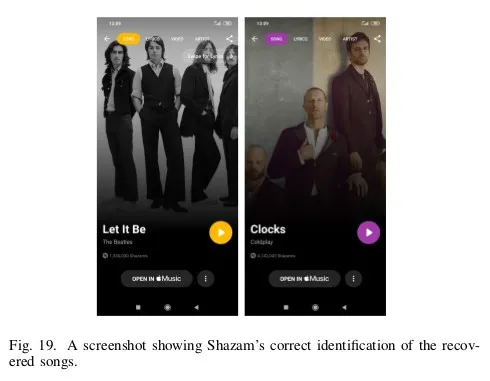
In addition to Trump's speech and the song by the Fabulous Four from Liverpool, the sound of the song Clocks by Coldplay was also "recovered".
On the site of the principal investigator, Ben Nassi, you can hear the recovered sound. The identification in each of these three cases is clear. But that's not all: they also used automatic audio detection systems, such as Shazam and the Google Cloud Speech API, which recognize songs and speeches automatically, and in all three cases it was successful. That is, the fidelity of the audio recovered in this way is sufficiently good. The researchers note that the best results were achieved with the telescope with the largest aperture.
It is possible that this research will boost the production and sale of telescopes, sensors and... curtains!
Sources and related links
- Light bulb vibrations yield eavesdropping data
https://techxplore.com/news/2020-06-bulb-vibrations-yield-eavesdropping.html - Ben Nassi's site
https://www.nassiben.com/lamphone - Lamphone: Real-Time Passive Sound Recovery from Light Bulb Vibrations
Ben Nassi and Yaron Pirutin and Adi Shamir and Yuval Elovici and Boris Zadov
Cryptology ePrint Archive, Report 2020/708
https://eprint.iacr.org/2020/708 - The Visual Microphone: Passive Recovery of Sound from Video
http://people.csail.mit.edu/mrub/VisualMic/ - The Gyroscopes in Your Phone Could Let Apps Eavesdrop on Conversations
https://www.wired.com/2014/08/gyroscope-listening-hack/
About the images
Credit: Ben Nassi et al 2020.