On the International Day of Women in Astronomy.
Around 1850, astronomers managed to take the first photograph of a star. The resulting daguerreotype was blurry and diffuse, but the path was clear: photography could be used to record the night sky.
Cameras were quickly mounted on telescopes. Photography was analog. Glass plates with a photosensitive emulsion were used, which were then developed using the appropriate chemicals in a darkroom. The result was negative: stars or galaxies in black.
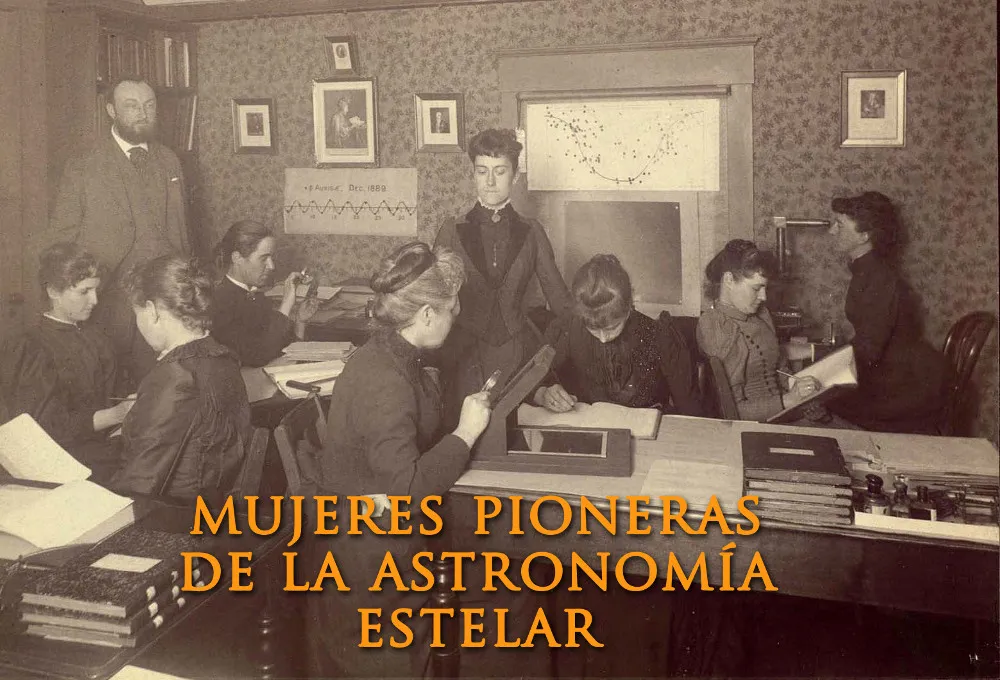
One place where they were trying to create a map of the sky -in the Northern Hemisphere- was the Harvard Observatory, where Edward Pickering kept generating photographic plates without them being analyzed. The brightness and spectrum of each star on each plate had to be calculated and the photos compared over time to notice changes in brightness and movement. Pickering's student astronomers did not want to do that tedious work. Legend has it that he told them: "My Scottish maid could do it better!".
And he hired her.
Williamina Fleming, a Scottish immigrant, Pickering's housekeeper, was the first of the 40 women known as "the Harvard computers", as they performed the calculations for those stars.
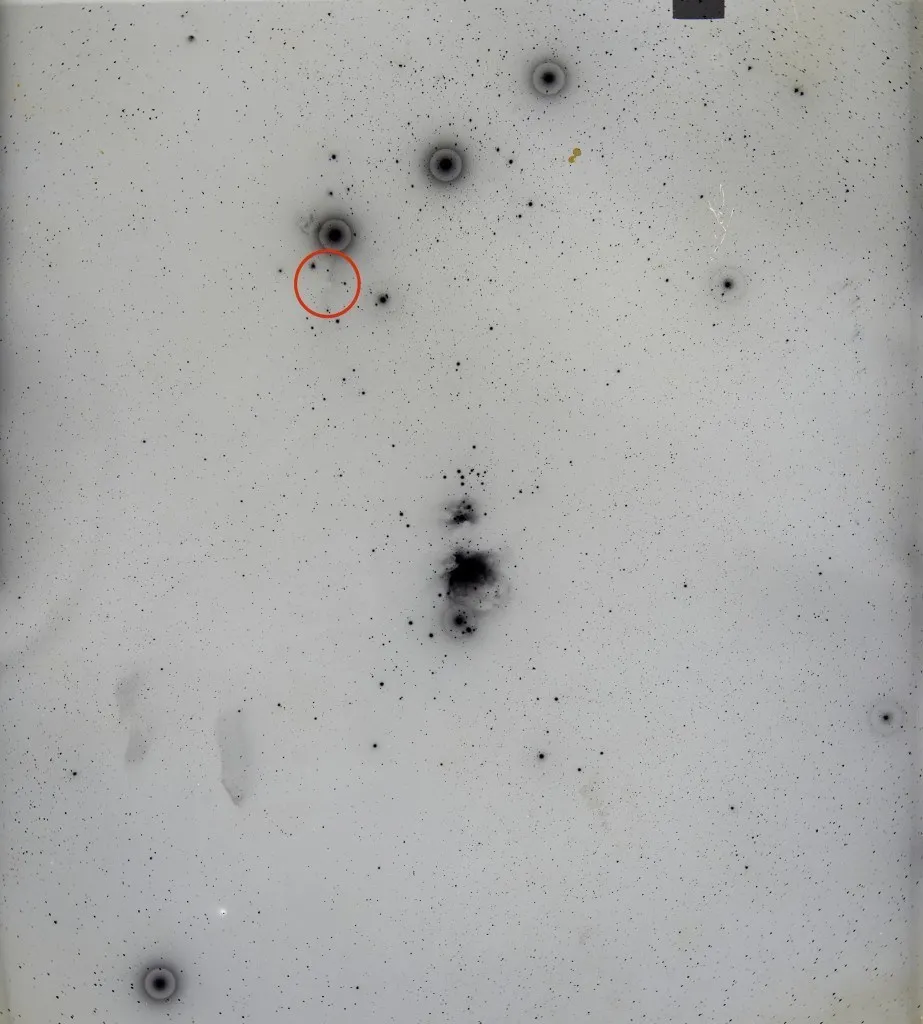
Glass plate, in negative, of Orion's Belt. The circle marks the Horsehead Nebula, discovered by W. Fleming.
Why women? On one hand, the founder of the stellar catalog project was a woman, Mary Draper, who had started a photographic catalog with her husband, Henry, and wanted to finish it after her husband's death.
On the other hand, the task was considered "suitable for women" as it could be done indoors and not outdoors and during daytime hours.
Another reason, which should not be overlooked, is that women were cheaper. They were paid less than men and many people were needed, so it was more economically viable.
The group of "Harvard computers" included figures of the stature of Annie Jump Cannon (1863–1941), Henrietta Swan Leavitt (1868–1921), Cecilia Payne-Gaposchkin (1900–1979).
I would like to highlight two facts:
1-Cecilia Payne proposed in her doctoral thesis that stars are composed mainly of hydrogen, in 1925.
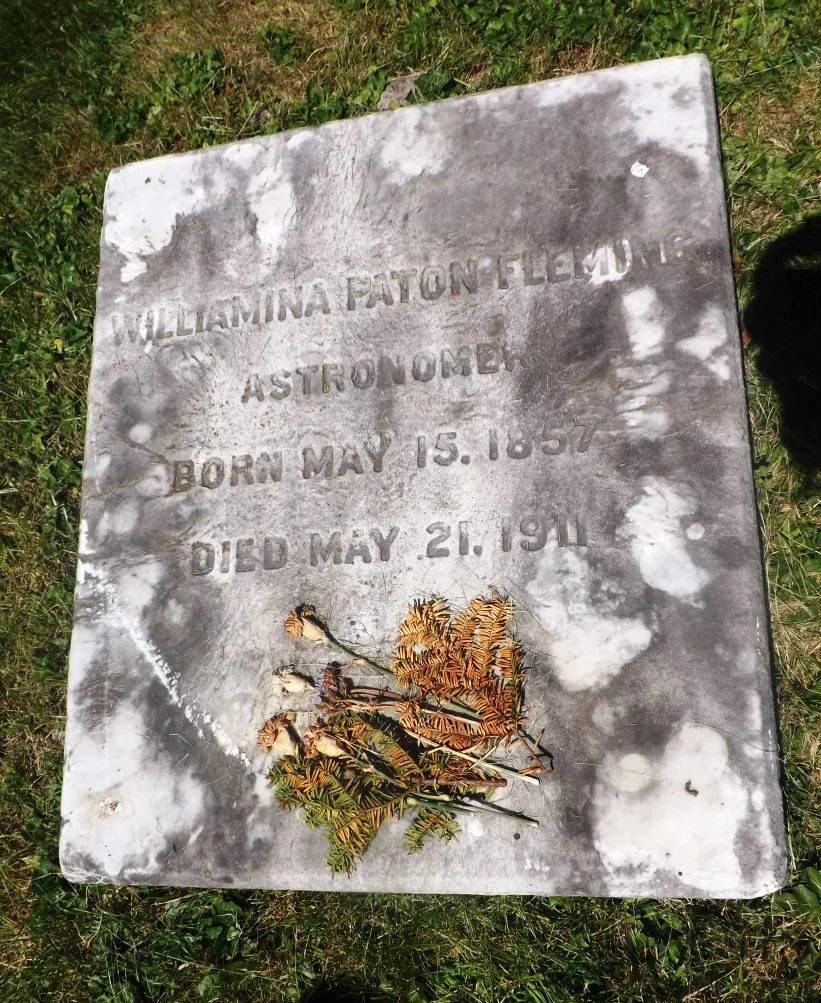
2-Williamina Fleming was Scottish. She emigrated to the United States and became pregnant, after which her husband abandoned her. Desperate, she looked for any job and ended up as Edward Pickering's housekeeper. They say that the astronomer's wife insisted that he give Mina a job as an observatory employee. In 1893 she published an article on the work of women in astronomy where she said: “While we cannot maintain that woman is the equal of man in all things, in many things her patience, perseverance, and method make her his superior”.
She died in 1911. On her tombstone there is a single word as an epitaph: "Astronomer".
February 11 – International Day of Women and Girls in Science
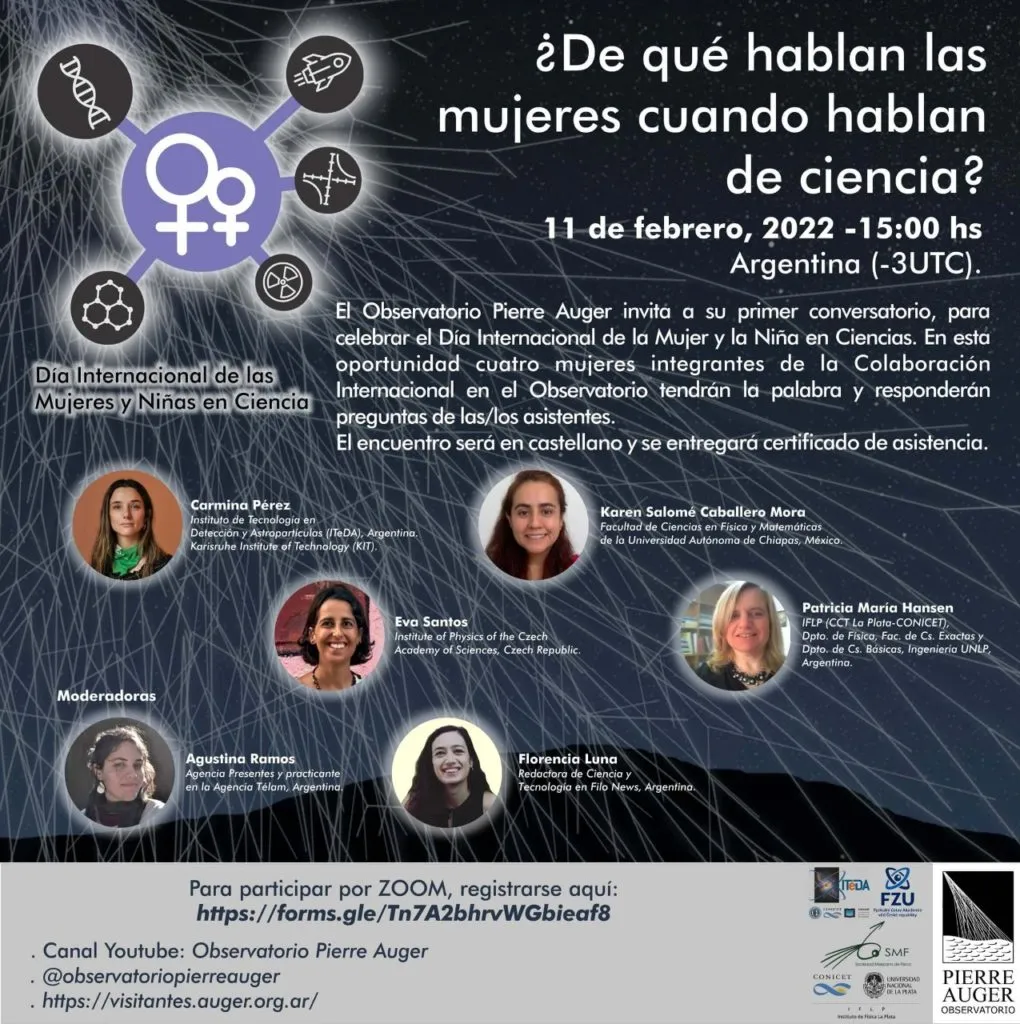
The Pierre Auger Observatory invites a meeting of women scientists to talk about science and reflect on gender differences in activities related not only to science, but also to technology. The "conversation" is open to the general public.
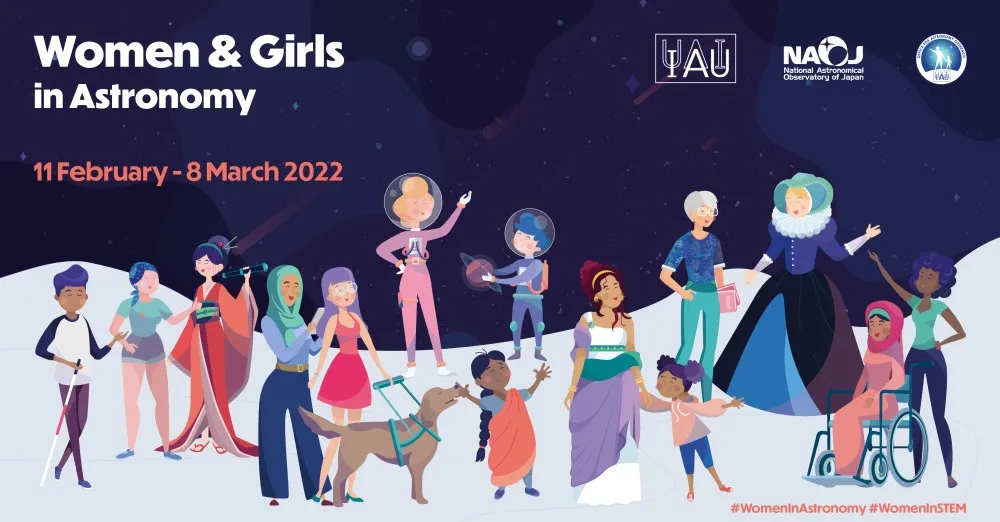
The IAU celebrates the Day of Women and Girls in astronomy until March 8 with various events around the world, virtually.
Sources and related links
- The women of Clementina
https://www.dc.uba.ar/las-mujeres-de-clementina/ - AND WOMEN… WHERE ARE THEY?
Summary of the first study by the Dr. Manuel Sadosky Foundation on the low female presence in computer science.
http://www.fundacionsadosky.org.ar/publicaciones/ - Williamina Fleming
https://www.harvardmagazine.com/2017/01/williamina-fleming - The pioneering women of stellar astronomy
https://insidetheperimeter.ca/pioneering-women-of-stellar-astronomy/ - Williamina Paton Stevens Fleming
https://es.findagrave.com/memorial/58437055/williamina-paton-fleming - “A Field for Woman’s Work in Astronomy,” W. Fleming
https://wolba.ch/gazette/wp-content/uploads/2017/07/Fleming-Mrs.-M._Astronomy-Astrophysics_Vol.-12_1893_pp.-683-689.pdf - Women and Girls in Astronomy
https://www.iau.org/public/women-and-girls-in-astronomy/ - Iteda Mendoza
http://itedamza.frm.utn.edu.ar/
About the images
Image Credit: the Harvard University Archives/HUV 1210 (9-4).
Image: Perimeter Institute.
<