The IAU Centre for the Protection of the Dark and Quiet Sky from Satellite Constellation Interference (CPS) expressed its concern about the recently launched BlueWalker 3, a prototype brighter than any other.
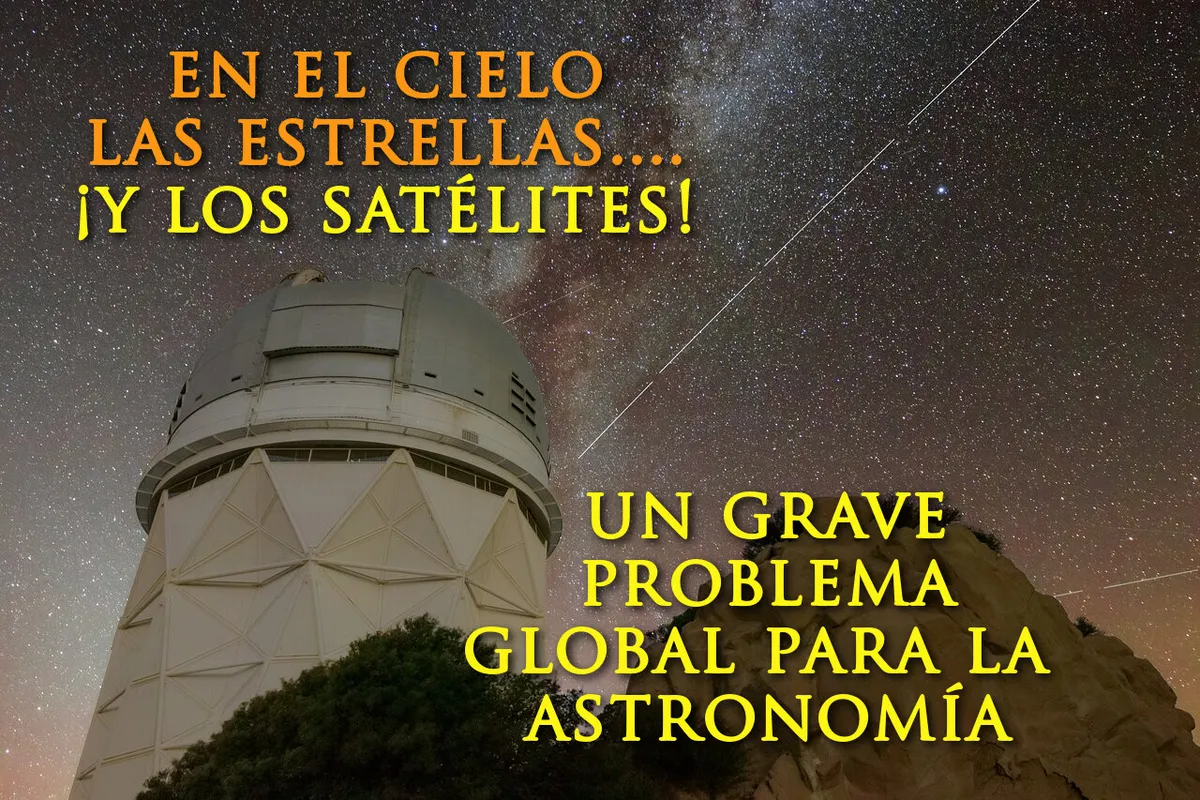
On September 10 the company AST SpaceMobile launched a prototype satellite into low Earth orbit. The satellite, which has a 64-square-meter antenna system (the largest commercial system launched there to date), is the first of a series of more than a hundred planned for the near future (called BlueBirds).
New measurements from observers around the world, coordinated by the CPS, show that the satellite has become one of the brightest objects in the night sky; brighter than other constellations and sometimes brighter than some of the most recognizable stars in the firmament. It reaches a visual magnitude of 1, almost like Antares or Spica.

AST SpaceMobile staff posing in front of the 64-square-meter prototype.
In the images, taken by professional and amateur astronomers, these satellites leave their mark as a straight line. This is because since starlight is very faint, when taking photos the shutter is left open longer, that is, photos with longer exposure. The camera's sensor accumulates the light received over several seconds, during which the object moves across the sky, thus generating a streak.
In addition to their visual brightness, these new satellites that serve as "cellular phone towers in space" transmit strong radio signals at reserved frequencies, thus interfering with radio astronomy.
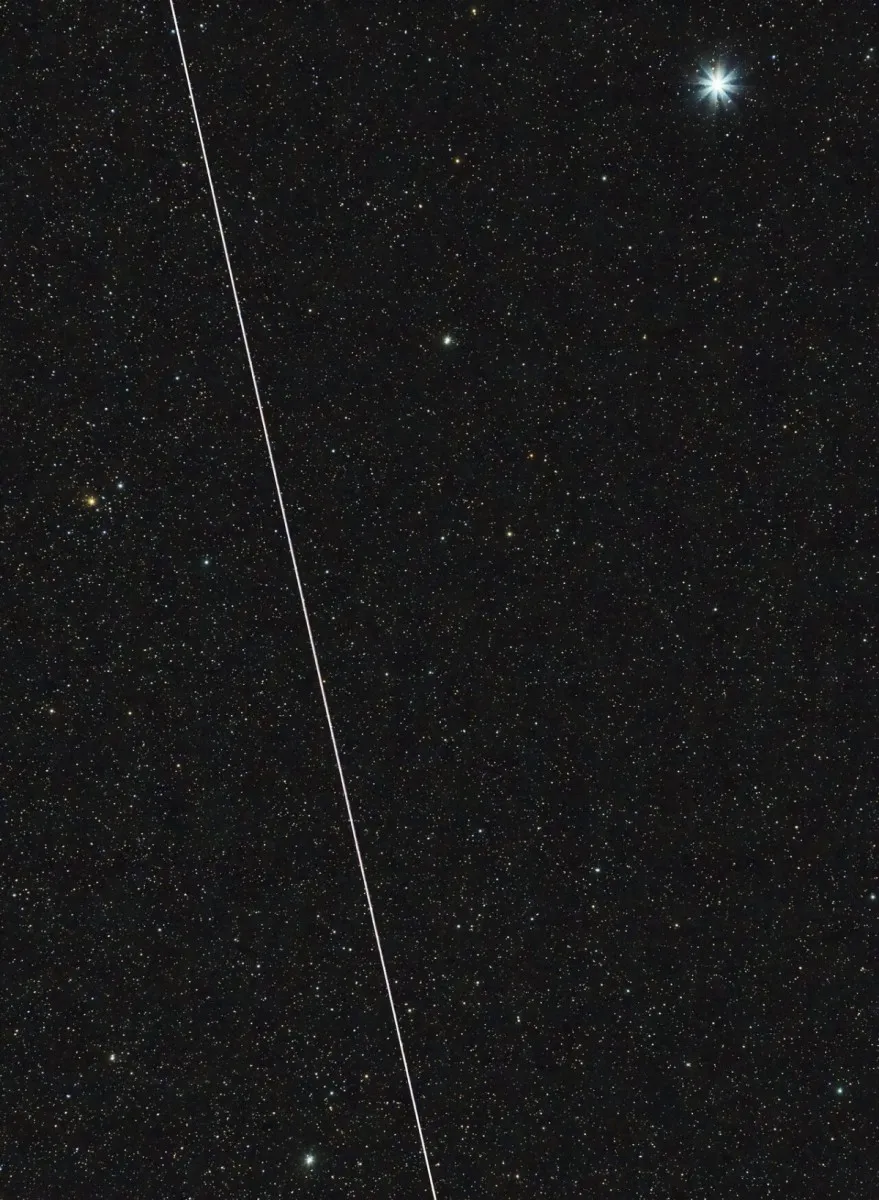
Photo taken by an amateur in Tucson, Arizona on 11-20-2022, showing the trail of a satellite, near Vega.
In addition to the IAU CPS, the SKA Observatory also expressed its concern: "Astronomers build radio telescopes as far away as they can from human activity, looking for places where there is no cellular phone coverage. New satellites like BlueWalker 3 have the potential to worsen the situation and compromise our ability to do science if not properly mitigated", explained Director Philip Diamond.
The IAU and the CPS recognize that new satellite constellations have a role in improving global communications. However, their interference with astronomical observations can severely damage the progress of our understanding of the cosmos. Their deployment should be conducted with considerations about their side effects with efforts to minimize their impact on astronomy.
It's a problem of quantity, a problem of "dose": one thing is ten satellites, another is thousands, hundreds of thousands. It becomes unmanageable.
Recently the IAU wrote a letter on behalf of the global astronomy community to the U.S. Federal Communications Commission (FCC) urging them to seriously consider the potential impacts of constellations on astronomy, the appearance of the night sky and the environment.
The Astronomers' Union also initiated conversations with the company AST to seek mitigation measures.
The unanswered question: Who does the night sky belong to?☉
Sources and related links
- IAU CPS Statement on BlueWalker 3
https://www.iau.org/news/pressreleases/detail/iau2211/?lang - BlueWalker 3
https://ast-science.com/spacemobile-network/bluewalker-3/
About the images
KPNO/NOIRLab/IAU/SKAO/NSF/AURA/R. Sparks
A. Block/IAU CPS