Is scientific knowledge reliable? Does the closest single star have at least one planet?
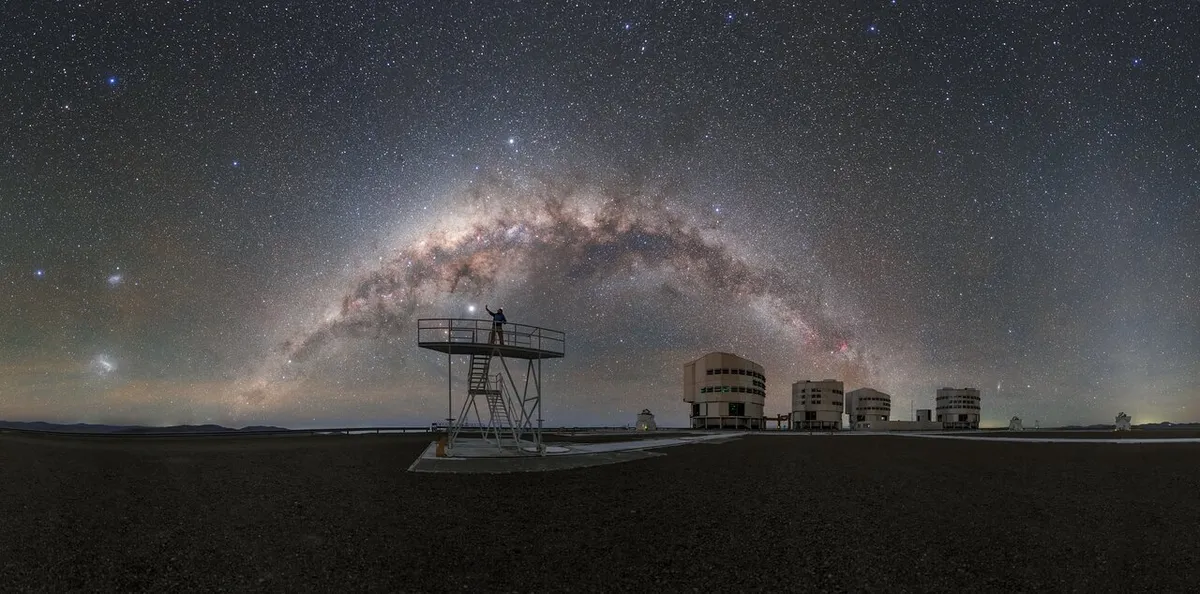
Natalia R. Zelman in the Book of the Gran Telescopio Canarias (GTC)
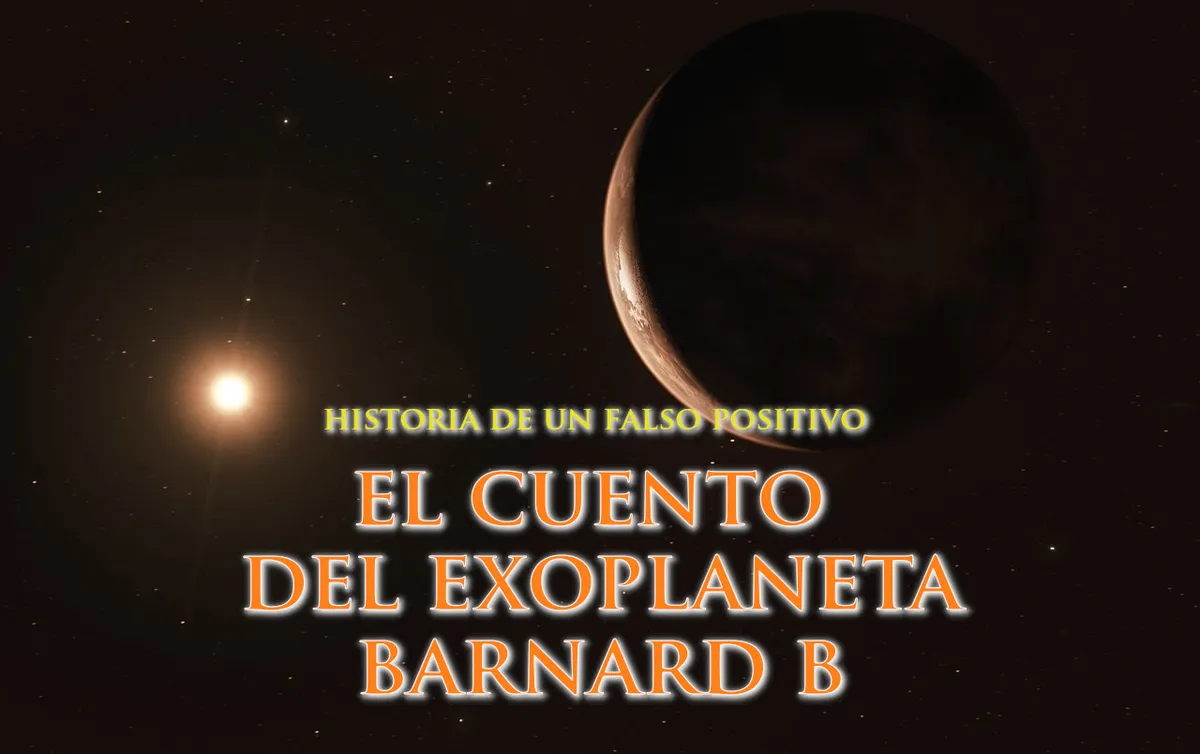
Barnard's Star (HIP 87937) is famous, as it has been used in several science fiction stories. This is because it is the closest single (non-binary) star, at almost 6 light-years. It is a red dwarf, with only 15% of the mass of our Sun and twice its age. It is located in the Ophiuchus neighborhood of the sky, with an apparent magnitude of 9.5.
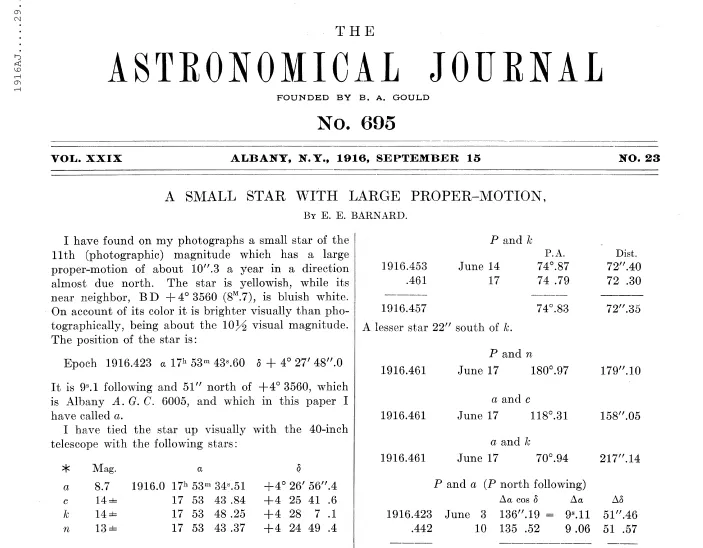
Its name comes from the American astronomer Edward Emerson Barnard who in 1916 published the finding that the star has a remarkable apparent motion, turning an insignificant star into one of great interest ever since. Barnard in his works called the star P, to give it some name.
Van de Kamp's exoplanet
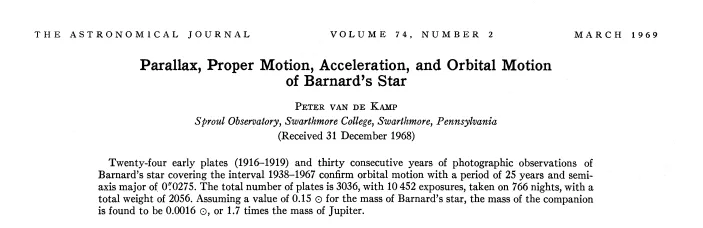
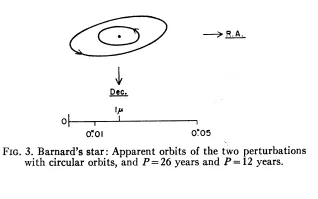
The astronomer Peter van de Kamp, of Dutch origin, from Sproul Observatory, studied the motion of the star by comparing photographic plates taken from 1938 to 1967. According to Kamp, a "wobble" was detected in the star's motion that suggested the presence of a body around the star: it would be an object with 1.6 times the mass of Jupiter and a revolution of 24 years, with an elongated orbit. In the following years, Kamp published a series of papers refining the initial data. In 1969, an "alternative analysis" of the data performed by Kamp led him to infer that it was not a single body, but two planets, with circular orbits, that surrounded the star.
However, in 1973, astrometrists Gatewood and Eichhorn examined plates taken with a 20-inch refractor at Van Vleck Observatory and were unable to detect any "wobble" in the red dwarf. In the same year, John L. Hershey, while working at Sproul Observatory (the same as Kamp's), analyzed the same plates as his colleague, not only those corresponding to Barnard's star, but also others and came to an incredible conclusion: he not only detected an additional motion in Barnard's, but... in all of them! Either all those stars had some planet around them... or there was some problem with the instrument.
Peter van de Kamp did not give in and in 1982 published a work that confirmed his conclusions (regarding planets around the star), although with some modifications to the data. Subsequent analyses performed by other astronomers (Fredrick, L. W. ; Ianna, P. A. 1985) found no perturbation in the star's motion.
2018: THEY BARK, SANCHO
In a new chapter of this saga of alleged false positives, Ignasi Ribas, a Spanish researcher, stated in 2018: "After careful analysis, we are 99% convinced that the planet is there". And he added in a statement: "We have used observations from seven different instruments, spanning 20 years of measurements, making this one of the largest and most extensive datasets used for precise radial velocity studies," explains Ribas. "The combination of all the data led to a total of 771 measurements, a huge amount of information!".
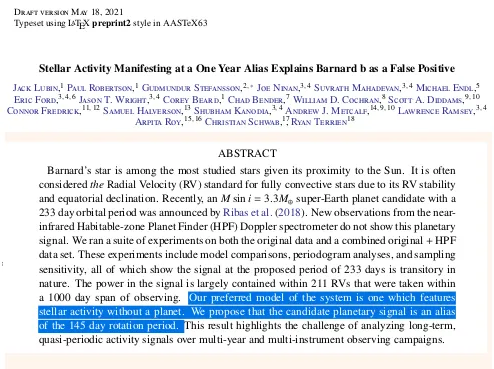
In 2021, Jack Lubin (Univ. of California) and others publish an analysis and suggest that the "signal" is not due to a planet, but is a product of the star's 145-day rotation. As indicated at the beginning of their work, stellar activity is the primary source of false positives in exoplanets. Thus, the possible exoplanet became a... windmill. ESO's planet-hunting instrument HARPS, used by the Spaniards, became Rocinante in a quixotic astronomical investigation...
SO WHERE DO WE STAND? WHO DO WE TRUST?
Science does not write conclusions in stone. There are no definitive conclusions. If I say "There is a tree," you accept the statement if you also see it and reject it if you don't. You don't need to believe me. It's not that I have a "special" ability to see trees that others cannot observe. If I can, you can too.
Exoplanets cannot be seen. Their existence around a star can be detected by subtle effects. If a star's light curve shows a periodic drop in brightness, using the transit technique, it is possible to think that there is something there that blocks the starlight every certain amount of time. It could be a planet. But it could be a sunspot, a "cooler" area of the star, an alias. In such cases, precision and the accumulation of data over time are crucial. Analyses with different instruments are also crucial. One telescope might be poorly calibrated, but not all of them.
There is no need to blindly trust scientific results. It would make no sense to do so, since that is not how science works. Unlike astrology, which objectively does not work, but is subjectively accepted because it tells people something that makes them feel good (even though there is no objective justification to support it), science must be based on data from reality, not mere wishes. It is easy to confuse windmills with giants.
The tale of Barnard b, as the potential planet was called, is not over. Perhaps there really is one or more planets around this famous star. I think many astronomers wish it were so. But good wishes are not enough. So far, Barnard b is a fictional exoplanet, of science fiction. Although it lacks concrete reality, its existence in the scientific literature has something to teach about how science works. The only true "wobble" is the back-and-forth of scientific knowledge between reality and fiction. False positives are not the product of astronomers doing their job poorly, but a consequence of scientists - though it may not seem so - also being human, imperfect, but also persevering.
I think of Peter van de Kamp. At 93 years old, he died in 1995. Did he die mistaken? Surely. Like everyone else. But he left us a valuable story. It is up to us to learn the lesson.☉
Sources and related links
- 50 years ago, astronomers challenged claims that Barnard’s star has a planet
https://www.sciencenews.org/article/50-years-ago-barnards-star-planet - https://www.sciencenews.org/archive/no-planet-barnards-star
- Super-Earth Orbiting Barnard’s Star
https://www.eso.org/public/news/eso1837/ - Stellar Activity Manifesting at a One-year Alias Explains Barnard b as a False Positive
Jack Lubin et al 2021 AJ 162 61
https://iopscience.iop.org/article/10.3847/1538-3881/ac0057
https://arxiv.org/abs/2105.07005 - An unsuccessful search for a planetary companion of Barnard's star BD +4 3561.
Gatewood, G. ; Eichhorn, H.
https://ui.adsabs.harvard.edu/abs/1973AJ.....78..769G/abstract - Alternate dynamical analysis of Barnard's star.
van de Kamp, P.
https://ui.adsabs.harvard.edu/abs/1969AJ.....74..757V/abstract - A small star with large proper motion
https://ui.adsabs.harvard.edu/abs/1916PA.....24..504B/abstract - A small star with large proper-motion
https://ui.adsabs.harvard.edu/abs/1916AJ.....29..181B/abstract - Parallax, Proper Motion, Acceleration, and Orbital Motion of Barnard's Star
https://ui.adsabs.harvard.edu/abs/1969AJ.....74..238V/abstract - Astrometric analysis of the field of AC +65 6955 from plates taken with the Sproul 24-inch refractor.
https://ui.adsabs.harvard.edu/abs/1973AJ.....78..421H/abstract - The planetary system of Barnard's star
Vistas in Astronomy Volume 26, Part 2, 1982, Pages 141-157
https://www.sciencedirect.com/science/article/abs/pii/0083665682900046
https://ui.adsabs.harvard.edu/abs/1982VA.....26..141V/abstract - BARNARD'S STAR AND VAN DE KAMP'S PLANETS: THE BEGINNING
https://www.public.asu.edu/~sciref/exoplnt.htm#section2 - The Barnard's Star Perturbation
https://ui.adsabs.harvard.edu/abs/1985BAAS...17..551F/abstract - Book: GTC primera luz (pdf, 15MB)
https://www.iac.es/es/divulgacion/ediciones/libro-gtc-primera-luz-pdf-15mb
About the images
Illustration: ESO/M. Kornmesser