New Netflix series follows tradition and sensationalism.
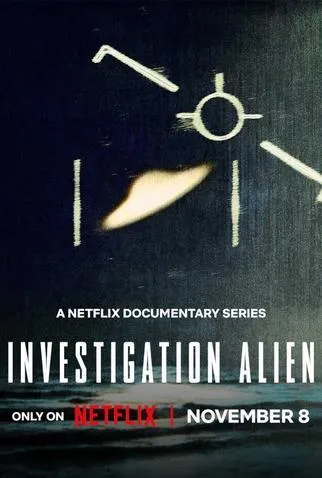
Netflix recently premiered its series "El Enigma Extraterrestre" (Investigation Alien), which consists of 6 episodes of 40 min. It is a documentary made by a journalist and collaborators, not very different from other documentaries on the same topic. Throughout the episodes, a story is narrated that contains the following ingredients:
1-UFO testimonies say they have seen spheres of light (orbs), or triangular shapes.
2-These objects move in a way not known to humanity.
3-In some cases they only show themselves and leave. In others, they seem to attack people (as in a locality in Brazil in 1970).
4-It is claimed that these supposed "ships" do not come and go from outside Earth, but remain here, underwater.
5-It is indicated that they attack livestock, extracting genitals and blood.
6-In this series, abduction cases are not explored in depth.
7-It is pointed out that there are similar testimonies from Native Americans, 200 years ago.
8-In the last episode, the idea of "ancient aliens" and time travel is endorsed.
9-It is indicated that many people felt a "connection" and that the message is one of peace.
10-There is a worldwide cover-up of the topic.
The documentary, journalistic work, is very good that it exists. In these documentaries, however, in addition to collecting information, grandiose conclusions are reached, with little basis. Many of the "cases" addressed are from 40-50 years ago. In this documentary, along with some testimonies and videos that could be "interesting," there are others that -frankly- do not withstand analysis, like the video of the "jellyfish UAP," the "UFO" shaped like a jellyfish...
On the other hand, the journalist in charge wants to make a counter-report to counteract an AARO (All-domain Anomaly Resolution Office) report in a clearly biased way. For example: he interviews the Spanish astronomer who leads the VASCO project (which we talked about here a while ago, see link below). What they don't say is that there are several reasons to explain the apparent disappearance of stars in archival photos. There are very few examples of this, despite astronomers constantly looking at the night sky.
The problems with this type of series are, namely:
I-Those who make these documentaries are people who are usually against an interventionist State. They say that state agencies are inefficient. However, they build conspiracy theories based on the idea that the State (of the USA and other countries) has been carrying out an efficient cover-up of "ET contacts" for 70 years.
II-The "UFO hypothesis" implies a civilization much more technically advanced than us, which has been visiting us for at least two centuries, which makes ships with colored lights, but which does not want to show itself openly. Are they intelligent or teletubbies?
III-The idea that an ET ship has a crew could be plausible in 1947, with the Roswell case, because until that moment we humans could not make ships without crew. But a decade later, the first satellite was launched. Since then, we send robots to Mars, we have computing and now, artificial intelligence. Sending ships with crew (to another star system) is NOT intelligent. Putting colored lights on the ships isn't either.
IV-Data collection is necessary, but so far such data does not allow reaching any strong conclusion. It is curious that -as happens in other documentaries that are still shown on cable TV- no one asks: where do they come from?
THE ORIGIN
If it is considered possible that at least a part of UFO sightings are ships from other worlds, then the obvious question is: where do they come from? It is important because they cannot come from just anywhere. In fact, they cannot come from almost anywhere. Let me explain:
It is quite easy to conclude that it is unlikely for a civilization to visit us from other galaxies: A ship traveling at the speed of light (*) and coming from M31 (a galaxy close to ours) would take 2.5 million years of travel. If such a ship traveled 10 times faster than the speed of light, it would take 10 times less: 250 thousand years of travel. If there were a civilization in M31, and it wants to search for life outside its world, the logical thing is that it first visits the stars of its own galaxy, instead of crossing 2.5 million light-years of empty space to reach the Milky Way. But visiting all the stars of a galaxy, even traveling at the speed of light, could require more time than the age of the universe. Traveling between galaxies must not be something common.
If they ever visit us, the most likely thing is that they come from our own galaxy. But the outermost part of the Milky Way is 75 thousand light-years away. A ship from there, traveling at the speed of light, would take 75 thousand years. Ergo, if they visit us they must come from very close.
We have just excluded most of the universe. In other parts of the galaxy and in other galaxies there will surely be other forms of life. But one thing is that they exist, another that they visit us with ships.
If they come from a place 200 light-years from Earth, at the speed of light, they would take 200 years of travel. In a sphere around the world, with a radius of 100 light-years, there are not a huge number of stars. If a civilization ever visits us, the most likely thing is that it is close, within that "travelable sphere." Investigating those stars is much better than just collecting old testimonies and blurry photos.☉
(*) According to the General Theory of Relativity, objects with mass cannot travel at the speed of light. Some have questioned this. To cut to the chase, here I assume that possibility, only to show that even if it were possible, it is not a solution.
Sources and related links
- Filmaffinity El enigma extraterrestre
https://www.filmaffinity.com/ar/film886259.html - Visiting all the stars of a galaxy requires more time than the age of the universe
https://www.noticiasdelcosmos.com/2024/02/recorrer-todas-las-estrellas-de-una.html - VASCO: The mystery of the disappearing stars
https://www.noticiasdelcosmos.com/2023/10/vasco-el-misterio-de-las-desapariciones.html - The "travelable sphere" of the universe
https://www.noticiasdelcosmos.com/2021/12/la-esfera-viajable-del-universo.html
About the images
Netflix