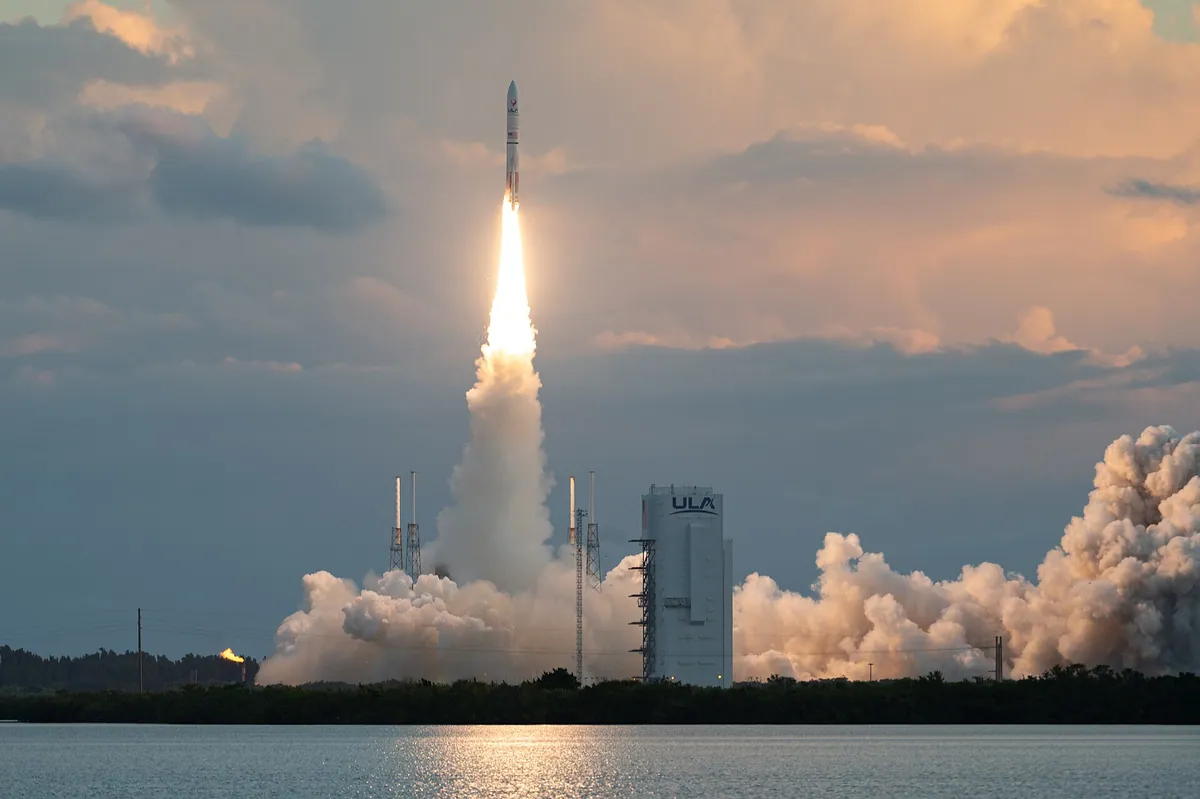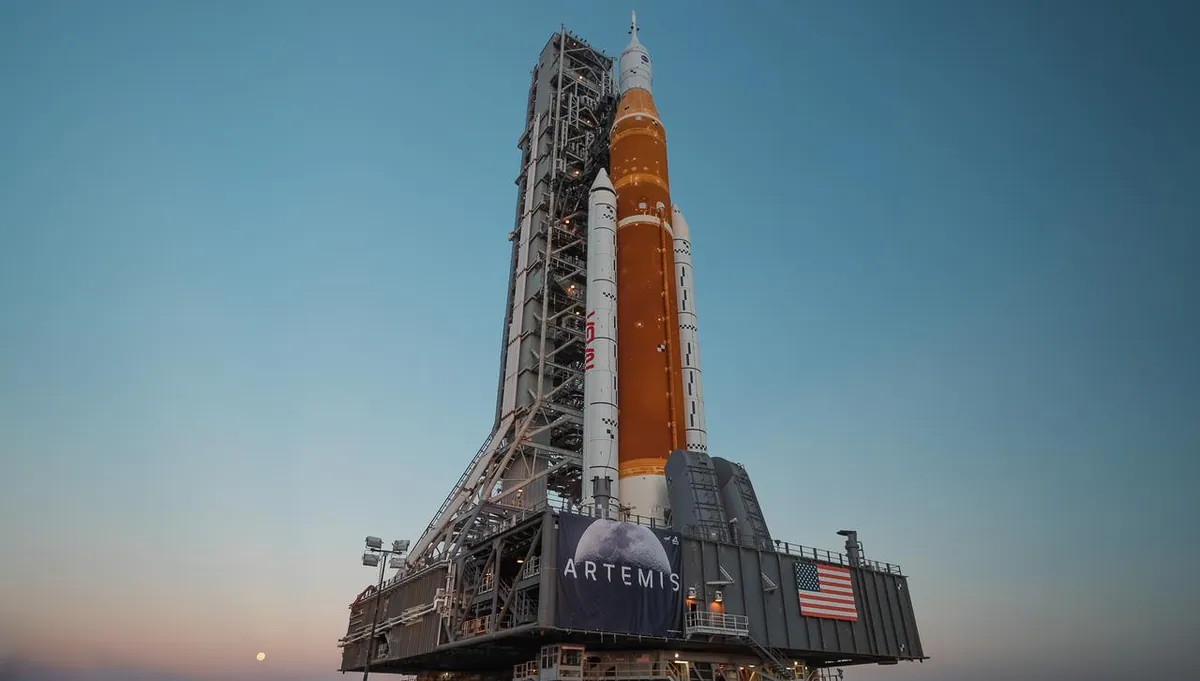
Blue Origin has revealed two key developments for its New Glenn rocket family: a new third upper stage and a new first-stage engine. The company's CEO, Dave Limp, made the announcement during an event at the Kennedy Space Center. The new stage, called Glenn Stage 3 (GS3), is designed for missions that require direct injection to geostationary orbit (GEO) and Earth-escape trajectories. Blue Origin already has a government mission scheduled for 2028 that will launch a payload to cis-lunar space, though it did not offer more details about that customer. The company also introduced the Northstar engine, which will produce 715,000 pounds of thrust for New Glenn boosters.
According to Blue Origin, the GS3 stage expands the rocket's performance without altering the experience for customers sending payloads. The company explained that, built on proven New Glenn hardware, GS3 expands performance without changing the customer payload experience. The stage can deliver up to 14 metric tons to GEO and 20 metric tons to trans-lunar injection (TLI) on the 9x4 variant of the rocket. In the 7x2 configuration, the figures are up to 8 metric tons to GEO and 10 metric tons to TLI. GS3 uses the same payload adapters and fairing as the two-stage vehicle, and is integrated within an interstage to preserve the full fairing volume.
The stage is powered by Blue Origin's BE-7 engine, the same one used on its Blue Moon Mark 1 and 2 lunar landers. The company clarified that this new system is not required for its current plans to deliver astronauts to the lunar surface, but stated that it could help in supporting sustained operations around the Moon. According to the company, by delivering significant payload mass directly to trans-lunar injection, GS3 enables faster transit times while preserving propellant for on-orbit operations. For GS3 mission profiles, Blue Origin cites a vacuum specific impulse better than 460 seconds.
Testing on this new upper stage is already underway at Launch Site One in Texas. Blue Origin reported that it pressurized a liquid hydrogen tank for 2.5 hours at 100 percent of what it calls Maximum Expected Operating Pressure (MEOP). The company added that the tank was also successfully pressurized to 150 percent of MEOP for 10 minutes. Blue Origin expects the GS3 tank to be the first composite liquid hydrogen tank to fly in space. The stage also reuses New Glenn fluids, mechanical systems, and avionics, which the company presents as a way to reduce technical risk.
In the same announcement, Blue Origin introduced the Northstar engine, a new first-stage engine that runs on a combination of liquefied natural gas and liquid oxygen. Northstar will be capable of producing 715,000 pounds of thrust, compared to the 640,000 pounds of the current BE-4 engine. The company states that more than 65 percent of Northstar is manufactured using additive manufacturing (3D printing). Compared to the BE-4, the company claims a 30 percent reduction in mass and a 50 percent cut in the number of parts. Manufacturing advancements have significantly shortened production timelines, allowing final assembly in less than a day.
Blue Origin noted that moving from program approval to development testing in just 11 months demonstrates its ability to rapidly iterate and deliver advanced propulsion systems. The engine retains the oxygen-rich staged combustion cycle fueled by liquefied natural gas, and the single-shaft turbopump architecture that have been foundational to the company's propulsion development. A person familiar with the development of Northstar said the engine will be compatible with the New Glenn 9x4 rockets. They added that the BE-4 engine will continue to play an important role for the company, including on its return to flight mission.
Blue Origin is preparing to resume flights with NG-4.1, whose booster is called "Never Tell Me The Odds", in early 2027. This follows the pad explosion that destroyed NG-4 in May, though the repair efforts have been impressive. The company is promoting an ambitious schedule for 2027 and beyond, which includes an increasing launch cadence. It also plans another launch pad, LC-36B, and a new rocket variant.