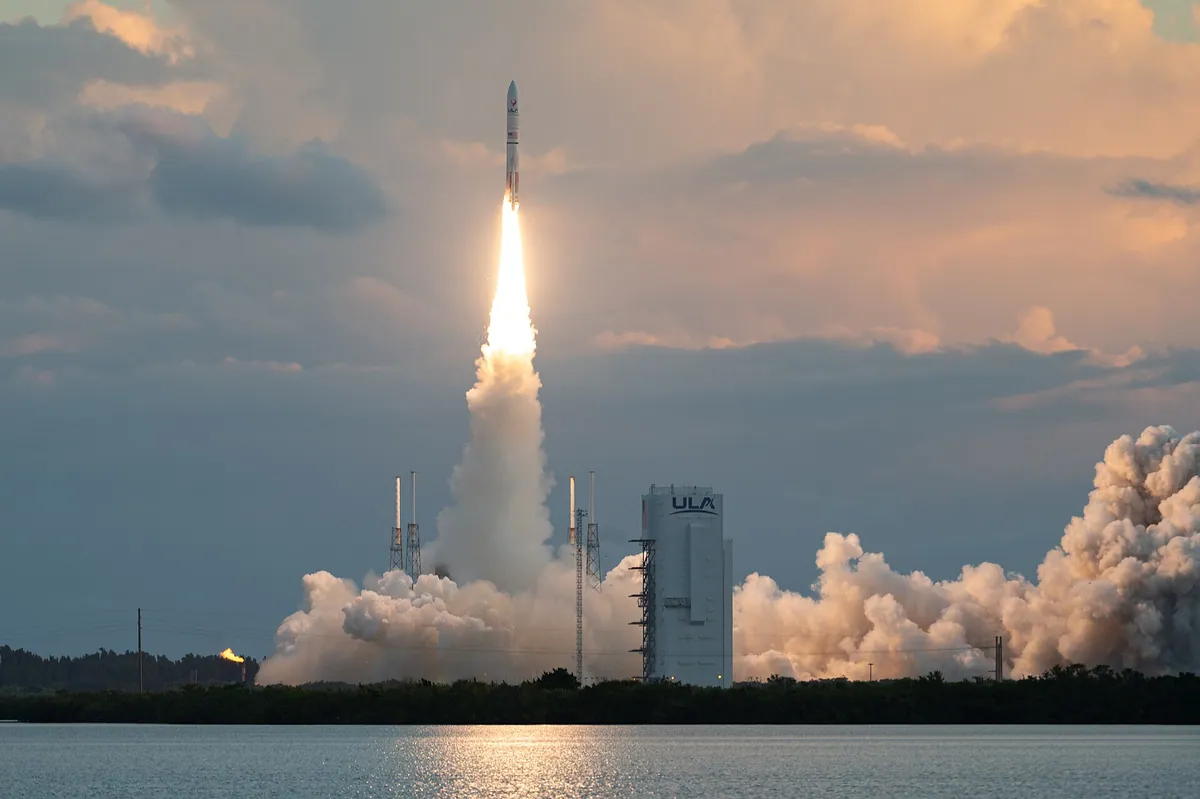
United Launch Alliance (ULA) reported that the preliminary cause of its Vulcan rocket failure on Sunday could be an inadequate fuel supply from the vehicle to its main BE-4 engines. The fifth flight of the company's new launch vehicle ended in mission loss approximately 10 minutes after liftoff from Cape Canaveral on November 15. According to ULA, initial data indicates that the low booster performance was the result of an inadequate fuel supply from the vehicle to the BE-4 engines, not the performance of the engines. The Centaur V second stage and the six solid rocket boosters functioned nominally, but could not compensate for the initial thrust deficit.
The company, a 50-50 joint venture between Boeing and Lockheed Martin, completed an initial integrated review of the flight data. In a November 18 statement, ULA explained that, while work to determine the exact cause continues, preliminary indications point to the propellant feed system. The company noted that the second stage appears to have started nominally, and the RL10 engines were operating as planned. The second stage was performing well but was unable to recover from the performance loss resulting in loss of mission.
ULA engineers are analyzing the possibility that one of the two BE-4 engines began producing lower thrust shortly after liftoff and never recovered full throttle for the remainder of the burn. Video observations from high-zoom tracking cameras seemed to show one engine slightly dimmer than the other after Vulcan jettisoned its solid rocket boosters nearly two minutes into flight. The failure occurred during the launch of 40 satellites for the Amazon Leo satellite internet constellation (formerly Project Kuiper). Vulcan is a two-stage rocket where the first stage, or booster, uses two liquid methane and liquid oxygen BE-4 engines built by Blue Origin, while the second stage, Centaur V, uses two Aerojet Rocketdyne RL10 engines.
Implications for Blue Origin and the Space Force
The investigation, overseen by the Federal Aviation Administration (FAA) and led by ULA, is described by two sources as very complicated and is in its early stages. The distinction between a vehicle problem and an engine problem is critical. Blue Origin, Jeff Bezos's company, also uses a similar but slightly more powerful version of the BE-4 engine in its own New Glenn rocket, which suffered a catastrophic failure during a ground test in May. That failure was later attributed to a main oxygen valve on one of the BE-4 engines.
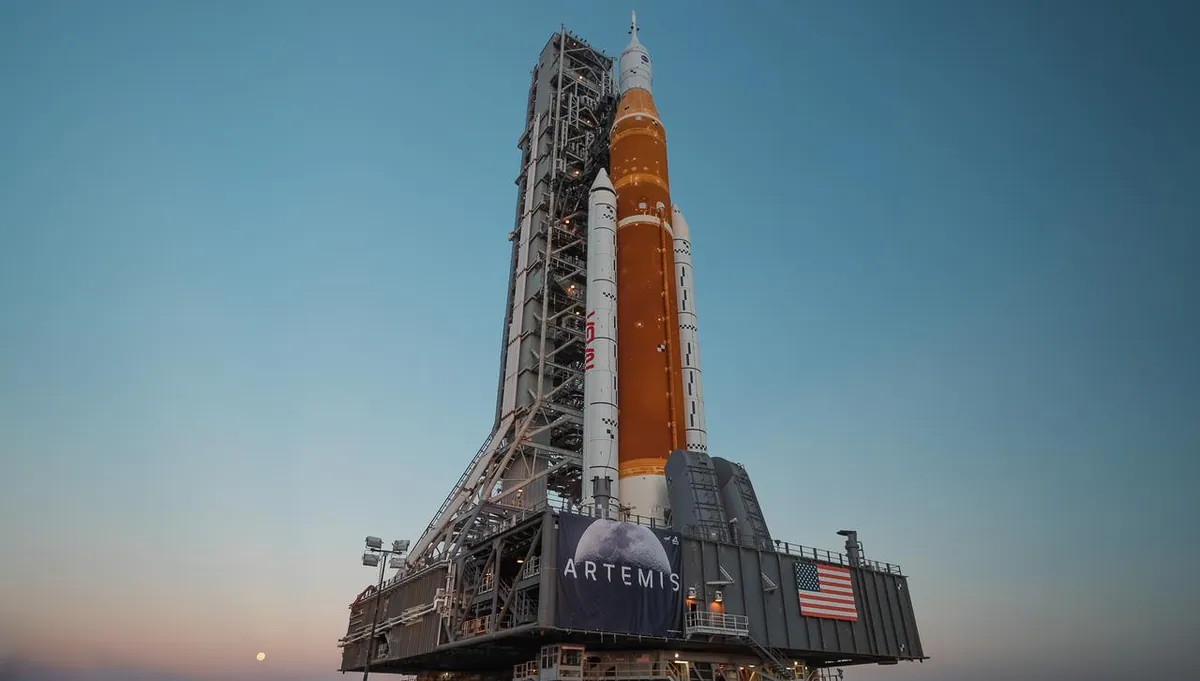
Blue Origin announced last week that a modified main oxygen valve had successfully completed qualification testing and had already been incorporated into engines slated for upcoming flights. The company expects to complete its own anomaly investigation by the end of this month. If the Vulcan failure were ultimately due to a problem with the BE-4 engine, it would certainly delay the return to flight of New Glenn, tentatively planned for January. This would be a setback for NASA, which is counting on that heavy-lift rocket for much of the heavy lifting for its Artemis Program and future lunar base.
This latest setback will likely ground Vulcan for at least half a year, and probably longer. The most affected will be the U.S. Space Force, which has national security payloads waiting for a ride to space on Vulcan, and Amazon, which had more than a dozen launches of its Amazon Leo constellation on the manifest for 2027. It would exacerbate a worsening launch crisis in the United States. The Space Force has shown reluctance to use Vulcan until previous anomalies with the solid rocket booster nozzles are resolved.
Vulcan was designed to replace ULA's Atlas V and Delta IV rockets. The Atlas V has a 100 percent success record, but uses Russian RD-180 engines. Following Russia's annexation of the Crimean Peninsula in 2014, Congress required ULA to end U.S. reliance on Russian engines for national security launches. Although the law allowed Atlas to be used for civil and commercial launches, ULA decided to retire both the Atlas V and Delta IV and replace them with Vulcan.