The US Federal Communications Commission (FCC) has authorized SpaceX to deploy a constellation of up to one million satellites designed as orbital data centers for artificial intelligence computing. The order, published on November 25 by the FCC's Space Bureau, marks the first authorization of its kind in the country and sets a 14-year window to place the complete network in low Earth orbit. If fully built, the constellation, named Starmind, would exceed by nearly two orders of magnitude all satellites launched in the history of space exploration. The European Southern Observatory (ESO) immediately warned that the project would have deep consequences for astronomy and would fundamentally alter the night sky for everyone on the planet.
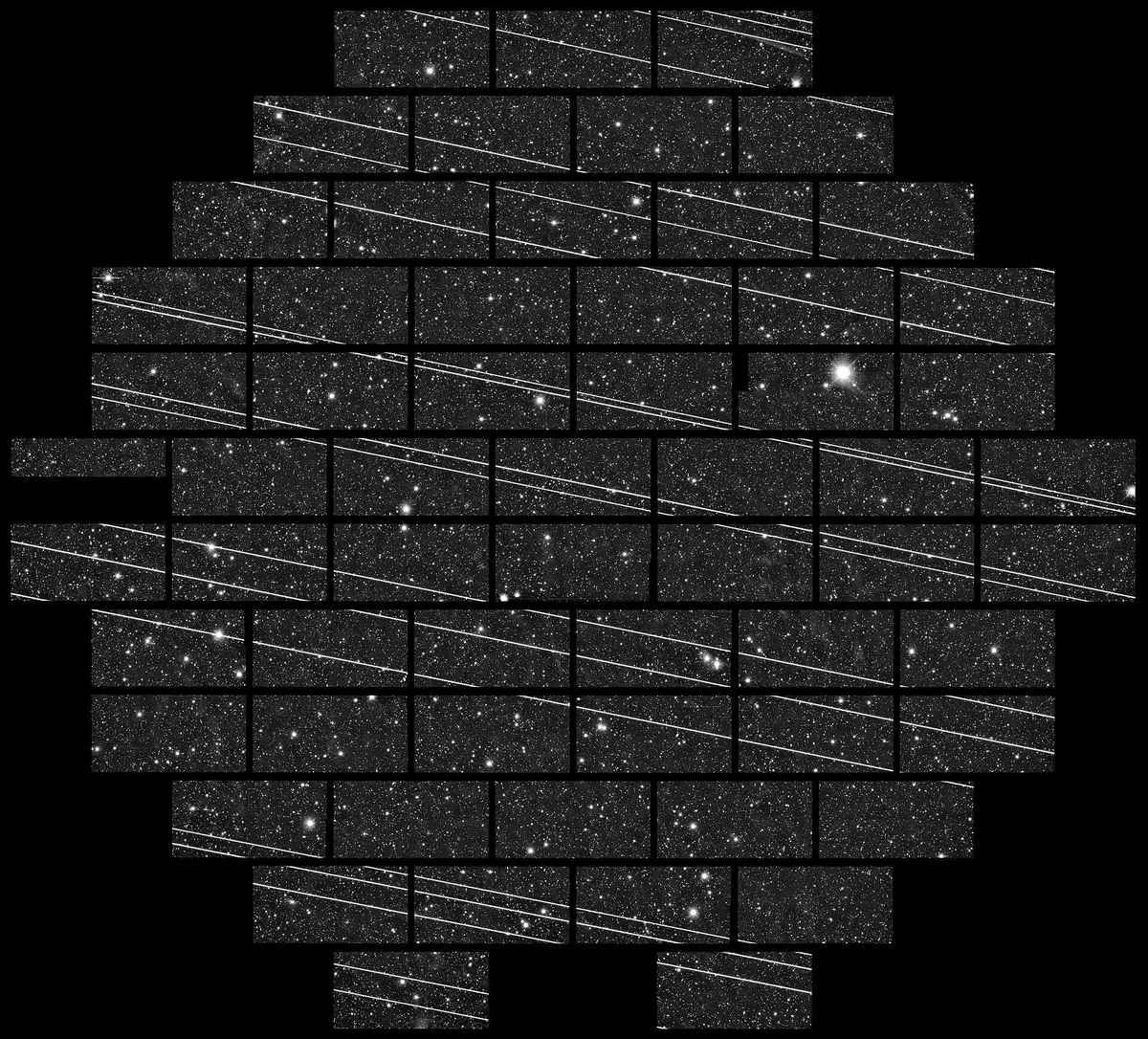
Andreas Kaufer, Director General of ESO, stated that the approval shows the urgent need for international mechanisms capable of evaluating activities whose impacts extend beyond national borders. According to Kaufer, ESO already demonstrated these impacts in an extensive technical analysis and raised them in a response to the FCC, as did other organizations worldwide. A peer-reviewed technical analysis, led by ESO expert Olivier Hainaut and published earlier this year, quantified the impacts of launching large, bright satellite constellations on observations of the night sky. The study concluded that planned constellations, including SpaceX's data centers, would hinder the ability to observe faint cosmic targets, like far-away galaxies, some Earth-like planets around other stars, and even asteroids potentially dangerous to our planet. Although companies are reducing the brightness of their individual satellites, the total number approved in these projects means the streaks in astronomical images will exceed what can be mitigated. Beyond optical astronomy, one million satellites would generate radio noise affecting radio astronomy, pollute the atmosphere from multiple launches and reentries, and crowd low Earth orbit, risking major chain collisions.
The FCC authorization sets strict deployment milestones. SpaceX must have at least one operational Starmind satellite in orbit by November 25, 2033. It must then reach 10 percent of the constellation, or 100,000 satellites, by November 2035, and 50 percent, or 500,000, by November 2038. The full one million must be in orbit by November 25, 2040. Missing any milestone voids the authorization. The order also requires ongoing reporting on conjunctions, deorbiting, and spectrum use, and it denied petitions filed by Amazon Leo, Viasat, and the American Astronomical Society.
The first-generation satellite, designated AI1, is substantially larger than current Starlink vehicles. With its solar arrays and radiators deployed, the spacecraft is designed to span roughly 70 meters in one axis and 20 meters in the other. The satellites will rely primarily on optical laser links with the existing Starlink constellation for data return. Ka-band spectrum is authorized only for backup and emergency telemetry, tracking, and command.
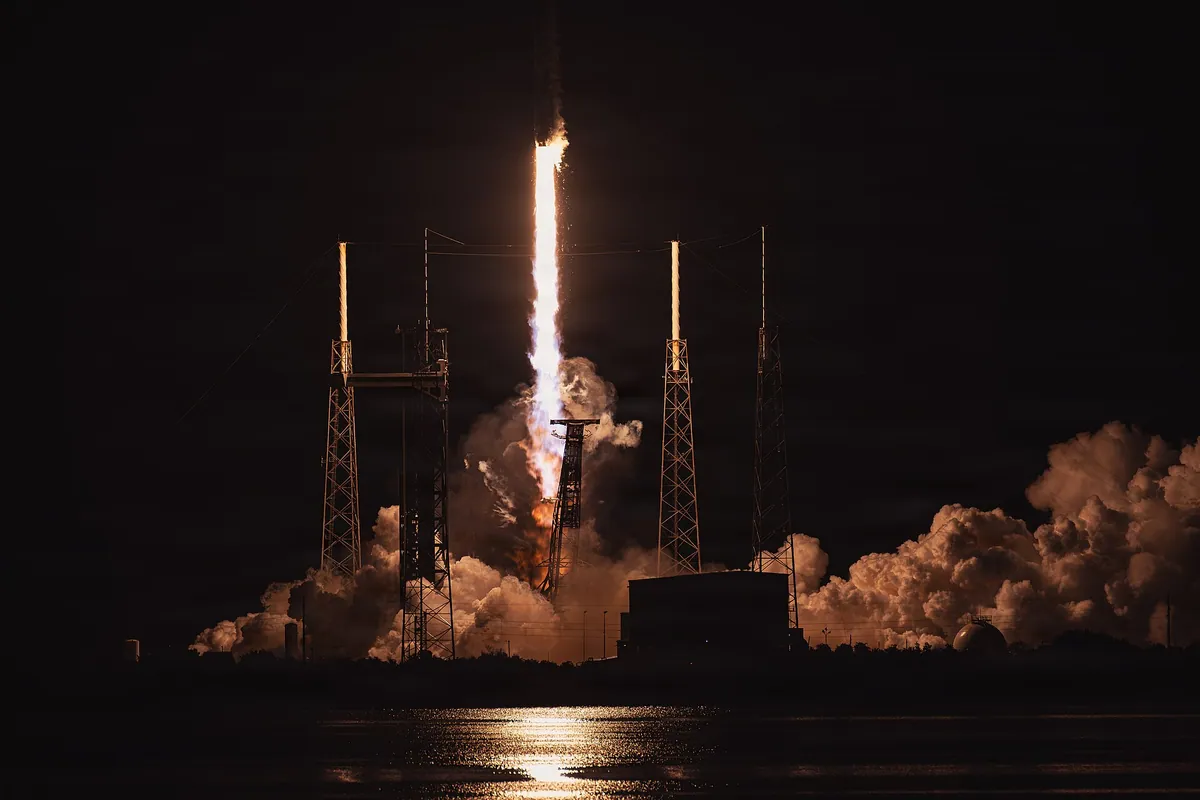
The intermediate milestones imply a launch tempo far beyond current capabilities. Reaching 100,000 satellites by 2035, starting from a first operational vehicle in 2033, would average well over one hundred AI satellites per day. Given the large size of the AI1 design, that volume would translate into multiple Starship flights per day for years. SpaceX is currently working to increase the Starship flight rate, but it has not yet demonstrated the weekly, let alone daily, cadence that a full Starmind deployment would demand.
In a statement on the decision, FCC Chairman Brendan Carr said it moves the United States decisively to ensure this breakthrough technology creates opportunity, drives investment, and delivers lasting benefits for the American people. Other companies, like Blue Origin, Google, and Nvidia-backed Starcloud, are also pursuing orbital computing concepts, but SpaceX is the first to receive a US license of this scale. The authorization does not guarantee the constellation will be built to its full size, but it clears the regulatory path and sets the conditions under which SpaceX may attempt it. ESO supports international governance frameworks that balance innovation in space with the protection of the night sky, scientific research, and the long-term sustainability of the space environment. The organization maintains that as space activities expand rapidly, decisions with global consequences must be based on scientific evidence and assessed through appropriate international mechanisms. The first real test of the regulatory path will come in November 2033, when at least one AI1 satellite must be operating in orbit.