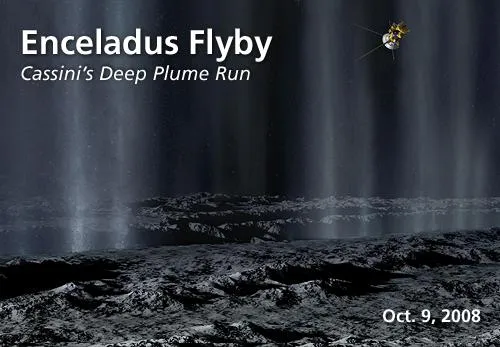
The Cassini spacecraft will fly by Saturn's moon Enceladus twice in October. On October 9, the spacecraft will fly by Enceladus at 25 kilometers from its surface, making it the closest flyby ever made of a Saturnian moon. On October 31, it will do so at a greater distance, 196 kilometers.
Scientists are intrigued by the possibility that liquid water, perhaps even an ocean, could exist beneath the surface of Enceladus.
Traces of organic matter have also been detected, increasing the tantalizing possibilities that it could be habitable.
During the October 9 flyby, the spacecraft's instruments will delve into the plume's mantle deeper than ever before, sampling particles and gases directly.
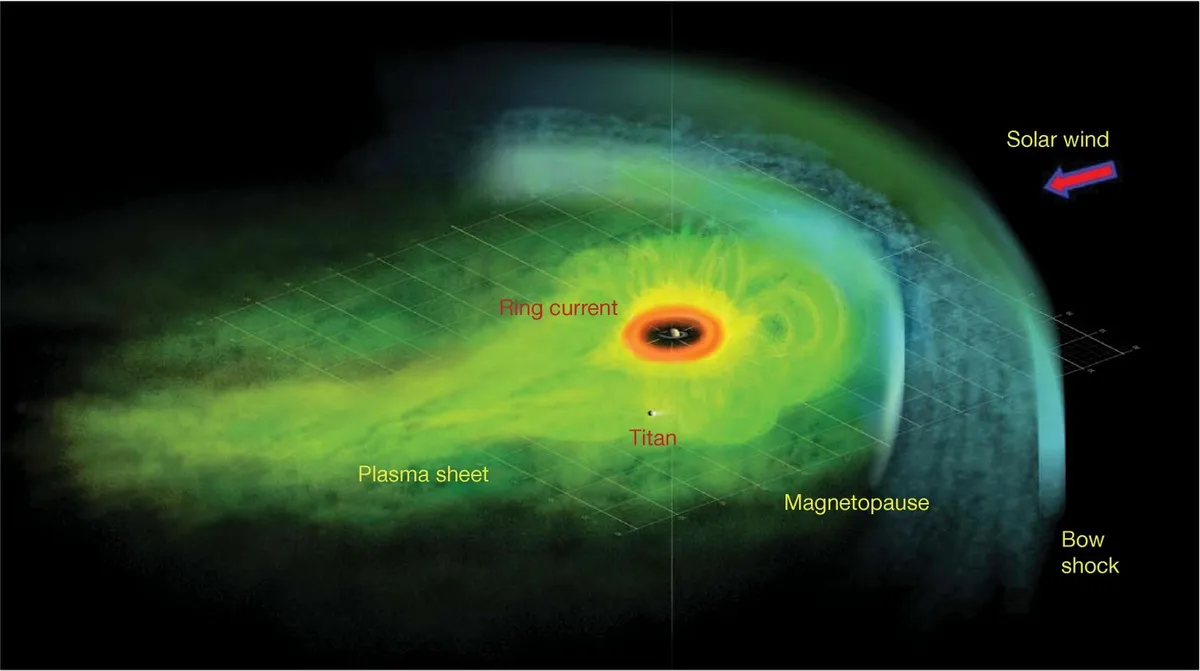
"One of the scientific unknowns we are trying to understand is what happens to the gas and dust that Enceladus releases, how that gas is transformed into ionized plasma and is disseminated through the magnetosphere," said Tamas Gambosi, a Cassini scientist at the University of Michigan.
On October 31, the cameras and other instruments will focus on the fissures that cross the moon's south polar region.
These two flybys may increase the findings from the last one performed at Enceladus on August 11, 2008, which showed possible changes related to this icy satellite. That encounter showed that the temperatures in the fissures (which look like tiger stripes) were lower than those measured in previous flybys.
The Cassini spacecraft has orbited Saturn since 2004. In the next two years it will make four other flybys of Enceladus, according to NASA's mission schedule.
Sources and related links
- NASA JPL: Cassini Plans Doubleheader Flybys of Saturn's Geyser Moon
- Cassini finds organic material in Enceladus geyser
About the images
Illustration of Cassini over Enceladus.
Copyright 2008 Karl Kofoed