Science Talk is a Scientific American podcast, hosted by Steve Mirsky. Three weeks after the audio is published, the transcript of the talk is published. Below, the talk given by cosmology specialists Alan Guth (who formulated the idea of inflationary universe); Lawrence Krauss, a prominent physicist, author of several popular publications and contributor to Scientific American; John Carlstrom, leader of the South Pole Telescope, who studies the background radiation; and Scott Dodelson, a cosmologist at Fermilab.

What follows is a translation of the podcast transcript, whose original can be found at: Stars of Cosmology, Part 1.
To the right, next to the Talk logo, it is possible to listen, on the original page, to the podcast and below a link to download the audio file.
(MP3, 8MB, 17 minutes long)
Welcome to Science Talk, the weekly Scientific American podcast for the week of February 18, 2009. I'm Steve Mirsky. I just got back from Chicago, where I was at the annual meeting of the American Association for the Advancement of Science. On Monday, February 16, I had the privilege of attending a historic press conference, which I'm going to share with you, on the current state of cosmology. The participants were Alan Guth of M.I.T., the developer of the inflationary model of the universe; Lawrence Krauss, a frequent contributor to Scientific American magazine and director of the Origins Initiative at Arizona State University; John Carlstrom of the University of Chicago, who studies the cosmic microwave background radiation left by the big bang; and Scott Dodelson of Fermi National Accelerator Laboratory, who studies the origin and structure of the universe. In the first part of the podcast, we'll hear from the four cosmologists, who discuss our understanding of the universe, and then, in the second part, they answer reporters' questions.
Krauss: The last decade has seen more revolutions in cosmology than, perhaps, the previous century, and our picture of the universe has completely changed, but at the same time we are on the threshold of addressing questions that it would be fair to say, a generation ago we not only wouldn't have even thought to ask but we would never have imagined they would be testable. We have been able to investigate literally the physics of the universe when it was less than a millionth of a millionth of a millionth of a millionth of a second old and, in fact, the best current ideas about what happened are due to this man...
Steve: This man is referring to Alan Guth, seated to the left of Krauss.

Krauss:...who developed something, an idea, called inflation, which is actually currently the best-founded picture of what might have happened and the only picture that, in some way, provides a possibility of explaining what we see from first principles. That doesn't mean it's correct, and that's the key question we need to know. Currently, right now, with all the new observations in the cosmic microwave background radiation and galactic structure and the weight of mass in the universe, it's all completely consistent with ideas that were developed associated with the idea of inflation. But the key is, is there any way to definitively test the idea? And one of the ways, one of the predictions of inflation, potentially, is that if there is a background of something called gravitational waves -literally ripples in space and time that exist throughout the universe- and the other two gentlemen who are here, John Carlstrom, one of the experimental leaders in looking at the cosmic microwave background radiation, which is currently our best probe of the universe.
Moreover, some people would say, "What turned cosmology into a precision science?" That instead of being able to measure things to an order of magnitude, we can measure things to many decimal places. And one of the tests that could...that the cosmic microwave background radiation could provide us is a test of gravitational waves. And we have been living in the golden age of cosmology, as people say, and the question is, "What will happen in the near future?". And the answer, of course, is that we don't know. We are getting so close to boundary issues, fundamental questions about the universe, that perhaps we are at the limits of what we could call falsifiability. Our ability to rule out ideas, perhaps [has begun to] be limited, because the grandeur of the ideas we are testing could become so real. Inflation is truly a remarkable idea that is simple and beautiful. Currently it is more of an idea than a model. And it could be that we end up with observations that are completely consistent with inflation, but perhaps we won't be able to say, with certainty, whether it happened or not. Perhaps we will have to live with that. But it gets worse. The good news about the universe is that as bad as it is, now it is getting much worse, so you should enjoy it. And the future of the universe is based on what we have now been able to measure, completely miserable. The longer we wait, the less we will see of the universe, the more the universe will disappear, the fewer measurements we will be able to make about nature and thus our presentation of the falsifiability of the universe could get worse.[Note 1] And these crazy ideas have mainly suggested a change in the nature of science. The most puzzling observation that has been made in the last decade is that the universe seems to be full of something called dark energy, empty space. It is full of energy. If you get rid of all the radiation and matter in the universe, empty space still weighs something. But the crazy thing about empty space weighing something -well, there are many crazy things- is that it produces a gravitational repulsion instead of attraction, so the expansion of the universe is accelerating; but this is so mysterious and inexplicable -completely inexplicable so far- that many physicists have gone wild and crazy and have changed what it could mean for fundamental physics by suggesting, for example, that the fundamental concepts in nature are not really fundamental, that they are accidental; they are accidents of the environment; that there are many universes and that we live in the one that has the values it has because if you change them a little, we wouldn't be living. That is to say that the universe is the way it is because there are astronomers who go out and measure it.[Note 2] And that might sound like a tautology or a religious statement, but it is neither. In fact, in honor of Darwin, it is almost like a cosmic evolution, a kind of cosmic natural selection. It is not very surprising that bees can see the colors of flowers, not because they were designed to do so, but because otherwise they wouldn't find the food they need and a similarity has been argued that perhaps crazy things like dark energy have the value they have because if it were different, galaxies would not have formed and if galaxies had not formed stars would not have formed, and if stars had not formed, planets would not have formed and if planets had not formed, astronomers would not have formed. Now, that has completely changed the nature of..., if it is really true, it means that the future of science is very different, because if there are many universes and in each universe the laws of physics are different, perhaps we should throw out fundamental ideas and the ability to make fundamental predictions in nature and we should start talking about probability.
And if that is true, well, all hell would break loose, I think, anyway. And then finally, the future of cosmology would be even worse. The incredible thing is that all the evidence for the universe that we now see, will disappear. All the evidence of the big bang, this remarkable edifice of theory and observation that we have created in the last century, which has produced this bizarre universe but one that we think we understand very well, all the data are consistent with a single picture of the universe. In the distant future, observers will go out with the best laws of physics they can, observe the universe, but will infer that the universe is static and eternal and that we live in an island galaxy surrounded by nothing, which is precisely the picture of the universe that existed in 1900. And that will be the future of cosmology, which will arrive at the wrong picture of the universe.
Steve: John Carlstrom, from the University of Chicago.
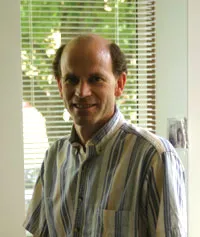
Carlstrom: You just heard from a theorist (laughs) that in the last 10 years, all this information was discovered and our picture of the universe changed completely and I agree with that. I am an experimentalist, and if you think, I say, the last ten years are fantastic, it's really true. I say we have this picture of the universe, but this picture has dark energy, dark matter, 95 percent of what the universe is we don't really know what it is. My view is that it has been an incredible time for discovery and to think that we are somehow close to finishing discovery or understanding something well, now, to predict the next 10 to 20 billion years, I think is not correct and I am not so pessimistic. I think there are many discoveries to be made, perhaps learn from the LHC -the Large Hadron Collider- what dark matter is and of course in the future the cosmic microwave background radiation has much more to tell us. So, if I have to say, stay tuned before assuming that things are the way they are because we are there to see them and that's the end of the story.
Krauss: And I certainly hope that is the case. It is certainly true that every time we have opened a new window on the universe, we have been surprised. And my greatest fear, and I want to bet here, John, in front of the reporters, is that we have made remarkable discoveries in the last decade.
Calstrom: Yeah.
Krauss: And we don't understand these things we have seen. We don't understand dark energy, we don't understand a lot, we have discovered the nature of the universe, but we don't understand why it is the way it is. And I worry that experimentation has expired. I mean, in terms of being able to fundamentally eliminate these questions, and perhaps we must fall back on theory - and if you are a scientist that is a dangerous thing to fall back on - and so perhaps we are on the threshold, perhaps a new idea is required, and that is much more difficult.
Steve: Alan Guth.
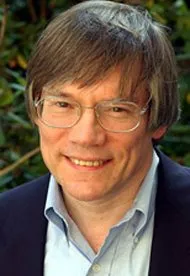
Guth: I think those discoveries are about to be made; with the Large Hadron Collider and with the many detector experiments that are being set up, some scientists may have discovered something already. I think the puzzle is going to be solved. With dark energy, it's hard to know what it is. It could well be vacuum energy. If it's just vacuum energy all we can do is, in some way, constrain it more to be more and more vacuum energy. There won't be a new theory there, there is no experiment that is going to show us that it is vacuum energy, but there will be many experiments that will determine its properties, so we finally decide perhaps that it is as much as vacuum energy that then it's just vacuum energy. I think there are also other possibilities, you know, many exciting discoveries to come. About Lawrence's criticism of this crazy idea that the universe is the way it is because astronomers are here, I think that, in fact, we must live with that. There, I believe, I agree with what Lawrence said, I think it's unpleasant to think that science, or at least this particular aspect of science, could be reduced to the claim that the universe is the way it is because there are astronomers here. The key issue that I think probably pushes us in that direction is this dark energy. I should add, I don't think Lawrence really said it, the most peculiar thing about this dark energy is really the fact that there is so little. Based only on particle physics, if you must naively guess what the energy density of the vacuum should be, you might think it is zero, and zero was, in a way, acceptable to us for a long time, but the quantum vacuum that physicists really know is not empty, so zero wasn't really a very sensible answer. But the natural answer we would pick would be about 120 orders of magnitude greater than the observed vacuum energy. So, the big question is "What explains why the vacuum energy is so incredibly small?". And one possible answer, I don't know if it's correct, and I think it will take a long time before we really establish or know if it is the best explanation or not, I think the best explanation is the one we have now, but it's not good enough to believe it is the best explanation in the context in which our theories of cosmology are moving. This inflation theory, which gives us very good predictions of properties like the cosmic microwave background radiation for the mass density of the universe, for things we actually measure, the same theory in almost all its forms predicts that there shouldn't be just one universe, but that the same mechanism that produced our universe would produce more and more universes without limit, producing an infinite number of universes. Furthermore, the idea combines with ideas that come from string theory, which I think, like most theoretical physicists, is our best guess of the fundamental laws of nature. String theory tells us that there isn't just one vacuum, but a large number of vacua, possible vacua, 10^500 or so, crazy numbers that people talk about, and that means that each of them has a different vacuum energy. And if this idea of eternal inflation producing an infinite number of universes is correct, those infinite numbers of universes could each have a different vacuum from these 10^500, so all of them could exist. And then you ask yourself, where in this multiverse would you expect to find astronomers making measurements of the vacuum energy density? And there are good arguments that you could only find it when the vacuum energy is incredibly small, because a larger vacuum energy would tear the universe apart, it would produce a repulsive force before galaxies could form and if you believe observers only form in galaxies, there are no observers in those universes. Conversely, if the vacuum energy were negative, it would cause the universe to re-collapse quickly and there wouldn't be time for astronomers, at least of the type we know, to exist.
Krauss: That's the key point. At least of the type we know.
Guth: In fact, you are right, there is great uncertainty, I completely agree. So I will be much happier if all this goes away, but I will continue arguing that this is a very reasonable explanation, and it could even be the correct explanation for why the vacuum energy we observe is so incredibly small compared to what we would theoretically expect.
Steve: Scott Dodelson of Fermilab.

Dodelson: I think I would be a bit more optimistic than all of you. (Laughter). In the last decade we have figured out how the universe went from A to B; A in this case is the picture that John and his collaborators have taken with the cosmic microwave background radiation and the universe at only 400,000 years old, and B is how the universe looks today when it is 13.7 billion years old. The incredible thing is that we have so much confidence in our ability to understand how it got from A to B, I mean, that now we are thinking, extrapolating, past B and before A. So, Alan has done that 'before A', perhaps it's inflation, and Lawrence has done that 'after B', by saying the universe will die with that pessimistic death. I really don't know, and I think the most exciting thing is that the measurements we will make in the next decade can inform us about both possible extrapolations. So, for example, by measuring the properties of dark energy, we can learn if Lawrence is right or wrong, and those measurements will be made during the next decade. And similarly, by making more detailed measurements of the cosmic microwave background radiation, we can learn if this inflation theory is correct.
And just as on the ground it seems to me that observations are not disappearing, there are more and more of them; each year there is another idea of how to test inflation. For example, gravitational waves are a solid test for inflation, but in the last couple of years, there have been a number of other ideas studying these fundamental seeds that John and collaborators measured. The detailed properties of these seeds have had finer scales of measurement. We can expect to test inflation in more ways and more precisely. So I am very optimistic about these extrapolations. We are asking great questions, but we have real hopes of answering them.
Steve: That's all for the first part. We will return with the cosmologists' answers to the reporters' questions in the second part of this podcast. For Science Talk from Scientific American, I'm Steve Mirsky.
The second part is at "The Future of Cosmology (2)".
Sources and related links
Notes:
The links and images are my own contributions.
This is a public outreach talk, given by cosmologists for a broad audience. This implies there will not be very technical language or detailed explanations, but rather a conversation about the future of cosmology. It also means that, not having a prepared text to read, but commenting spontaneously on what they think, they comment with redundancies of terms and ideas.
In the Scientific American transcript the term "probe" (to probe, investigate, examine) is used in certain parts, but I thought that, given the context, in some cases they might have meant "prove" (to prove, demonstrate).
Certain ideas are alluded to such as:
[Note 1]:On the death of cosmology
[Note 2] Anthropic principle
About the images
Science Talk logo. The logo, the podcast and the English transcript belong to Scientific American.
Photograph of the participating cosmologists, from their respective websites.