The cosmologist won the 2009 Isaac Newton Medal from the Institute of Physics (IOP). The American scientist was honored for "his invention of the inflationary universe model, his appreciation that inflation could solve major problems facing standard cosmology and his calculation -with others- of the density fluctuations that gave rise to structures in the universe".
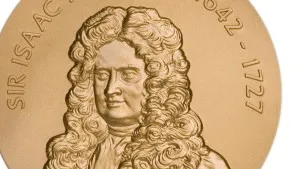
The prize includes 2000 pounds sterling and will be presented at a ceremony on October 15. Guth will give the institute's lecture on October 13.
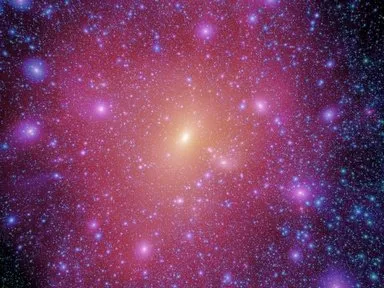
In 1981, Guth introduced the concept of an inflationary universe to solve a number of shortcomings in the conventional big bang theory. According to the inflation concept, the universe underwent a fantastic expansion during the first instants after the big bang, stretching incredibly fast.
This hyper-expansion answered two important cosmological questions: Why is energy spread so uniformly across the universe? and How could small deviations from uniformity arise? These deviations or density fluctuations would have led to the formation of galaxies and large-scale structures.
Guth had the idea while searching for a phase transition thought to have occurred about 10-35 seconds after the big bang, when the strong force separated from the electroweak. Grand Unified Theories (GUT) have predicted that a large number of magnetic monopoles would have been created at that time, but there is no observational evidence that it happened.
Working with Henry Tye of Cornell University, Guth realized that particle physics and cosmology theories could be modified so that a supercooling of the universe occurs in the phase transition, suppressing monopole production. This supercooling also released a tremendous amount of energy, which accelerated the expansion of the universe in an inflationary period lasting about 10-32 seconds.
The inflationary hypothesis remains an important milestone in the development of cosmology because it showed that the nature of the universe as a whole could be understood in terms of theories derived from particle physics experiments.
Guth, 62, was born in New Jersey and is a professor of physics at the Massachusetts Institute of Technology.
Other awardees
Professor Datuk Dr Mazlan Othman, an astrophysicist from Malaysia, received the President's Medal, recognizing her contribution to the development of astronomy education in her country and her leadership role in space science.
The Kelvin Medal was awarded to Professor John D. Barrow for his vivid descriptions of physics and astronomy through various books, lectures, and broadcasts that encourage young people and the general public to understand the historical importance of physics.
The 2009 Chadwick Medal went to Imperial College London professor Tejinder Virdee for his crucial role in the design and construction of CMS, one of the main experiments at the LHC.
Other medals and awards were also presented, which are listed at Awards 2009.
The IOP
The Institute of Physics (IOP) awards exist to recognize and reward outstanding achievements by physicists in their respective fields, working in industry, business, or research. In 2008, the awards portfolio was expanded and now 27 medals are awarded covering all areas of modern physics, education and outreach, application and technology. The IOP is responsible for publishing a set of scientific journals, among which are The Astronomical Journal and The Astrophysical Journal, as well as the magazine PhysicsWorld.
Sources and related links
- Physicsworld: Alan Guth bags Isaac Newton medal, by Hamish Johnston
- IOP announces 2009 award winners
- Astromía: The inflationary theory
- Astrocosmo: An inflationary solution
About the images
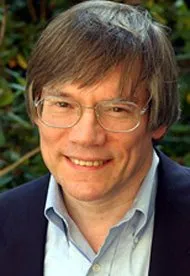
Alan Guth. Credit: MIT
Image of the Isaac Newton Medal. Credit: IOP.