The Miradas Project
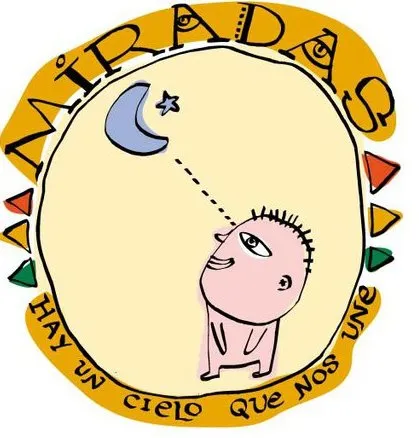
A pedagogical, cultural and communicative journey is healing the open wounds in Latin America to generate reflections on the very large and the very small, towards a look at ourselves. Astronomy and science within everyone's reach.
Raise your hand if you think science has no emotion.
We human beings have been building a difficult world. Here we are, civilized, with bank accounts, consuming all kinds of products -if they are electronic it's because we are "technological", sending ships into outer space, dancing for a dream or surrounding a group of athletes in the new Roman arena of soccer. And all of it on TV. Or on Twitter.
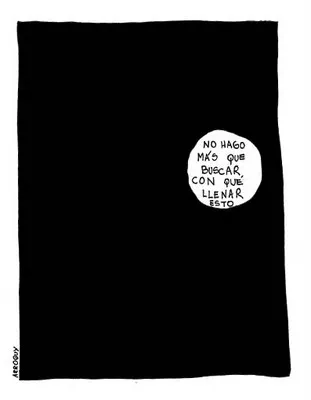
At the same time, since we can't make sense of this, we believe that "another world" is possible: fairies, gnomes, elves, vampires, werewolves, angels, demons, little green men from other planets, beings of light, ghosts, prophecies, ends of the world, beginnings of new eras.
We believe it because we can't find meaning in this wandering of ours through life. Because we are alone in this ring. Until our gaze meets another and everything changes.
What we are is plural. There are others here and there. And we need each other. Mutually. In this interaction there is an invaluable enrichment from the transfer of scientific knowledge, but also cultural. We are creatures of habit and that diversity, through globalization, is being lost if we don't safeguard it.
And in this interaction we can find meaning in this wandering through life.
But saying it is one thing and acting accordingly is another. Being supportive of others is also being supportive of oneself. But there are several ways to do it.
The Miradas Project
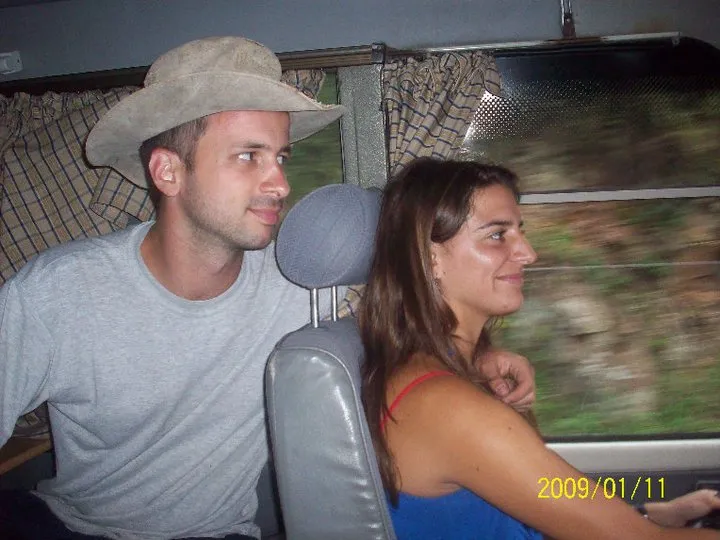
Sofía Méndez and Daniel Ekdesman are from Rosario, in their thirties. There is already a love story there. Mutual love for each other and for others.
"Being together we try to accompany each other in our daily practices, always aimed at a social transformation that represents true equality of conditions for everyone," they say.
She is a social psychologist. He is a social communicator. The common denominator is obvious. But there are other things that are not equally visible. I already told it in A different look, but I want to do it again.
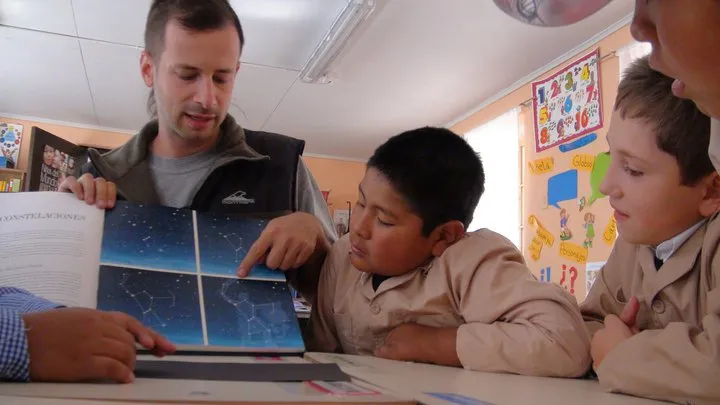
Yayo, as they call him, and Sofía are traveling through Latin America, reaching small schools with optical instruments: telescopes and microscopes. What for?
They tell us on the Miradas Project page:
"...By sharpening our gaze, we will try to see and collectively understand visual records that are not always perceived in everyday life. In this sense, observation will cover the broadest possible spectrum, ranging from the farthest point (the macro) to the closest (the micro); to derive in a deep, intimate focus towards the interior of oneself. Therefore, on this journey, we will seek to reflect on what we have that is plural and singular, what we have in common with others and what is particularly our own, what makes us similar and what makes us different."
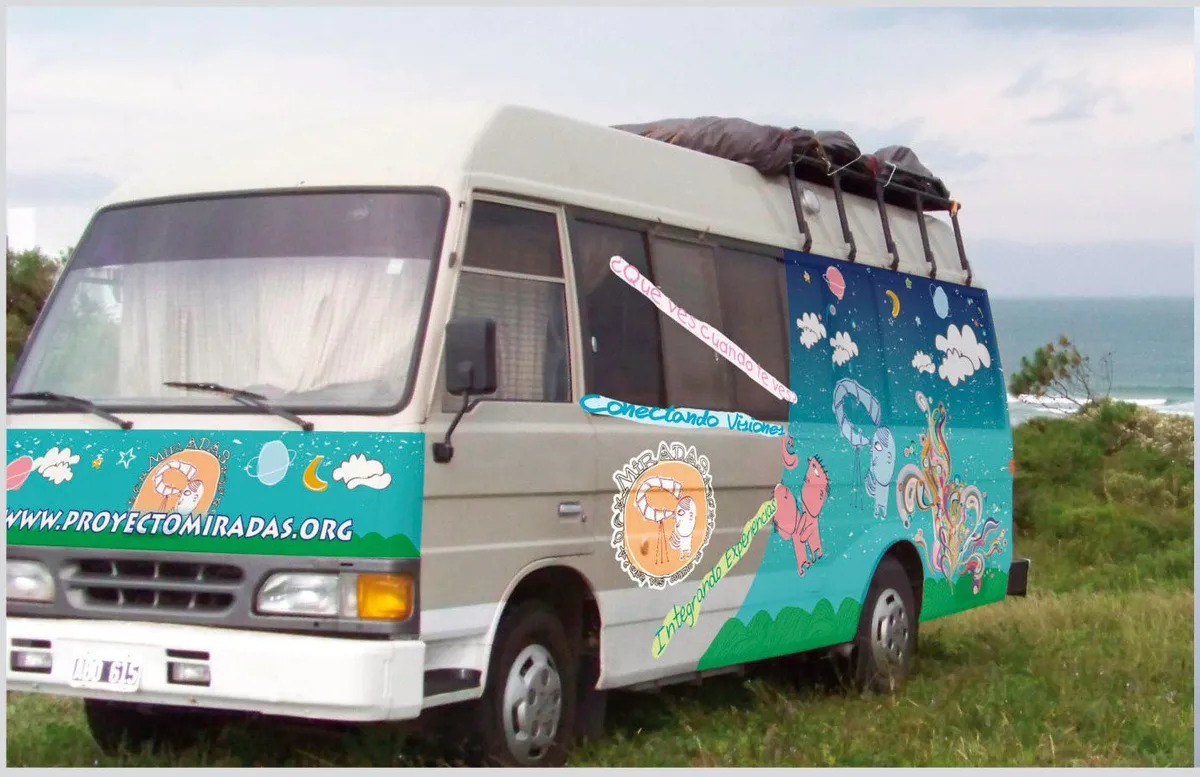
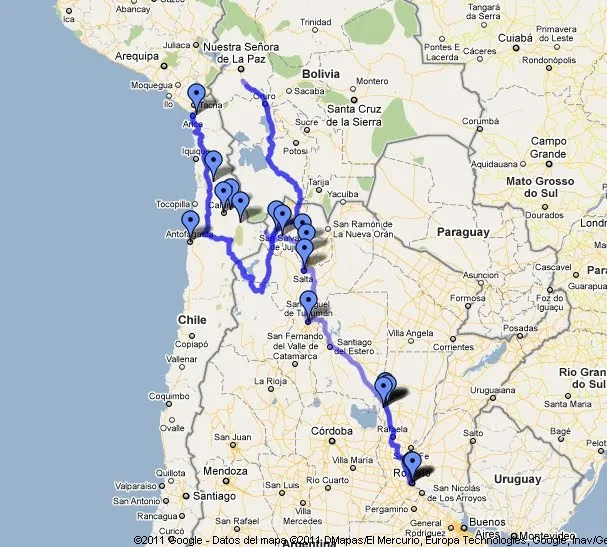
In their nice vehicle, nicknamed Aguará, they left Rosario towards the North of Santa Fe, passed through Santiago del Estero, Tucumán, Salta, Jujuy, Chile and Bolivia, so far, but the journey is being updated not only with a traced route, but with enriching stories of different looks. With dreams.
High dreams
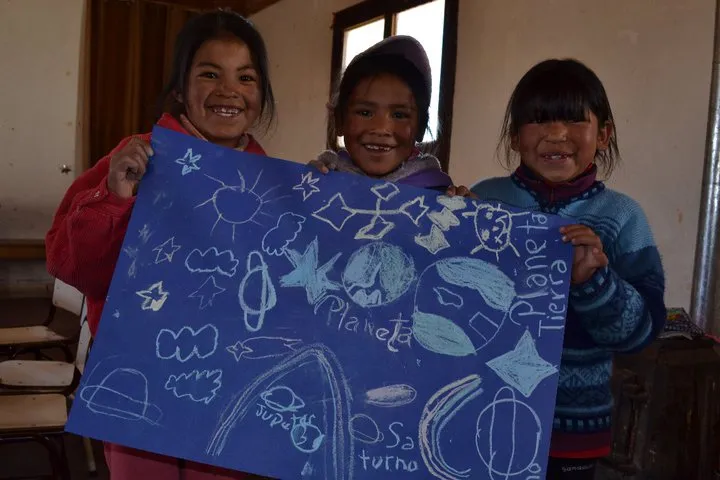
The duo from Rosario took their dreams of integration to Olaróz, at 4,600 meters above sea level, to a population of Atacama families. 61 kids attended the workshops. The narration of a story about the Maimará community was a good excuse to talk about the night, the moon, the stars, the sun. The kids drew their sky, the animals of the place. With another group they talked about shadows, about the movements of the Earth. At night, with a telescope, they observed the Orion Nebula.
Science and emotion
Stories like this one, much richer in detail, are told to us by Yayo and Sofía from their website, their Facebook page and their Twitter account.
Take my advice. Read the stories of the Miradas Project. Know that you can collaborate. It is a project made by force of will and enthusiasm, non-profit, which does not mean they don't need help. If we don't collaborate the project will surely continue anyway. In the end they will edit a DVD and it would be great if the authorities of Argentina and other countries in the region took note of this wonderful effort to give it support and dissemination.
According to what Daniel told me, something of that may materialize. Hopefully. But he also told me that it's an uphill battle, that difficult situations are lived.
In this business reality with so much CSR, which is often just marketing, some company could, with sincerity and without an exclusively advertising purpose, give a good hand.
And you, reader, perhaps can too. Consider it. I believe it is one of those projects that are worth it. If you don't want to or are in a position to collaborate financially, perhaps you can do it in another way. In that case, get in touch with Yayo and Sofía.
A look, a contact
The most important experience of the other is what Sartre calls the look:
You are sitting on a bench in a solitary park contemplating the grass, the path, the trees. Everything you see is organized around you, you are the center of the universe. Someone appears walking towards the grass altering everything. The universe bleeds out for moments. You can still remain seated on the bench, keep the grass at the same distance and make that man just another object, with any position, within a universe whose center you still are. It works until he looks at you; when he looks at you you know it's not about eyes, an object, you know that what you have seen is a look and a subject. (1)
I recently published an interview with Dr. Alejandro Gangui here and asked him about the value of astronomy. And he answered with the wisdom that characterizes him. Astronomy is not just a longing to know (it is, because we are curious), it also has utility (in technology transfer) and an invaluable pedagogical and cultural weight. Constellations are a cultural legacy whose diversity should be encouraged because it speaks of us, of our ideas and customs. The sky is there to be contemplated, it is a heritage of humanity, in addition to helping us navigate and locate ourselves.
Locate ourselves. And multiply. That is the task. A task that Sofía and Yayo carry out and that you, now that you know about it, can learn more about and be a part of.
Read the stories of Proyecto Mirada. And then go back to the beginning of this post:
Raise your hand if you think science has no emotion.
WAYS TO GET IN TOUCH
To get in touch with Proyecto Miradas you can:
Visit their website: http://www.proyectomiradas.org/
Use the contact form on that page
Visit the Facebook page: http://www.facebook.com/PROYECTOMIRADAS
Follow them on Twitter
Follow them via RSS
Sources and related links
- Proyecto Miradas
- (1): From Sartre, the gaze
About the images
- The photos belong to Proyecto Miradas and were taken from the website and the Facebook page.
- The vignette Buscar, is by Julieta Arroquy: http://julietaarroquy.blogspot.com/