They say journalism is dead. I don't think so. But sometimes, you read articles that smell of decomposition. Reflections on a case of "forensic science".
I am not fond of police reports and even less of tabloid journalism. But in both cases, the justice system usually intervenes: robberies, kidnappings, divorces, homicides, suicides. Particularly in death cases, trials usually contain some science, in addition to the use of various arguments for or against someone.
How to know the truth? You have to infer. And there begins a sauce, sometimes unbelievable, of arguments of all kinds.
It must be noted that judicial debates end up generating public opinion. Such a priest is pointed out as a suspected child molester. Medium shot of a crying mother: "He is guilty." And immediately that man becomes the guilty one.
I am not trying to defend any priest with the preceding expressions. They are an example, although they refer to a notorious case in Argentina in which the aforementioned was "condemned" in public opinion before any judicial process.
But what sparked my interest in writing this was another case, of raging judicial currency in my country, which was categorized as "The Solange case".
In short:
Solange Grabenheimer, 21 years old, who lived with her best friend, Lucila Frend, was found dead on January 10, 2007.
You can access an interview that Para Tí Magazine conducted with Lucila Frend. The interview was also compiled by the blog Psicología Jurídica-Forense, where they also talk about the topic of the "psychological autopsy" that I will discuss later.
There was no lack of money, there were no forced doors (although a door leading to a balcony had no lock...), there were no footprints and few fingerprints were found that are allegedly useless.
Among the statements that the press disseminates, a forensic expert is cited who would have indicated that there were no footprints even though it rained that day.
I can't help but wonder: did it rain all day).
It is difficult to find very reliable archived meteorological data. The previous link is to Wunderground.com. For the date of the case (January 10, 2007) it indicates that it would have rained between 8 am and 12 pm.
But also, couldn't the footprints that might have been left have been erased?
Aside from that, what disturbed me was the mention of a forensic expert who would have performed a "psychological autopsy". How? According to the media, for example a Télam wire: "the psychological autopsy is an innovative technique in the country that is based on the analysis of the victim's habits and interviews with her environment, to then be able to draw conclusions".
What kind of conclusions?
I quote the same wire again: "I believe the motive was passionate and given how Sol was with her crisis, it is likely that the perpetrator felt abandoned or betrayed. Statistically, women kill when they feel abandoned or betrayed", she concluded.
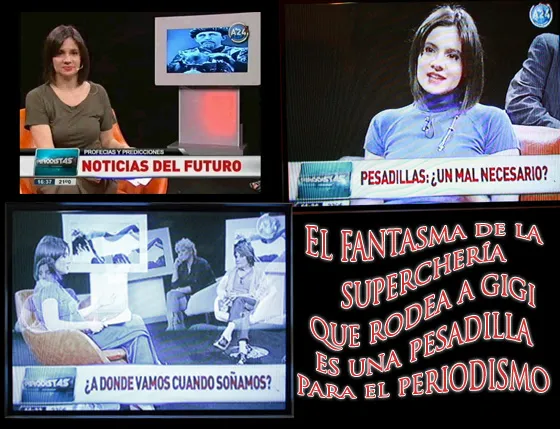
A couple of nights ago the program Otro tema, hosted by journalist Santo Biasatti, interviewed Lucila Frend and her mother (you can see the video from the link), with the collaboration of the police reporter from TN, Ricardo Canaletti.
Canaletti's view seemed very appropriate to me, unlike other police reporters, particularly those in the print press. At least because he asks questions.
But the most striking thing was the mention of the "psychological autopsy" and its usefulness. Trying to reconstruct a person's mental state through data from their personal life, their last acts, their behavior with other people, their problems and activities, etc., can be useful. At least as a description. From what I have read since this technique is mentioned in the press for this case, it is a non-standardized technique, used in the United States, and especially to try to clarify -perhaps- or at least understand the possible causes of suicides.
But what kind of conclusions could be drawn from this type of analysis in a homicide? Is it possible to point to a person as guilty or a presumed guilt through this type of "expertise"?
What importance does statistics have in this context? You read around that most crimes of passion are committed with a bladed weapon. Is it possible to infer the opposite? Is a death by bladed weapon necessarily produced by a motive of passion?
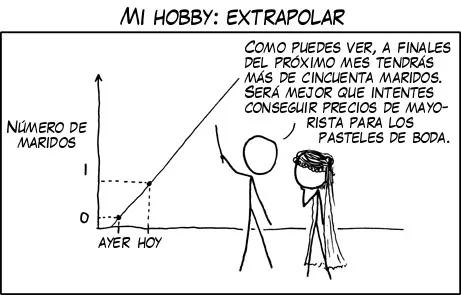
All lawyers are men. Does that mean all men are lawyers?
I mean, is it too much to ask for a tiny bit of logic?
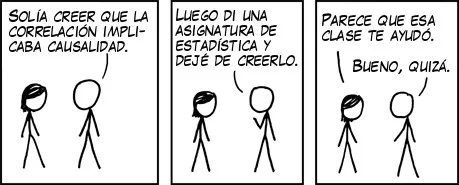
According to La Nación: "(...) the psychologist Sandra Musumeci, a Gendarmería forensic expert who performed the psychological autopsy, maintained that the killer belongs to the victim's inner circle and that it would be a woman, which would have implicated the only defendant".
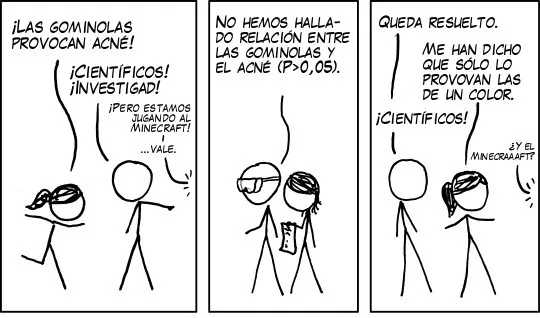
How does that arise from a psychological autopsy? This question I am asking, don't those who write the police reports ask it?
It goes without saying that I am not trying to "defend" Lucila Frend with these questions. I don't know her. Those who judge are the judges and those who accuse are the prosecutors.
But aside from this case, what is the scientific value of these "expert reports"?
Isn't it necessary to ask that?
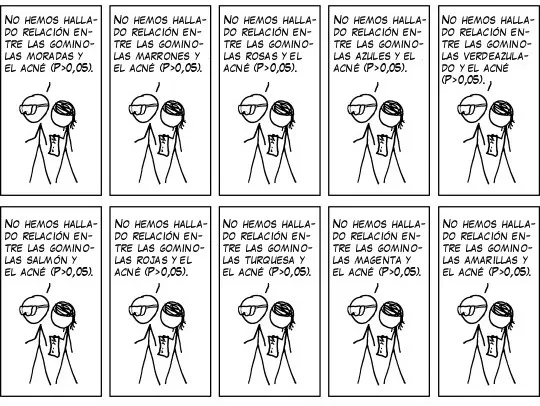
I don't want to lump all of psychology into the same bag. I understand the difficulty of reaching firm conclusions in social studies. A human being is not the same as a photon. But if that's the case, be careful with the conclusions that are drawn.
A warning call to the physical sciences
In this case, and also in others, a problem with other sciences is also perceived. Some epistemologists and thinkers suggest that psychology is NOT a science. I have some caution in making statements of that type and I do not want to dismiss research with a dismissive view.
In fact, if we analyze the statements from expert reports that we could consider "more exact", we find that there are at least two different forensic reports on the presumed time of death, in the Solange case. And with very different time ranges. In one range, Miss Frend would have been in the apartment; in the other, she would not. It is very important, then, to establish the range with the greatest possible precision. And I don't understand how two experts can reach such different conclusions. And that IS "science", isn't it? Or not either?
The issue of the rain and the footprints, moreover, would also be related to the time range, because it did not rain all day.
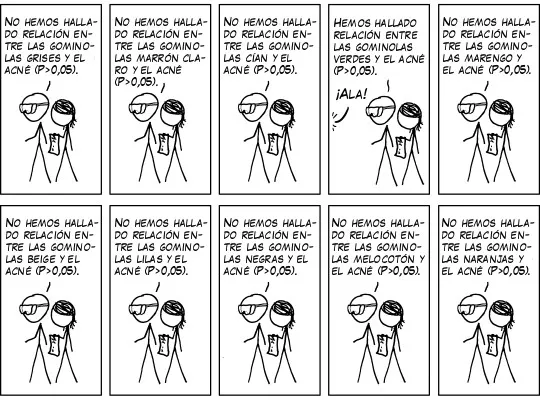
Was Solange stabbed by a right-handed or left-handed person? It is not known, because there are experts who would point to one thing, and others, the opposite.
If I remember correctly, Canaletti said in the cited interview, that "everything is said and nothing is said".
And this is not right.
The utility of science
I ask myself questions because thinking is free. And wonderful. But also irritating. Someone who likes science might find it annoying to ask: what is science for?
But I ask myself and try to answer it, evaluating a social, political, and economic context.
To put it with an example:
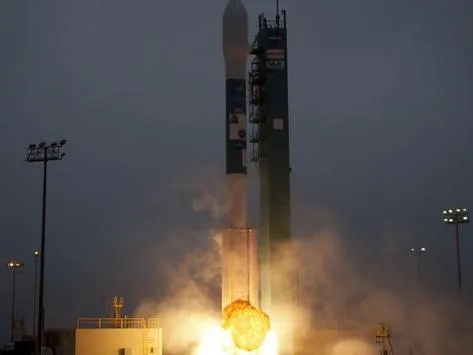
The launch of the SAC-D satellite was recently publicized. An Argentine satellite, with 8 instruments, 5 of which are national. There is no doubt that it is a remarkable scientific-technological achievement and it is very good to give it the magnitude it deserves.
How much did it cost? A little over 300 million dollars, of which Argentina contributes only one fifth. It is still a lot of money that could be used for something else.
I believe it is explainable that science "spends" money. And I do not believe that there necessarily has to be a "practical application", at least not in basic science.
But in the case of SAC-D, it is reported that the collected data will help make better weather forecasts, by understanding it better. That is, questions will be answered.
When conclusions are reached, after using that data in research, will we have very different points of view?
Just by getting informed about the current claims about climate change we will see that it is very possible that this will happen.
I insist that I ask myself questions. It is not a criticism, I am not making a value judgment. I bring it up for two reasons:
a-The study of climate is related to temperature. And the same occurs, regarding temperature, with the possibility of inferring the time of death of a person. However, in one case we have a very complex system and in the second case there do not seem to be as many variables as with the climate.
b-Also, it is important to point out from the start that with much more data, like the ones SAC-D will collect, more answers will be obtained, yes, but new ones will also open up and there will not necessarily be, in the short term, definitive answers (or at least high consensus) since it is science, not magic. On the other hand, the climate is a complex system.
I take the opportunity to say this now, with the media effervescence over the satellite launch, because in five years, perhaps with another government in charge of the executive, results will be demanded, the use of the satellite will have to be extended, economic disbursements made. The public, then, it would be logical (and the political class) to demand results. Will there be any? If "result" is understood as a generalized agreement among researchers, as the definitive and conclusive answer to questions, then there will be a problem. Because it is difficult for that to exist in the short term. However, that does not mean that the data collected is not useful. Without a doubt, with more data there will be more answers.
Ptolemy's image of the world and the solar system matched the observations of the time. But it was a false image. With more data, a "real" image of the movement of the planets could be found. But it was not immediate.
It is necessary to say this from the start. If we only say it in five years, it will seem like a "scam" to the public, who are now promised a better understanding of the climate and better predictions and perhaps that will not happen quickly.
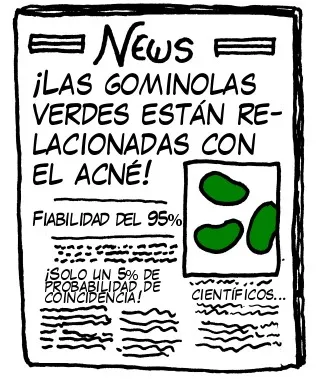
But, if that occurs in general in the sciences, it is logical that it is more evident with complex systems, like the climate, and not so much in other systems and subsystems. Is it not possible with current data and models to know with considerable certainty the time of death of a person through temperature measurement or other methods?
If that cannot be answered, is it because insufficient research has been done? If that were the case, we would have to rethink what we invest in science. Or is it a matter of expert negligence? It seems more like the latter than the former.
Anyway. Questions I leave to the reader. Questions about questions not asked, not addressed in the judicial/police chronicles. Why do these questions not arise?
Life and the human being have been defined in different ways. I believe that a living human being is one who asks questions. They ask them and share them, communicate them.
If this does not happen, perhaps an "autopsy" should be performed on those who listen, reproduce, and remain silent. Or am I exaggerating?
Sources and related links
- The forensic psychological autopsy in the criminal process, Dr. Jorge Núñez de Arco, Dra. Tatiana Huici, Identidad Jurídica - Revista del Ministerio Publico de Bolivia, November 2005 Year 1 No. 1, Pág. 235-241
- Psychological autopsy studies: a review
E. T. Isometsä, Eur Psychiatry Ed. Esp. (2002); 9: 11-18 - PSYCHOLOGICAL AUTOPSY: A useful tool for psychological expert testimony, Andrea Rodriguez
About the images
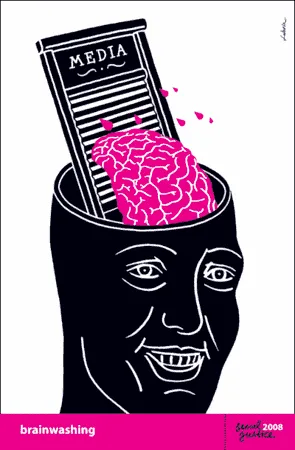
- Brainwashing media: from Luba Lukova Studio
www.lukova.net, Social Justice 2008 - xkcd.es is a translation of xckd. Credits: Randal Munroe