A collection of links to music, images and videos relating art and science. Today: Images of: G292.0+1.8, NGC 6559, sky at 408MHz, SN 1987A, Centaurus A. Music by Planoprojetivo. Video: What does it take to work in extreme astrophysics?

Images of the decade
G292.0+1.8 by Chandra
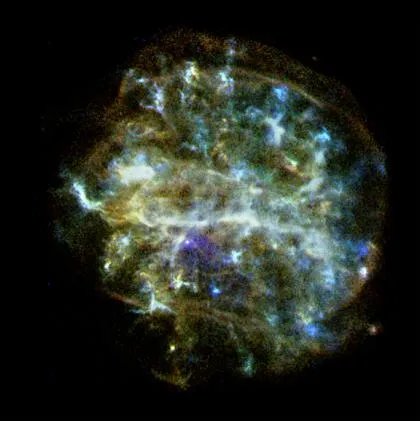
NASA's X-ray Observatory captured this spectacular image of the supernova remnant G292.0+1.8 with a pulsar at its center.
With an estimated age of 1,600 years and at about 20,000 light-years away, G292.0+1.8 is one of three oxygen-rich supernova remnants in our Galaxy.
The image was published by Chandra on October 22, 2001.
Credits: NASA/CXC/Rutgers/J.Hughes et al.
NGC 6559
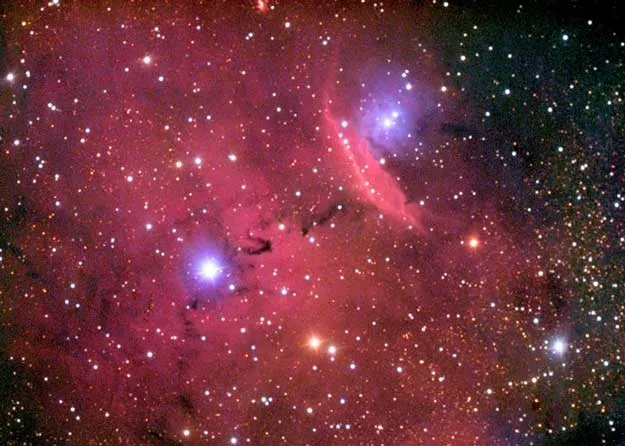
The beautiful nebula NGC 6559 is composed of gas and dust, mainly hydrogen, responsible for the diffuse reddish glow. It is located 5,000 light-years away, in Sagittarius.
It was the Astronomy Picture of the Day (APOD) of October 23, 2001. And on Observatorio.
Credit: Robert Gendler
The radio of the sky
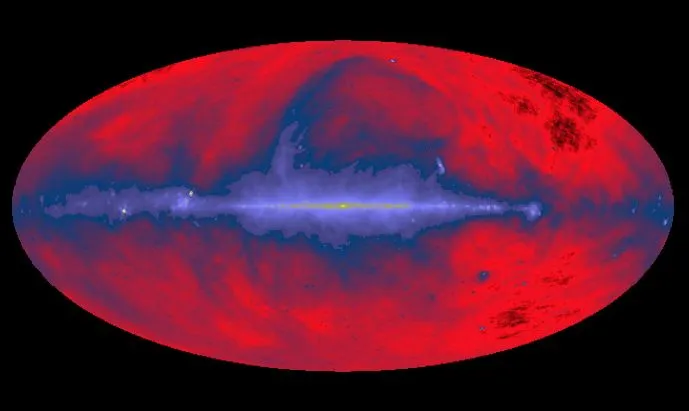
Tune your radio telescope to 408MHz and you'll have "Radio Sky"!
In the seventies, the large antennas of the radio observatories, Jodrell Bank, MPIfR, and Parkes Observatory, were used to combine data and create a whole map of the sky. Near this frequency, cosmic radio waves are generated by energetic charged electrons spinning along magnetic fields.
In the resulting false-color photo, the galactic plane lies horizontally in the center, but there are no visible stars. Instead, many of the bright sources near this plane are distant pulsars.
External galaxies like Centaurus A, located above the plane to the right of center, and the LMC (Large Magellanic Cloud) (below and right) also shine in this sky photographed in radio waves.
It was the Astronomy Picture of the Day (APOD) of October 20, 2001. And on Observatorio.
Credits: C. Haslam et al.,MPIfR,SkyView
Images of the week
Hubble visits an old friend
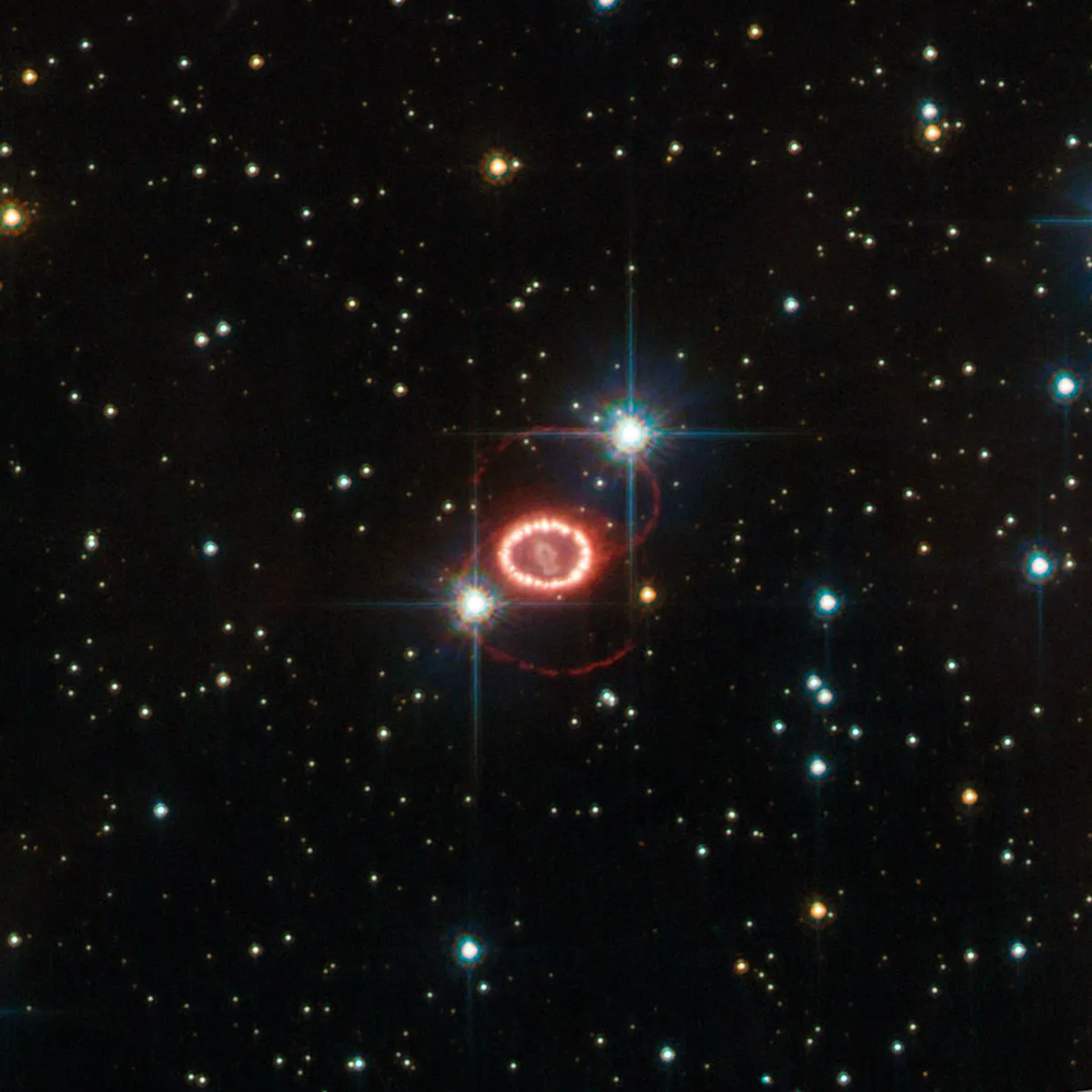
Supernova SN 1987A, one of the brightest explosions since the invention of the telescope, is well known to Hubble which studied it on several occasions since its launch in 1990.
The supernova is part of the Large Magellanic Cloud, a nearby galaxy 168,000 light-years away.
The object's name refers to the year of its observation, February 23, 1987. This image was generated from Hubble archive data and published as the Space Telescope's Image of the Week.
Credit: NASA/ESA Hubble
Centaurus A
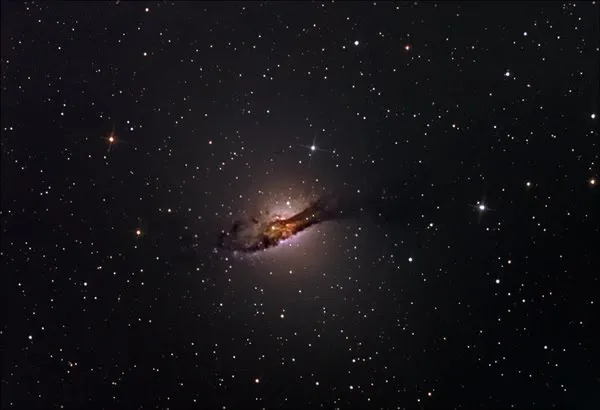
This lenticular radio galaxy, cataloged as NGC 5128, is located 14 million light-years away, in Centaurus.
With a magnitude of 6.6 it was photographed by the Argentine Omar Mangini (nebula1) from Buenos Aires, on May 29 of this year with a Newton 254/1200.
It was chosen as the Amateur Astronomy Picture of the Day (AAPOD) of October 20, 2011.
Space Music
Planoprojetivo
Last week I already commented here on the work of Orlando Moreira. That time I mentioned his trilogy titled Postales del Universo (Post cards of the Universe) which has the particularity that its tracks are names of stars.
Here is the second part of the trilogy:
Post cards of the Universe 2 by planoprojetivo
Imagine that tonight, after sunset, you go out to observe with binoculars or a telescope. Which of these 10 stars will be difficult or impossible to see?
Science in motion
Anil Ananthaswamy: What does it take to work in extreme astrophysics?
Across the planet, giant telescopes and detectors are searching (and listening) for clues to understand the workings of the Universe. At the INK Conference, science writer Anil Ananthaswamy takes us on a tour of these impressive facilities, in some of the most remote and silent places on the planet.
To access previous editions of this section, consult the Multimedia Selection Series.