This is pointed out by Dr. in astronomy Beatriz García, with whom I spoke about ITeDA, the projects being carried out there, in particular AMIGA and the ESA deep space antenna under construction that will allow Argentine astronomers 10% of the time for research. We also talked about the NASE project.
-What is ITeDA?
-The acronym stands for Instituto de Tecnología y Detección de Astropartículas. Its life began at the end of 2009. It is an institute born by agreement between three institutions: the Comisión de Energía Atómica (CNEA), CONICET and the Universidad de San Martín. Its main headquarters is in Buenos Aires, at the CNEA headquarters in the Centro atómico Constituyentes and it has a branch in Mendoza, where our group is located.
-And is it related to the Pierre Auger project?
-The birth of the institute is a consequence of working at the Pierre Auger Observatory. In addition to being linked to Auger from its beginnings -many of us have been part of the Auger Project since 1996, and Dr. Alberto Etchegoyen, Director of ITeDA, since 95- it is born mainly because the group that forms it began to develop other projects, probably the most important one, the one that really gave birth to the institute, is the AMIGA project, another acronym that means Auger Muon and Infill for the Ground Array, which means Muon Counters for the Surface Array of the Pierre Auger Observatory. This project is linked to the design of detectors, the muon counters, which are intended to count this type of particle that accompanies others in the showers of secondary particles originated by the primary cosmic ray. The AMIGA project [1], when it is fully operational, when it is completely installed, will allow us to count the muons. If we can count them we will be able to know the mass of the primary cosmic ray. That is why the project is very important, there is no other way to clearly discriminate the number of muons in the cascade of secondary particles. These counters are being designed and built 80% in Argentina. Other countries participate in the project, such as Germany, but the original idea was conceived in our country, which is why we are very proud and it will be of enormous importance for the study of cosmic rays. As a consequence of the need to carry out this project in Argentina, special laboratories were installed for development in electronic engineering, communications, the construction of the detectors -scintillators- which are quite rare and enormous, they are 9 meters long by 1.4 meters wide, they are made of plastic rods doped with fluorine and when muons pass through they interact with the substance and produce light. The light is collected by optical fibers that are located in the center of the rods and that reach a small photomultiplier tube of 2.5 cm x 2.5 cm into which 64 fibers converge. So that tube receives information from the muons that pass through it. Muons are very heavy particles, they have 204 times more mass than the electron, they pass through almost everything, our body and the Earth. To eliminate the other particles in the shower, the scintillators are buried 2.5 meters deep. As can be seen, it is a quite interesting development, a challenge for us and the Institute is born mainly around this project.
-What similarities and differences are there between what AMIGA does and Auger?
-Pierre Auger uses two types of detectors that analyze the shower of secondary particles as a whole. The surface detectors, which are tanks filled with hyper-pure water, detect the passage of the secondary particle shower. When passing through the tanks, the particles produce certain effects. The other type of detector is fluorescence, which detects the interaction of the secondary shower with atmospheric nitrogen. That interaction produces fluorescence light.
In water, muons move very fast, faster than light in water and generate a type of radiation called Cerenkov, a very faint ultraviolet light is generated. With the surface detectors you can know that you have an ultra-high energy event when several tanks detect the same event, because the shower opens like water in a shower, in a kind of cone and you can reconstruct the direction and energy of the event. With the fluorescence detectors you can reconstruct the direction. By having two detector systems, the Observatory is not only the largest in the world, but the only one that uses a hybrid detection technique.
With the AMIGA scintillators it will be possible to count the muons and it will be possible to answer, probably, the third question. Because there are three questions associated with cosmic rays: Where do they come from, that is, what is the object that produces them? Why do they arrive with such high energy? and What is the mass of the particles? Well, if we can count the muons we will be able to answer this last question.
-Is there any idea that they could come from the center of distant galaxies, but that is not entirely clear?
-There are cosmic rays that are of galactic origin, they probably come from the center of our own galaxy. But there are extragalactic components and some events have an arrival direction that seem to coincide with positions where galaxies with active nuclei are found. For quite some time these galaxies had been proposed as producers of ultra-high energy cosmic rays. So finding a correlation with them is a great discovery by Pierre Auger, but it is far from explaining the production of all cosmic rays.
-You just mentioned Cerenkov radiation. There is an international project of Cerenkov telescopes that could be installed in Argentina.
-ITeDA is also involved in that project and it is called CTA, for Cerenkov Telescope Array. [1] That project aims to detect gamma radiation. Gamma radiation reaches the atmosphere and when interacting with it produces Cerenkov radiation, the telescopes detect it, it is an indirect way of observing in the gamma region of the spectrum. It is a quite impressive project that would involve installing about 100 telescopes of different diameters, up to 30 meters in diameter, in a space of 10 km2. Argentina is proposing a couple of sites to install this project. We are competing in the Southern Hemisphere with Namibia, which is an African country that already has telescopes of this type, in the HESS project.
The international competition is very tough because you have to show the advantages of the site, the quality of the sky, the infrastructure, there's a lot to do. We are now in the period of proposing the sites. In the case of the Pierre Auger Observatory, installed here, we also went through a site selection and competed for it to come to Argentina with South Africa and with Australia. It was decided to install it here for many reasons, such as the quality of the location, the human resources, the country's economic support, the political commitment, there are many things that influence.
-Evidently some important resources, like human and infrastructure, exist for the European Space Agency to decide to install a Deep Space Antenna (DSA) here. Or was it for other reasons?
-No, it's that. The demonstration of what happened with Pierre Auger is what makes many people look at Argentina as a possible destination to install scientific projects. Pierre Auger is an impressive achievement of science and technology in our country. It's something few people know about, but from a scientific-technological point of view it is absolutely impressive. You have to think that this observatory is unique in the world. There are 1,600 surface detectors installed, 4 Fluorescence buildings housing 6 telescopes each, meaning there are 24 fluorescence telescopes, all that in 3000 km2, nearly 500 scientists from 17 countries working in the international collaboration. It's impressive and it could be done in Argentina overcoming all the obstacles we can imagine. In the middle of the observatory's construction, we found ourselves in the year 2001 and the construction never stopped. For the outside world that was also remarkable, because everyone thought the work would stop, for example, due to the tremendous crisis in our country. However we moved forward, things got done, it was finished on time and as planned. It's true there was support from other countries, but it's also true that the one in crisis was an entire country. The Argentine group made sure things kept moving forward and it was achieved. That's why many other megaprojects are looking at Argentina as a candidate.
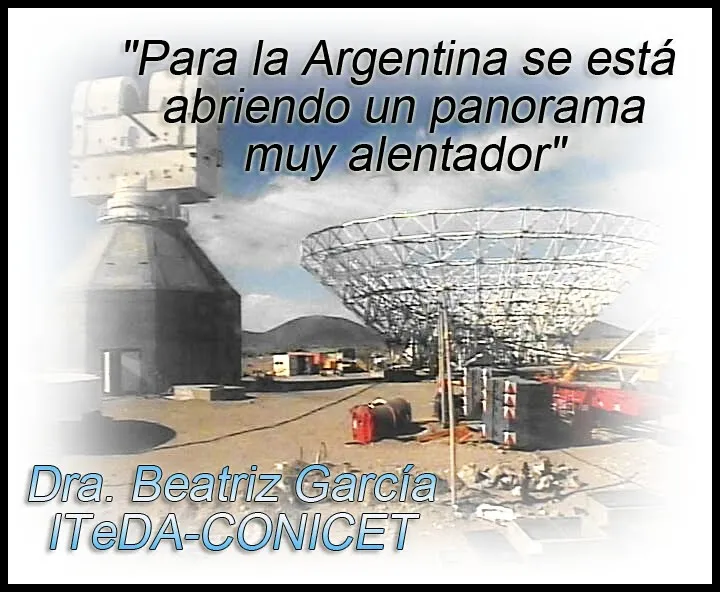
In the case of ESA's DSA 3 [1], which already has two other antennas installed, one in Australia and one in Spain, the choice of Argentina is somewhat linked to Pierre Auger, because they contacted us, even though this project is not carried out by CNEA or CONICET, but by CONAE. Our initial contribution related to the search for sites for the installation of astronomical instrumentation, a topic we are specializing in. It was a completely objective search, although we wished for it to come to Argentina; we competed with Chile, but for the installation in Malargüe, the existence of another scientific project and the local government's experience in that city with Pierre Auger weighed heavily. The presentation made by the municipality of Malargüe was excellent.
The fact that near the antenna and its associated facilities is the Observatory, gives some peace of mind regarding the existence of human resources, necessary for maintenance, it's true that ESA takes care of that, but it's good to know there are people nearby who can participate and collaborate with the work.
-And will Argentina have 10% of the time for its own research?
-That's right. Since we are not investing money in the antenna itself, that comes all done, being the host country ensures observation time. That is the currency of exchange.
The antenna is actually a radio telescope: it works with very low-energy photons, in the radio region, very far from what Auger does, but anyway, ITeDA is an institute that develops technology associated with astrophysics and presented a very interesting project for the use of the 10% of time we have, of particular interest to radio astronomers.
-There is a proposal for potential use of this antenna, presented at the last AAAA meeting by Paula Benaglia and others [2] for use in radio astronomy on different topics: gamma-ray sources, the radio galaxy Centaurus A, galactic nuclei, etc. Quite a lot can be done with the antenna.
-Yes, for us it is very interesting to have access to DSA 3 because as you said, despite working in low energy, phenomena such as galaxies with active nuclei also produce radiation in the radio zone. So if we manage to bring CTA to Argentina, which studies gamma radiation, and we have DSA 3, we can study the same phenomena at the two extremes of the electromagnetic spectrum, like GRBs, black holes, molecular clouds, among others and it would be a unique opportunity for the country to do multi-wavelength astrophysics which is a cutting-edge line of research.
-Only infrared would be missing in Argentina.
-We are organizing for next year a workshop together with COSPAR which is ESA's committee for education, associated with data acquisition, analysis and interpretation, and of satellite data in infrared precisely, Spitzer and Herschel. And we organized this workshop because both satellites are producing an amount of data that no one can keep up with analyzing and it's there, available for those who have a good proposal. We organized this workshop in that region of electromagnetic radiation because we could use the observations from those two satellites and in this way we would have instruments working in gamma, radio, and access to data in infrared with which the research spectrum in Argentina would be tremendous, the growth would be exponential and the lines of work would multiply in a very attractive way.
-It's interesting that the problem of the flood of astronomical data currently available is being addressed to take advantage of it.
-There is an amount of data that satellites and new observation techniques are producing that exceed by many orders of magnitude what a human being can do in their entire lifetime. So we need more people, more students, these topics that are cutting-edge, first-level research. In the past, students who wanted to dedicate themselves to this had to go abroad, now we aspire to be able to develop them in the country. And we hope to enthuse many more students because for Argentina a very encouraging panorama is opening up.
-For there to be students there have to be teachers. That leads me to ask you about a project you participate in, linked to education: NASE.
-In addition to doing research, we also work quite a bit with education. NASE is a program of the International Astronomical Union (IAU). It's another acronym that stands for Network for Astronomy School Education [3] and aims to train secondary school teachers so they dare to give astronomy classes. NASE is a program that is pure practice, it has a workshop format and the tools we provide to teachers are related to didactics. The workshops begin with a brief theoretical introduction to each topic, but the activity is fundamentally based on doing. Pure astronomy didactics on topics ranging from classical, positional astronomy, how sundials work, how to build them, how to read a star chart, to how I explain the expansion and evolution of the universe to young people in the first years of secondary school. The courses are super intensive, they last 4 days, they cover many topics in astronomy. Courses have been given in several Latin American countries, in Africa and in Europe. And these days a course is starting in Santa Fe, where we have already done it on three occasions: in Rosario, in Cañada de Gómez, in Rafaela and tomorrow [for Tuesday] the last course in Santa Fe in Reconquista begins. The courses are such that the IAU signed an agreement with the ministries of education and science of each country where the course is developed, to ensure quality. Here in Argentina it was signed with CONICET and the Ministry of Education of Santa Fe because they have to organize the teachers, provide the credit, etc., but we hope to spread it to more places in the country. In America, courses have been taught in Nicaragua, Colombia, Peru, Honduras, Ecuador, Panama, Paraguay and Argentina - I fought for it to be done here - but it is aimed mainly at countries that have difficulties in teaching astronomy. In our country, although not much astronomy is taught, teachers do not have as many difficulties.
-At the end you conduct a survey to evaluate the teachers. So far the conclusions seem to be quite good.
-They are excellent, yes. We have a page accessible to everyone where the course appears, the evaluation results and, yes, everyone leaves very happy. What we appreciate most about the course is that the teachers leave and the next day they are applying something they learned in their own class. That is the objective of the course, that the teacher does not keep the training in the notebook, but rather takes what they learned to the class and transmits it to the students. That is happening everywhere.
Profile
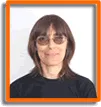
Dr. Beatriz García obtained her degree in Astronomy from UNLP in 1982 and earned her doctorate there also in 1988. She directs the Pierre Auger Laboratory of UTN Mendoza and is an independent researcher for CONICET. She is a member of several IAU commissions, vice president of the NASE program of commission 46, a university and secondary school teacher. She has directed several undergraduate, master's and doctoral theses and is the author of more than one hundred research and astronomy education articles, as well as several books like "Ladrones de estrellas". She is also the creator of the Planetarium for the blind and produced several videos related to astronomy such as "Voces del universo" about the Pierre Auger Observatory.
Sources and related links
- ITeDA. In the projects section of that page there is information about those mentioned in this note, CTA, DSA 3 and AMIGA.
- Pierre Auger Observatory
- ESTRACK Malargüe webcam
Webcam that makes it possible to follow the construction of DSA 3. - The antenna DSA 3 and its potential use for Radio Astronomy
P. Benaglia, N. Casco, S. Cichowolski, A. Cillis, B. Garcia, D. Ravignani, E. Reynoso, G. de la Vega
arXiv:1110.6422v1 [astro-ph.IM] - NASE courses
About the images
- The initial image was obtained with the ESTRACK Malargüe webcam and corresponds to 11/01/2011 20:05:28 UTC. The photograph of Dr. García is from the Auger Laboratory - UTN.