The Deep Impact of a 90s movie, Asteroid Day, and naive optimism vs. scientific optimism.
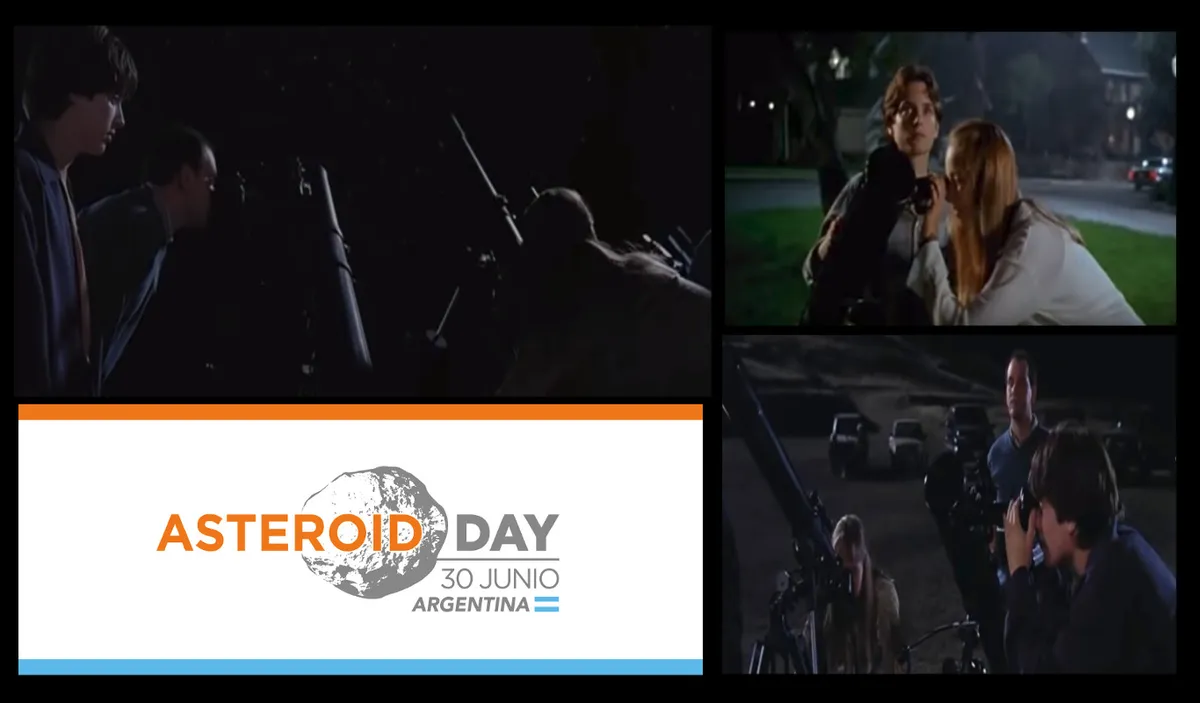
In 1998 Elijah Wood was not as well known as he would be several years later, after playing a key leading role in The Lord of the Rings.
In that 1998 film, Impacto Profundo (Deep Impact) directed by Mimi Leder, the actor also had an important role as the teenage astronomy enthusiast who discovered a comet heading for Earth. The impact zone will be the U.S., although, if it occurs, it would generate an E.L.E., an acronym that in English means Extinction Level Event, Evento de Extinción Masiva. As a consequence, the United States Government takes precautions: It sends a manned spacecraft to the comet to place nuclear bombs and shatter the object, Armageddon-style. In case that fails, they have missiles aimed at the comet, but they will only be effective when it is very close. And finally, if nothing works, a large bunker for a million people.
The first thing fails, although it manages to split the comet in two: a relatively small part and the rest. The missiles do not achieve their goal. But then, the Hollywood screenwriters come to the rescue: the spacecraft crew decides to sacrifice themselves and thus finally manage to shatter the larger part of the comet. The smaller part collides with Earth, causing a great impact, but without a Mass Extinction and so, somewhat bruised, they all lived happily ever after.
There are a couple of tragic personal subplots in the film, which features performances by Robert Duvall, Morgan Freeman and Téa Leoni.
For some time there has been a debate about whether comets can cause mass extinctions, but it is less questionable that if a comet collided with the planet it would cause great damage.
Some asteroids, being small in size, do not reach the Earth's surface as they disintegrate in the atmosphere. And that happens, very often. Many others that could potentially reach our planet would have a similar fate. But others, of larger size, could cause significant damage. For this reason, Asteroid Day has been celebrated for several years.
Asteroid Day is a global organization co-founded in 2014 by Dr. Brian May (astrophysicist and former guitarist of the rock band Queen), Rusty Schweickart (Apollo 9 astronaut, 1969), Danica Remy (member of the B612 Foundation) and filmmaker-director Grig Richters (creator of the documentary 51 Degrees North).
It is a movement declared of educational interest by the United Nations whose objective is not only to track and study asteroids but also to analyze the measures that can be taken in order to preserve life on our planet in the face of possible large impacts with these objects.
Asteroid Day is celebrated every June 30 in commemoration of the largest recorded impact between an asteroid and Earth (June 30, 1908, Tunguska, Russia). It is believed that said asteroid was an object of approximately 40 meters in diameter. As a result, an entire forested area the size of a large city was devastated, according to Lic. Diego Bagú, Director of the Planetario Ciudad de La Plata, Facultad de Ciencias Astronómicas y Geofísicas of the Universidad Nacional de La Plata and Coordinator of Asteroid Day Argentina.
Asteroid Day and optimism as a tactic
I want to cite another movie: Horizonte profundo (Deepwater Horizon, Peter Berg, 2016). There is a scene in which the character played by Mark Wahlberg (a technical supervisor) argues with an oil company manager (played by John Malkovich) and tells him: "Hope Ain't a Tactic", "La esperanza no es una táctica". In any case, it is not a good tactic. What does faith as a tactic consist of? In blindly believing that nothing bad will happen, even though it could happen. It is ignoring the possibilities and doing nothing about it.
It's like crossing the street without looking, under the "faith" that nothing will happen to us. It's putting your fingers in the socket without disconnecting the electricity, assuming everything will be fine. It's starting a car trip to the coast, without fuel in the tank, with your fingers crossed.
Hope as a tactic is ignorance, is not wanting to know. Knowledge has a risk: perhaps we will realize that something bad can happen. However, knowing that something bad can happen is the first step to trying to avoid it or, at least, to lessen the results, in case the event is inevitable.
You cannot stop a car from heading towards us, and if in that case what we can do is change our position, in the case of asteroids and Earth we cannot move the world. But knowing that something is heading home enables us to think about how to deal with it. And, even better, we can know things with some anticipation if the orbits of the largest asteroids are studied. But for that, they first have to be discovered.
In short, it is better to do something than to do nothing. We are not dinosaurs, we have the cognitive and technological capabilities to discover and investigate. The technical abilities to deal with large asteroids are, however, limited.
As a consequence, the opposite of hope (or optimism) as a tactic is not pessimism. Hope as a tactic is naive optimism based on ignorance. Knowledge as a tactic is scientific optimism.
Science, intertwined with politics and economics, generated Chernobyl (so fashionable nowadays because of a series), which can be considered not only as an "accident" but as negligence. Something much worse we should say about dropping two atomic bombs on Japan. But the same kind of cognitive effort, which is nothing other than scientific work, can be used to destroy not people, but objects dangerous to people.
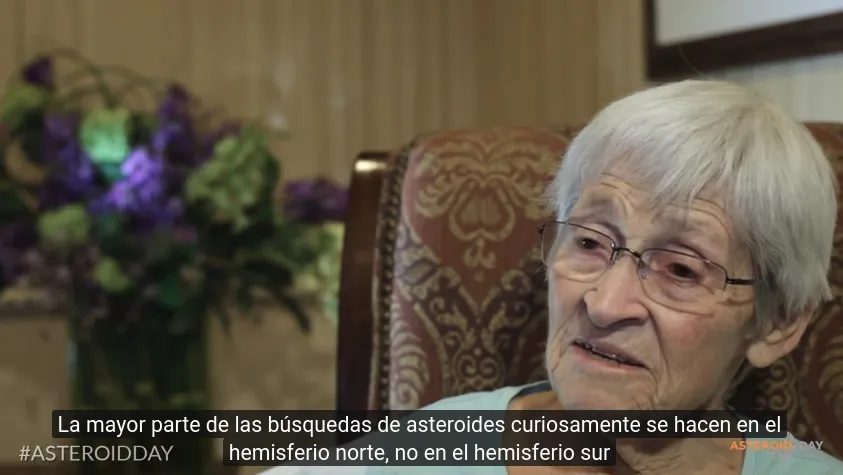
On the Asteroid Day website there is a series of videos, hosted on Youtube, subtitled in Spanish, that I recommend (see link below).
Conference in Asaramas
Los Amigos de la Astronomía tell us:
The United Nations General Assembly declares June 30 "International Asteroid Day". Our association participates in such an event, and therefore, we invite you to the conference titled “Día del asteroide: una charla impactante” given by Lic. Patricio Zain.
It will take place on June 29, 2019, at 19:00 h. at our headquarters at Av. Patricias Argentinas 550 – CABA –
Admission is free. We recommend arriving early. No prior registration is required.
We are frequently warned by the media about an asteroid that would impact Earth in the near future. However, when you read the body of the article, you find that the probability of that happening is so low that it doesn't warrant concern. Or does it?
The history of our planet tells us that it has been, and continues to be, frequently impacted by asteroids, with events of this type having been responsible for mass extinctions. Therefore, it is of utmost importance for the survival of all life on Earth to study and understand asteroids, determine their sizes, compositions, their orbits and, above all, know how to act in case a possible impact implies a risk for our civilization.
Within the framework of "Asteroid Day", in this talk we will discuss asteroids, impacts and their consequences, and their connection with the history of our planet and the Solar System.
50 Years of IAFE - Meeting III
Einstein's Eclipse and Modern Cosmology
Dr. Gabriel R. Bengochea* - IAFE (CONICET-UBA)
June 28, 19 h.
In 1915 Einstein formulated the Theory of General Relativity and with it we obtained our best description to date of gravitational phenomena. The deflection of light by massive objects and modern cosmology are two of the surprising results of Einstein's theory.
On May 29, 1919, two expeditions were carried out with the aim of validating Einstein's novel ideas, measuring star positions during a total solar eclipse. Ten years later, in 1929, Hubble published his recognized work which constituted one of the observational pillars of the current model of the expanding universe.
In this meeting we will talk about how the deflection of light and the 1919 solar eclipse relate to modern cosmology.
https://planetario.buenosaires.gob.ar/50-anos-del-iafe-encuentro-iii
Sources and related links
- Deep Impact on IMDB
https://www.imdb.com/title/tt0120647/ - Deepwater Horizon on IMDB
https://www.imdb.com/title/tt1860357/ - Hope Aint a Tactic | Deepwater Horizon (2016)
https://www.youtube.com/watch?v=SJvNSL70q68 - Asteroid Day videos on Youtube
https://asteroidday.org/resources/asteroid-learning/scientists-rock-series/
About the images
Deep Impact trailer and images from IMDB and Youtube.