Two studies indicate the possibility that the red giant is accompanied. α Orionis B, a new myth?
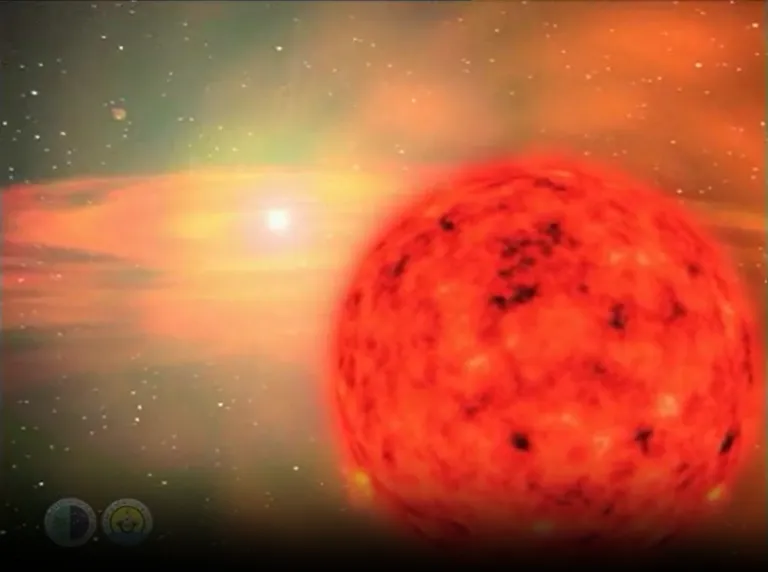
A recent study, shared via arXiv.org, led by Morgan MacLeod (Harvard & Smithsonian Center for Astrophysics) relates a six-year cycle of brightness variability to a companion star.
On the other hand, Jared Goldberg (Flatiron Institute) reaches a similar conclusion.
According to MacLeod and others, the companion would have 0.6 times the mass of the Sun and its period would be 2110 days (5.7 years) at a distance greater than double the stellar radius. Goldberg's data suggest the companion orbits every 2170 days and has a mass 1.2 times solar. What motivates the conclusion is a Long Secondary Period (LSP) in the star's light curve. The first work compiles information since 1896.
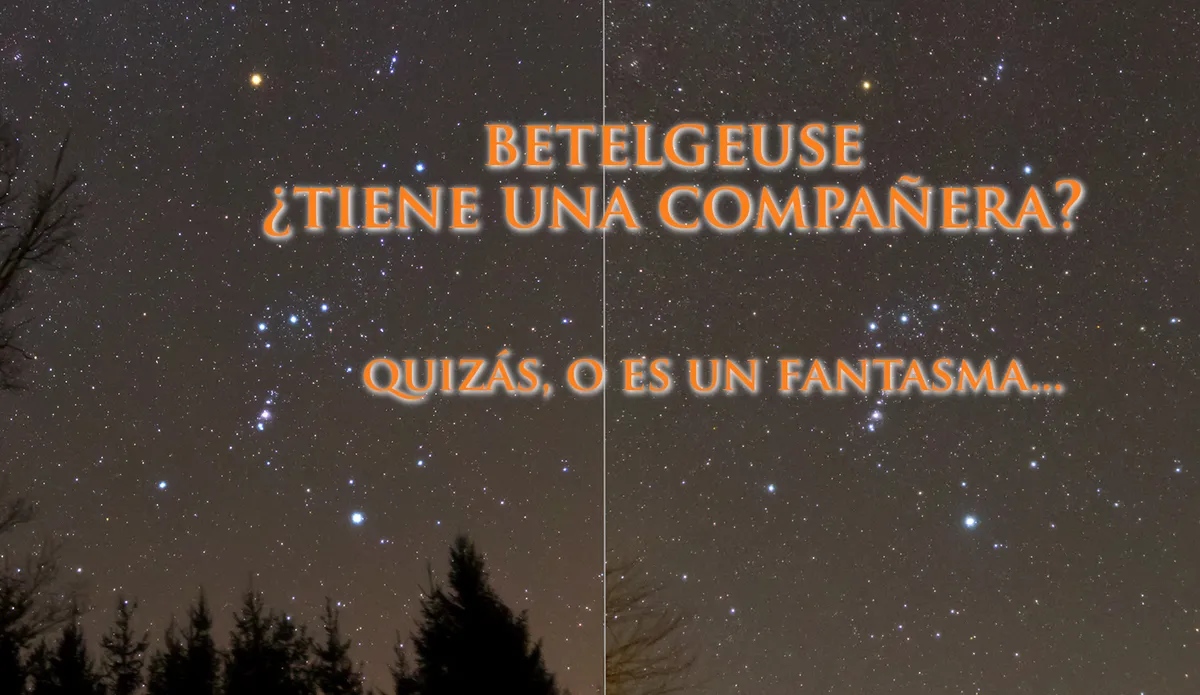
α Orionis is not the brightest star in the Constellation Orion, as its name in the Bayer designation suggests, since Rigel is the brightest. It is a red supergiant that is about to finish its equilibrium stage and will leave the main sequence. It lies about 600 light-years away, with an absolute magnitude between -6 and -5.5. It is about 20 times more massive than the Sun, almost 1000 times larger, and is a semi-regular variable.
It is a famous star, partly because it is one of the 10 brightest in the sky, easy to find, reddish, and with the possibility of exploding as a supernova and being visible to the naked eye. Let's remember that between late 2019 and early 2020 there was speculation about a possible outburst due to a notable drop in stellar brightness.
In any case, if the star has company, perhaps the ghost Beetlejuice will scare it away. Or perhaps it's an astronomical marketing maneuver for the second part that just premiered, Bitelchús-Bitelchús, as the Spaniards say.
If the existence of the companion star were verified, it should be called Lydia Deetz, because Winona Ryder is already a star.☉
Sources and related links
- Betelgeuse has a tiny companion star hidden in plain sight
https://www.sciencenews.org/article/betelgeuse-hidden-companion-star - Radial Velocity and Astrometric Evidence for a Close Companion to Betelgeuse
Morgan MacLeod et al
https://arxiv.org/abs/2409.11332 - A Buddy for Betelgeuse: Binarity as the Origin of the Long Secondary Period in α Orionis
Jared A. Goldberg, Meridith Joyce, László Molnár
https://arxiv.org/abs/2408.09089
About the images
By H. Raab (User:Vesta) - Own work, CC BY-SA 4.0, https://commons.wikimedia.org/w/index.php?curid=87447307